.avif)
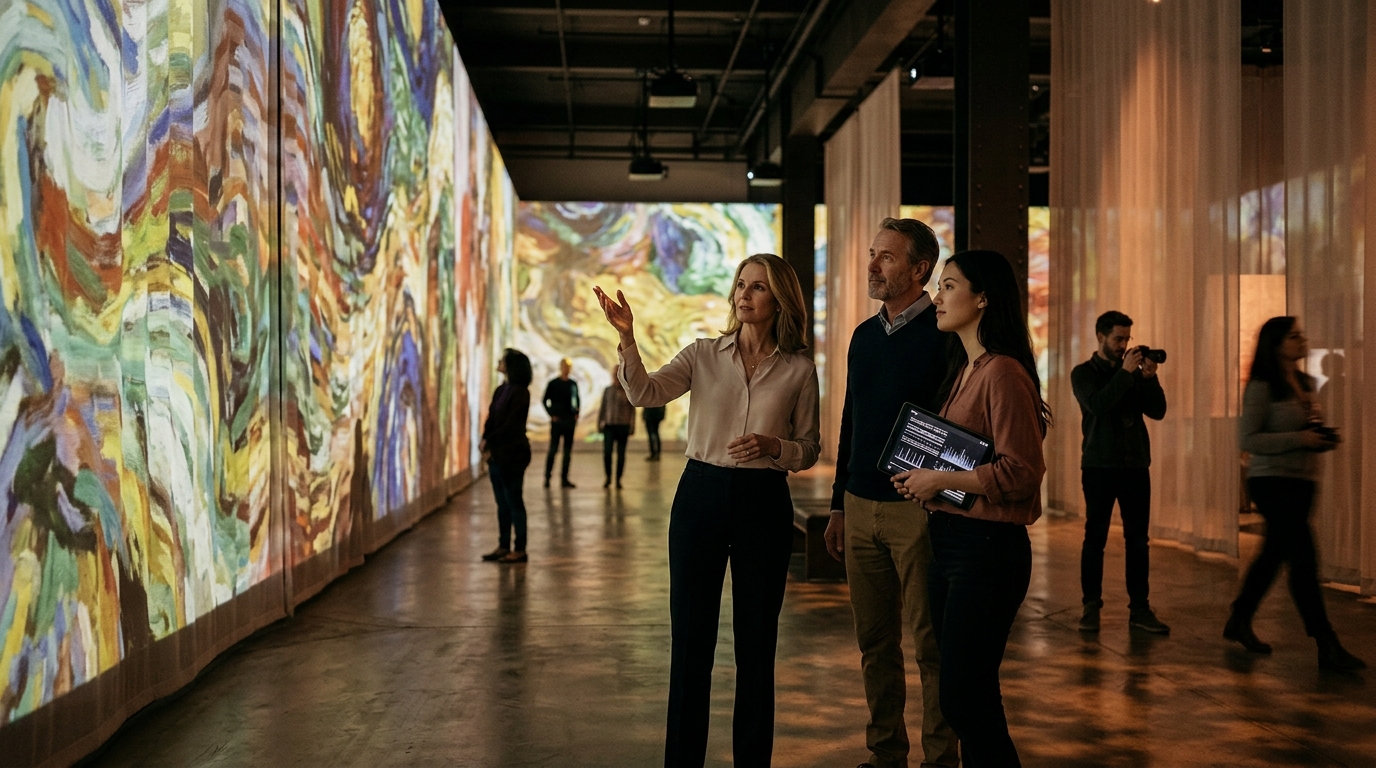
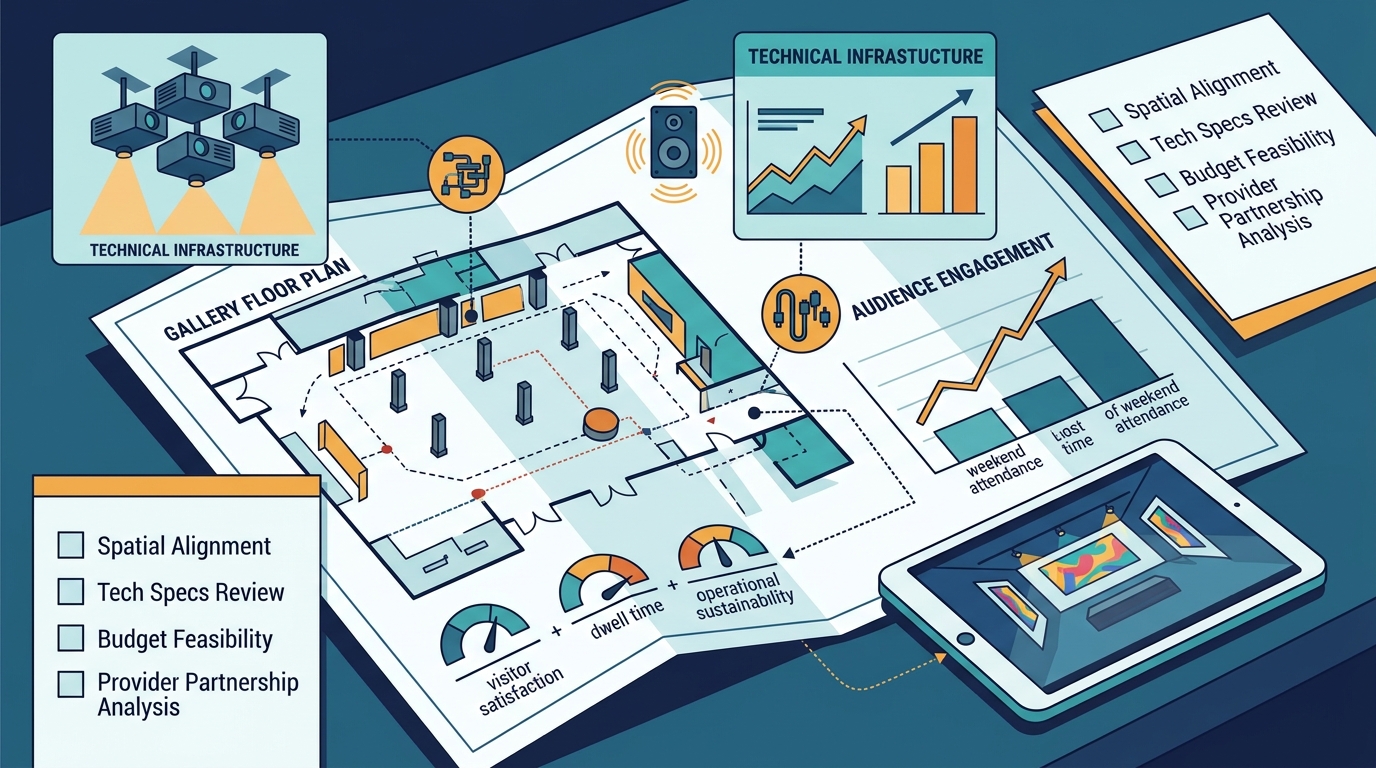
Museum administrators face mounting pressure to attract younger demographics while maintaining operational sustainability. Data shows that cultural institutions hosting digital art installations report a forty percent increase in weekend foot traffic compared to traditional static displays. This shift demands careful evaluation of spatial requirements, technical infrastructure, and audience engagement metrics before committing to a touring partnership. Museums must align their strategic goals with the production capabilities of the exhibition provider to ensure seamless execution and long term visitor satisfaction.
Spatial and Infrastructure Requirements
Museum administrators must evaluate their physical footprint before signing any touring agreement. A touring immersive exhibition requires specific square footage, ceiling height, and load bearing capacity to support heavy projection equipment and structural rigging. The venue must accommodate climate control systems that maintain stable temperature and humidity levels for sensitive electronic hardware. Large format projection mapping demands darkened environments, which directly impacts natural lighting schedules and gallery accessibility. Museums should conduct a thorough site audit to verify that their architecture can support the weight and power distribution needs of the installation.
Load Bearing and Power Distribution
Heavy machinery requires reinforced flooring and dedicated electrical circuits. Museums must verify that their existing power grid can handle continuous high wattage consumption without triggering safety protocols. Backup power generators should be included in the contingency planning phase to prevent exhibition downtime during municipal power fluctuations.
Environmental Controls
Projection equipment generates significant heat output. Museums must ensure their HVAC systems can maintain consistent ambient temperatures throughout operating hours. Failure to maintain proper cooling conditions will trigger automatic hardware shutdowns and compromise the visitor experience.
Technical Specifications and Integration
Modern cultural exhibitions rely on synchronized audiovisual systems that require precise calibration. A projection mapping exhibition is a large scale digital art presentation that uses architectural surfaces as dynamic canvases for synchronized visual and audio content. Museum technical directors must verify that their existing infrastructure supports the required resolution, brightness, and color accuracy standards. Integration with existing museum management software, ticketing platforms, and accessibility compliance frameworks requires early coordination between the production team and facility managers.
Accessibility Compliance
Institutional venues must meet ADA standards and international accessibility guidelines. Touring productions should include audio description tracks, tactile mapping stations, and wheelchair accessible viewing corridors. Museums must verify that the production team has already integrated these accessibility features into the core design rather than treating them as afterthoughts.
Software Integration
Seamless ticketing integration reduces queue times and improves visitor flow. Museums should require API compatibility with their existing reservation systems before finalizing any contract. Early technical testing prevents bottlenecks during peak operating hours.
Audience Metrics and Engagement
Museum leadership must define clear success metrics before launching any touring partnership. Visitor retention rates, dwell time, and post visit survey scores directly impact long term programming decisions. Institutions that track real time engagement data can adjust staffing levels and operational hours to match peak demand patterns. Museums should establish baseline performance indicators that align with their strategic mission statements and community outreach goals.
Demographic Targeting
Touring exhibitions often attract distinct demographic segments compared to permanent collections. Museums must analyze age distribution, geographic origin, and repeat visitation rates to optimize marketing spend. Data shows that institutions targeting family demographics see higher average spending on ancillary retail and dining partnerships.
Feedback Collection
Structured post visit surveys provide actionable insights for future programming. Museums should deploy digital feedback kiosks and mobile survey links to capture real time visitor sentiment. Aggregated feedback data directly informs contract renewal decisions and future booking strategies.
Financial Structures and Licensing
Museum finance departments must evaluate the complete revenue model before committing to any touring agreement. A cultural exhibition licensing agreement is a legal contract that grants institutional usage rights for a specified duration in exchange for guaranteed minimum payments or revenue sharing percentages. Institutions should compare flat licensing fees against percentage based revenue models to determine which structure aligns with their projected attendance forecasts. Insurance requirements, liability clauses, and damage waivers must be reviewed by legal counsel before signing any binding agreement.
Revenue Sharing Models
Percentage based agreements align institutional success with production success. Museums must establish clear reporting thresholds and audit rights to verify accurate ticket sales reporting. Transparent financial tracking prevents disputes during contract renewal negotiations.
Insurance and Liability
Institutional venues must carry comprehensive general liability coverage that specifically includes temporary exhibition installations. Museums should verify that the production company maintains adequate equipment insurance and worker compensation coverage. Clear liability boundaries prevent costly legal disputes during the installation and deinstallation phases.
Installation Logistics and Timeline
Museum operations teams must coordinate complex scheduling windows to minimize revenue loss during setup periods. A shared virtual reality exhibition is a collaborative digital experience that allows multiple visitors to interact within a synchronized virtual environment simultaneously. Production teams typically require two to four weeks for full installation, depending on venue size and existing infrastructure. Museums must plan for extended operating hours, temporary gallery closures, and specialized security protocols during the critical setup phase.
Setup and Dismantling Windows
Extended setup periods directly impact operating revenue. Museums should negotiate flexible opening dates that align with their fiscal calendar and seasonal attendance patterns. Early access agreements allow production teams to complete technical testing without disrupting public operations.
Security and Asset Protection
High value projection equipment requires specialized handling protocols. Museums must assign dedicated security personnel to monitor equipment movement during installation and deinstallation phases. Clear asset tracking logs prevent inventory discrepancies and protect institutional property from damage claims.
Partnership Models and Curation
Museum curatorial teams must evaluate how touring exhibitions align with their existing collection narratives. Institutions that integrate touring productions with permanent collections see higher visitor satisfaction scores and increased membership conversions. Museums should establish clear curatorial guidelines that dictate how the touring content interacts with existing artifacts and educational programming. Partnership agreements should include co branding opportunities that amplify institutional visibility across regional and international markets.
Curatorial Alignment
Touring exhibitions must complement existing collection themes rather than compete with them. Museums should require curatorial review sessions before finalizing any content selection. Aligned programming strengthens institutional authority and attracts dedicated academic audiences.
Co Branding Opportunities
Joint marketing campaigns expand institutional reach across new demographic segments. Museums should negotiate shared advertising budgets and cross promotional materials to maximize audience acquisition. Co branded initiatives directly increase brand recognition and drive long term visitor loyalty.
| Partnership Type | Financial Structure | Operational Control | Best For |
|---|---|---|---|
| Flat Licensing | Guaranteed minimum payment | Institution manages marketing | Established museums with predictable attendance |
| Revenue Share | Percentage based split | Shared marketing responsibility | New venues testing market demand |
| Custom SVR | Project based development | Full institutional oversight | Institutions requiring proprietary content |
| THE LUME Model | Long term lease agreement | Permanent integration | Cities seeking permanent cultural anchors |
Key Takeaways
- Museum administrators must verify ceiling height, load bearing capacity, and HVAC compatibility before signing any touring agreement.
- Projection mapping exhibitions require darkened environments and specialized rigging infrastructure that impacts gallery accessibility.
- Financial models should be evaluated against projected attendance forecasts to determine optimal revenue sharing structures.
- Accessibility compliance must be integrated into the core design phase rather than added as an afterthought.
- Production teams typically require two to four weeks for full installation, directly impacting operating revenue windows.
- Curatorial alignment between touring content and permanent collections drives higher visitor satisfaction and membership conversions.
- Institutions hosting digital art installations report a forty percent increase in weekend foot traffic compared to traditional static displays.
Frequently Asked Questions
How long does a typical touring immersive exhibition run?
Museum partnerships typically span six to eighteen months depending on venue size and market demand. Institutions can negotiate extension clauses that allow for extended operating periods if attendance thresholds are consistently met. Flexible scheduling options accommodate seasonal attendance fluctuations and regional holiday schedules.
What insurance coverage do museums need for touring installations?
Institutional venues must carry comprehensive general liability coverage that specifically includes temporary exhibition installations. Museums should verify that the production company maintains adequate equipment insurance and worker compensation coverage. Clear liability boundaries prevent costly legal disputes during the installation and deinstallation phases.
Can museums modify the exhibition content to match local themes?
Custom SVR productions allow institutions to integrate regional historical narratives and local artist collaborations. Museum curatorial teams can request content adjustments that align with community outreach objectives. Production teams typically accommodate minor content swaps without disrupting core technical infrastructure.
How do museums handle accessibility requirements for projection exhibitions?
Institutional venues must meet ADA standards and international accessibility guidelines. Touring productions should include audio description tracks, tactile mapping stations, and wheelchair accessible viewing corridors. Museums must verify that the production team has already integrated these accessibility features into the core design rather than treating them as afterthoughts.
What happens if attendance falls below projected thresholds?
Revenue sharing agreements typically include performance adjustment clauses that protect institutional financial exposure. Museums can negotiate minimum guarantee reductions if attendance drops below predetermined thresholds. Flexible contract terms allow institutions to exit partnerships early without incurring substantial penalty fees.
Do touring exhibitions require permanent structural modifications?
Modern projection installations utilize reversible mounting systems that leave no permanent damage to historic architecture. Museums can install heavy rigging using temporary anchor points that comply with heritage preservation guidelines. Production teams remove all equipment during deinstallation, restoring the venue to its original configuration.
How do museums track visitor engagement data?
Institutional venues should deploy digital feedback kiosks and mobile survey links to capture real time visitor sentiment. Museums must establish baseline performance indicators that align with their strategic mission statements and community outreach goals. Aggregated feedback data directly informs contract renewal decisions and future booking strategies.
Book Your Next Touring Exhibition
Museum administrators seeking proven touring partnerships should explore our comprehensive exhibition portfolio. Our production team has successfully deployed cultural exhibitions across two hundred fifty locations worldwide, delivering seamless technical execution and exceptional visitor engagement. Contact our partnerships division today to schedule a comprehensive site assessment and explore customized programming options tailored to your institutional goals. Visit https://grande-experiences.com/contact to begin your booking consultation.