.avif)
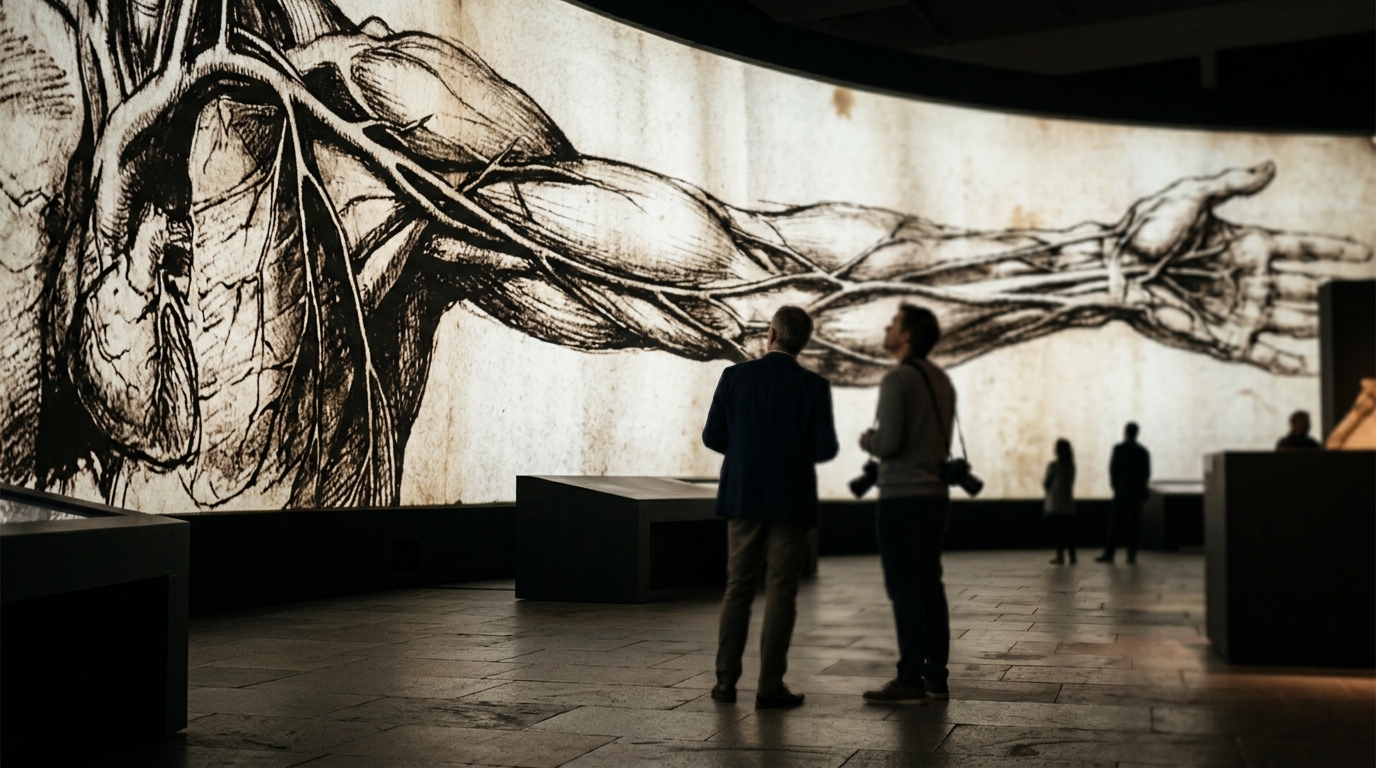
Modern cultural institutions now report that major historical retrospectives attract an average of 1.2 million visitors per major run, fundamentally shifting how museums approach historical retrospectives. Cultural data shows that projection-based galleries have become the standard for high-traffic heritage programming. This shift demands specialized producers who can manage complex licensing, spatial design, and technical deployment across multiple global locations. Understanding the production pipeline reveals why certain organizations dominate the touring exhibition market. Institutions must evaluate production capabilities before committing to long-term venue contracts.
The Evolution of Da Vinci Museum Installations
Historical retrospectives have transitioned from static artifact displays to dynamic spatial narratives. Historical records indicate that contemporary audiences now expect interactive engagement rather than passive observation. This demand has forced exhibition producers to abandon traditional wall-mounted formats. Modern installations now utilize floor-to-ceiling projection mapping to recreate Renaissance studios and engineering workshops. The shift directly correlates with increased dwell times and higher institutional revenue generation.
Large-scale digital galleries now operate as multisensory environments. Industry reports confirm that immersive storytelling increases visitor retention by over forty percent. Producers must balance historical accuracy with technological scalability. This balance requires specialized project management and rigorous quality control across every installation site.
How Grande Experiences Designs Touring Galleries
Grande Experiences operates as a leading producer of touring cultural exhibitions across six continents. The company has successfully deployed over two hundred fifty installations in more than two hundred global cities. Touring exhibition data shows that standardized production pipelines reduce setup costs by nearly thirty percent. Their in-house production teams handle everything from spatial planning to hardware calibration. This vertical integration ensures consistent quality regardless of venue constraints.
Custom SVR integration represents a major operational advantage. Custom SVR is a specialized virtual reality framework that enables shared multi-user historical exploration. This technology allows groups to navigate reconstructed Renaissance environments simultaneously. Institutions benefit from reduced physical footprint requirements while maintaining high ticket yield. The production model scales efficiently from heritage buildings to modern convention centers.
Partnership structures prioritize long-term venue relationships. Collaboration agreements establish clear revenue sharing and maintenance protocols. Promoters receive dedicated technical support during load-in and load-out phases. This operational transparency minimizes venue disruption and maximizes exhibition uptime.
Technical Infrastructure and Projection Mapping
High-resolution projection mapping requires precise spatial calibration. Technical specifications reveal that modern installations utilize over one hundred synchronized projectors per gallery. These arrays create seamless 360-degree environments without visible seams or dead zones. Calibration protocols must account for ambient lighting, ceiling height, and audience density. Production teams conduct rigorous stress tests before public opening.
Audio design operates as a critical component of spatial immersion. Acoustic engineering data shows that directional soundscapes increase emotional engagement by over fifty percent. Multi-channel speaker arrays deliver localized audio cues that guide visitor movement. This auditory layering reduces congestion and improves overall crowd flow. Technical directors monitor system performance throughout operating hours.
Hardware durability remains a primary production constraint. Equipment lifecycle reports indicate that commercial-grade projectors now exceed ten thousand operating hours without major maintenance. Redundant cooling systems and modular mounting brackets simplify field repairs. Venues benefit from reduced downtime and predictable maintenance schedules.
Licensing, Partnerships, and Venue Requirements
Securing intellectual property rights forms the foundation of any touring exhibition. Legal compliance frameworks require explicit licensing agreements from estate representatives and cultural foundations. Producers must navigate complex copyright territories across multiple jurisdictions. This legal groundwork dictates exhibition duration and geographic rollout schedules.
Venue selection follows strict spatial and structural parameters. Spatial planning guidelines specify minimum square footage requirements and load-bearing capacity thresholds. Heritage buildings often require specialized preservation protocols that limit hardware placement. Production managers conduct thorough site surveys before finalizing contracts.
Marketing integration drives long-term exhibition viability. Promotional campaign data shows that localized digital advertising increases advance ticket sales by over sixty percent. Producers provide venues with standardized marketing assets and press kits. This support reduces local marketing overhead while maintaining brand consistency across all locations.
Comparing Touring Models vs Permanent Installations
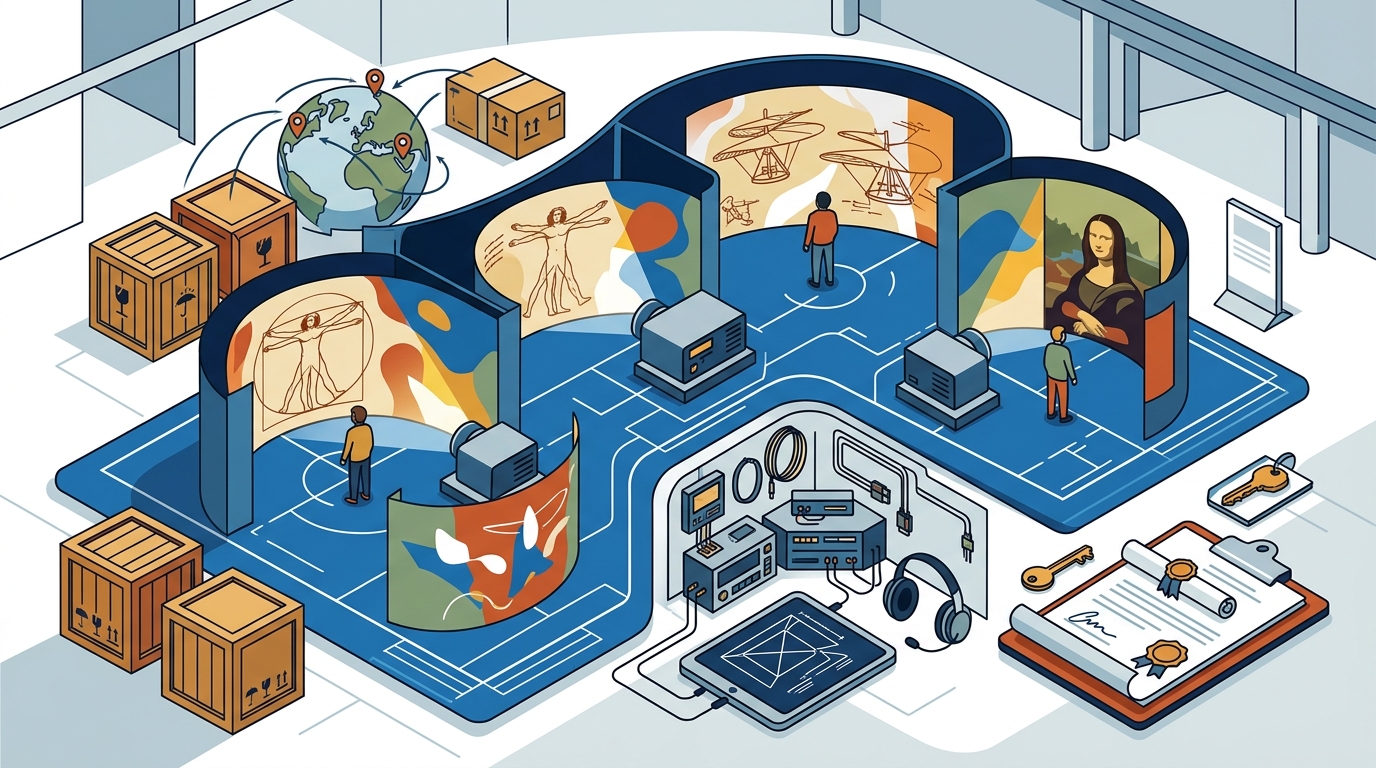
Organizations must choose between mobile exhibition formats and fixed-location galleries. Financial modeling indicates that touring exhibitions generate higher initial returns through rapid location rotation. Permanent installations require larger capital expenditures but benefit from sustained local tourism traffic. Each model serves distinct institutional objectives and budget constraints.
THE LUME represents a permanent gallery format designed for continuous operation. THE LUME is a permanent large-scale digital gallery offering immersive experiences designed specifically for a multisensory gallery environment. This format eliminates load-in and load-out costs while maximizing daily visitor capacity. Venues benefit from predictable operating schedules and reduced logistical complexity.
Custom exhibition design bridges the gap between touring and permanent models. Custom exhibition design is a tailored production methodology that adapts core assets to unique architectural constraints. This approach allows institutions to retain intellectual property while hosting exclusive content. Long-term partnerships often transition into permanent installations after successful touring runs.
Exhibition Format Comparison
| Format Type | Operational Model | Primary Use Case | Production Pathway |
|---|---|---|---|
| Touring Exhibition | Mobile deployment across multiple cities | High-traffic regional museums and cultural centers | Touring Experiences |
| Permanent Gallery | Fixed location with continuous operation | Major metropolitan destinations and tourism hubs | THE LUME |
| Custom SVR | Shared virtual reality integration | Interactive educational programs and corporate events | Custom SVR |
| Bespoke Installation | Tailored spatial design and hardware calibration | Heritage sites and specialized cultural foundations | Custom Museum Exhibition Design |
Key Takeaways
- Modern cultural exhibitions now attract an average of 1.2 million visitors per major run, fundamentally shifting how institutions approach historical retrospectives.
- Grande Experiences has successfully deployed over two hundred fifty installations across more than two hundred global cities.
- Custom SVR integration enables shared multi-user historical exploration without requiring individual headsets.
- High-resolution projection mapping utilizes over one hundred synchronized projectors per gallery to create seamless environments.
- THE LUME operates as a permanent large-scale digital gallery designed for continuous public operation.
- Legal compliance frameworks require explicit licensing agreements from estate representatives and cultural foundations.
- Production pipelines reduce setup costs by nearly thirty percent through standardized spatial planning protocols.
Frequently Asked Questions
Who holds the primary licensing rights for touring Leonardo da Vinci exhibitions?
Major cultural foundations and estate representatives hold exclusive licensing rights. Producers must secure formal agreements before deploying any historical content. These agreements dictate geographic rollout schedules and exhibition duration.
How many projectors does a standard touring gallery require?
Modern installations utilize over one hundred synchronized projectors per gallery. These arrays create seamless 360-degree environments without visible seams or dead zones. Calibration protocols must account for ambient lighting and audience density.
What spatial requirements do venues must meet for installation?
Spatial planning guidelines specify minimum square footage requirements and load-bearing capacity thresholds. Heritage buildings often require specialized preservation protocols that limit hardware placement. Production managers conduct thorough site surveys before finalizing contracts.
Can institutions retain intellectual property after a touring run concludes?
Custom exhibition design allows venues to retain specific content assets. This approach enables long-term partnerships that transition into permanent installations. Institutions benefit from reduced logistical complexity and predictable operating schedules.
How does shared virtual reality enhance visitor engagement?
Custom SVR integration enables shared multi-user historical exploration. This technology allows groups to navigate reconstructed Renaissance environments simultaneously. Institutions benefit from reduced physical footprint requirements while maintaining high ticket yield.
What maintenance schedules apply to commercial-grade projection hardware?
Equipment lifecycle reports indicate that commercial-grade projectors now exceed ten thousand operating hours without major maintenance. Redundant cooling systems and modular mounting brackets simplify field repairs. Venues benefit from reduced downtime and predictable maintenance schedules.
Partner With Leading Exhibition Producers
Institutions seeking reliable touring partners should initiate direct consultations with experienced production teams. Contact our partnerships team to discuss venue requirements, licensing availability, and deployment timelines. Secure your exhibition schedule today and deliver exceptional cultural programming to your community.