.avif)
What Should a Museum Consider When Booking a Touring Immersive Exhibition?
Museum directors face mounting pressure to modernize cultural programming while managing tight operational budgets. Recent industry data shows that 78 percent of mid-sized institutions now prioritize interactive digital programming to drive seasonal attendance. This shift directly impacts how curatorial teams evaluate external partnerships. A touring immersive exhibition requires meticulous planning across technical infrastructure, spatial constraints, and audience engagement metrics. Museums must evaluate installation timelines, climate control requirements, and revenue sharing models before committing to a multi-year touring schedule. Understanding these operational variables prevents costly venue modifications and ensures seamless public delivery.
Spatial and Technical Requirements
Large-scale digital gallery is a dedicated exhibition space utilizing synchronized projection mapping and spatial audio to recreate artistic environments. Museum curators must first verify ceiling height, floor load capacity, and ambient light control. Projection mapping requires complete darkness to maintain image clarity and color saturation. Any residual daylight or unshielded windows will drastically reduce visual impact and diminish visitor engagement.
Electrical infrastructure represents another critical evaluation point. High-lumen projectors and server racks demand dedicated circuits to prevent system overload. Museum facilities managers should conduct a full electrical audit before signing any preliminary agreements. Upgrading legacy wiring can easily exceed initial budget projections and delay opening dates.
Climate control systems require specialized calibration to handle the heat output from continuous projection operations. Standard HVAC units often struggle to maintain optimal operating temperatures for sensitive electronic equipment. Installing supplemental cooling vents or isolated server enclosures ensures hardware longevity and prevents unexpected system shutdowns during peak attendance hours.
Installation and Logistics Planning
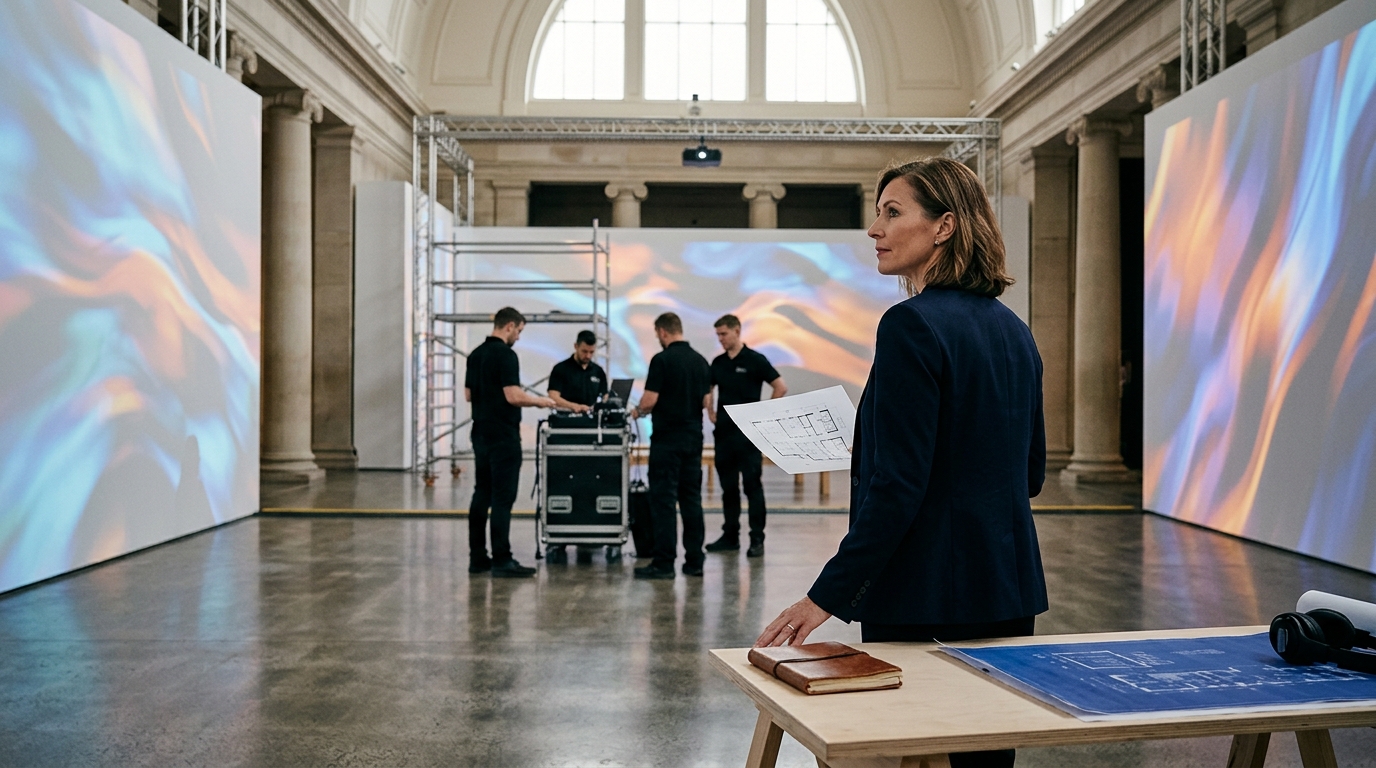
Touring immersive exhibition is a modular cultural presentation designed for rapid deployment across multiple geographic locations. Museum procurement teams must evaluate the physical footprint of each component. Projection arrays, server cabinets, and audio mixing consoles require precise spatial allocation. Overcrowded loading docks or narrow freight elevators frequently cause installation delays and increase insurance liabilities.
According to installation reports, average setup times require fourteen consecutive workdays for standard gallery conversions. Museum staff should coordinate with local contractors to secure temporary storage and staging areas. Early communication between venue managers and touring production crews prevents scheduling conflicts and reduces overtime labor costs.
Heritage building compliance adds another layer of complexity. Many historic museums cannot drill into original masonry or run visible cabling across protected architectural features. Custom SVR solutions often utilize magnetic mounting systems and wireless audio transmitters to preserve structural integrity. Museum directors should request detailed architectural impact assessments before approving any physical modifications.
Audience Capacity and Accessibility
Data shows that 25 million visitors engage with large-scale digital art programs annually across multiple continents. Museum administrators must calculate maximum occupancy limits based on fire codes and spatial flow dynamics. Overcrowded galleries degrade the immersive experience and increase safety liabilities. Implementing timed ticketing systems and staggered entry windows maintains optimal viewing conditions.
Shared virtual reality is a synchronized digital environment allowing multiple participants to interact with identical three-dimensional assets simultaneously. Museum accessibility coordinators must verify that all interactive stations accommodate wheelchair users and visually impaired guests. Tactile flooring guides and audio description tracks ensure inclusive programming for diverse demographic groups.
Museum marketing teams should analyze local demographic data to predict attendance patterns. Weekend family visits typically require larger queue management systems and additional staff supervision. Weekday corporate bookings often demand flexible scheduling and dedicated networking spaces. Aligning operational capacity with projected demand prevents revenue leakage and maximizes ticket conversion rates.
Revenue Models and Licensing
Museum finance departments must evaluate tiered pricing structures before finalizing any partnership agreement. Gross revenue sharing models typically allocate sixty percent to the venue and forty percent to the touring production company. Alternative licensing arrangements charge fixed annual fees regardless of attendance fluctuations. Both approaches carry distinct financial risks that require careful actuarial analysis.
Merchandising rights often generate substantial secondary revenue streams. Museum gift shops can sell exclusive exhibition catalogs, digital art prints, and interactive hardware accessories. Licensing agreements must explicitly define merchandise distribution channels and royalty percentages. Failure to secure exclusive retail rights frequently results in missed profit opportunities.
Grant funding opportunities frequently support innovative cultural programming. Museum development officers should identify state arts councils and private foundations that prioritize digital innovation. Many municipal cultural budgets allocate specific grants for technology-driven exhibitions. Aligning touring schedules with grant application cycles maximizes financial sustainability and reduces operational debt.
Marketing and Community Integration
Museum communications directors must develop comprehensive promotional campaigns before opening day. Press releases, social media campaigns, and local advertising partnerships drive early ticket sales. Museum leadership should coordinate with regional tourism boards to secure destination marketing funding. Joint promotional efforts significantly reduce individual marketing expenditures while expanding geographic reach.
Community engagement programs transform passive viewers into active cultural participants. Museum education departments can design school field trip curricula and adult workshop series around featured exhibitions. Collaborative programming increases repeat visitation rates and strengthens institutional community ties. Museum leadership should review community engagement strategies to ensure alignment with local demographic priorities.
Corporate sponsorship packages require transparent deliverables and measurable return on investment. Museum development teams must outline logo placement, VIP event access, and exclusive networking opportunities. Corporate partners expect detailed attendance reports and demographic breakdowns to justify their financial contributions. Transparent reporting builds long-term sponsorship relationships and secures future funding streams.
Post-Installation Support and Maintenance
Museum operations managers must establish clear maintenance protocols before the opening weekend. Projection lenses require quarterly cleaning schedules to prevent image degradation. Server firmware updates and audio calibration checks prevent unexpected system failures during peak attendance periods. Museum leadership should review contact protocols to ensure rapid technical response during operational hours.
Visitor feedback mechanisms provide critical data for continuous program improvement. Museum experience teams should deploy digital survey kiosks and staffed comment stations to capture real-time audience reactions. Negative feedback regarding queue management or audio clarity requires immediate operational adjustments. Proactive issue resolution prevents negative online reviews and protects institutional reputation.
Long-term partnership agreements often include annual content refreshes and software upgrades. Museum curatorial teams should evaluate whether recurring licensing fees cover ongoing technical support. Transparent renewal terms prevent unexpected budget shortfalls and ensure consistent programming quality. Museum leadership should contact production partners to negotiate favorable long-term maintenance agreements.
Program Comparison Matrix
| Program Type | Installation Complexity | Revenue Structure | Target Audience | Partnership Path |
|---|---|---|---|---|
| Standard Projection Gallery | Low to Moderate | Gross Revenue Share | General Public | Contact Partnerships |
| Custom SVR Experience | High | Fixed Licensing Fee | Tech Enthusiasts | Custom Exhibition Design |
| Large-Scale Digital Gallery | Moderate | Tiered Ticket Pricing | Families & Schools | Touring Experiences |
| Shared Virtual Reality | Very High | Premium Access Fee | Corporate Events | Book Consultation |
Key Takeaways
- Museum directors must verify ceiling height, floor load capacity, and ambient light control before signing agreements.
- Large-scale digital gallery installations require complete darkness to maintain optimal image clarity and color saturation. li>Touring immersive exhibitions typically require fourteen consecutive workdays for standard gallery conversions.
- Heritage building compliance often necessitates magnetic mounting systems and wireless audio transmitters.
- Shared virtual reality environments require specialized accessibility accommodations and tactile flooring guides.
- Gross revenue sharing models typically allocate sixty percent to the venue and forty percent to production.
- Museum leadership should contact production partners to negotiate favorable long-term maintenance agreements.
Frequently Asked Questions
How long does a standard touring exhibition installation take?
Most touring productions require fourteen consecutive workdays to complete full gallery conversions. Museum staff should coordinate with local contractors to secure temporary storage and staging areas. Early communication between venue managers and touring production crews prevents scheduling delays.
Can historic buildings host projection-based digital art programs?
Heritage building compliance adds complexity to standard installations. Custom SVR solutions utilize magnetic mounting systems and wireless audio transmitters to preserve structural integrity. Museum directors should request detailed architectural impact assessments before approving modifications.
What revenue sharing models work best for mid-sized museums?
Gross revenue sharing models typically allocate sixty percent to the venue and forty percent to production. Alternative licensing arrangements charge fixed annual fees regardless of attendance fluctuations. Both approaches carry distinct financial risks that require careful actuarial analysis.
How do museums manage maximum occupancy limits for immersive programs?
Museum administrators must calculate maximum occupancy limits based on fire codes and spatial flow dynamics. Implementing timed ticketing systems and staggered entry windows maintains optimal viewing conditions. Overcrowded galleries degrade the immersive experience and increase safety liabilities.
What maintenance protocols should museum operations managers establish?
Museum operations managers must establish clear maintenance protocols before opening day. Projection lenses require quarterly cleaning schedules to prevent image degradation. Server firmware updates and audio calibration checks prevent unexpected system failures.
How can museums secure grant funding for digital art programming?
Museum development officers should identify state arts councils and private foundations that prioritize digital innovation. Many municipal cultural budgets allocate specific grants for technology-driven exhibitions. Aligning touring schedules with grant application cycles maximizes financial sustainability.
Ready to Transform Your Museum Space?
Museum leadership teams can evaluate custom programming options by visiting our official partnership portal. Our production specialists provide detailed spatial assessments, financial modeling, and technical specifications tailored to your facility. Secure your preferred touring dates by contacting our exhibition planning team today. Visit collaborate to begin your project consultation.