.avif)
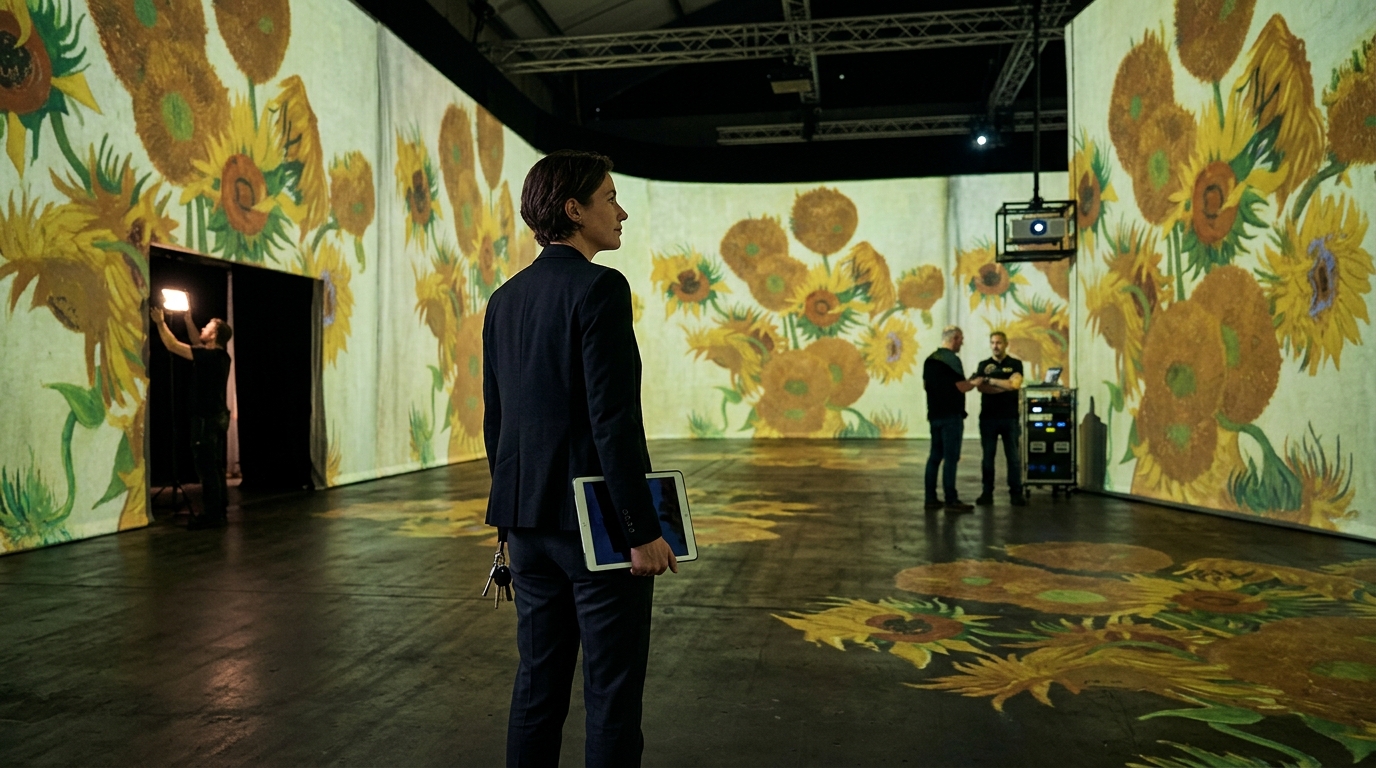
Venue operators seeking to host a large-scale cultural attraction face a complex logistical landscape. According to recent industry reports, immersive digital exhibitions now attract an average of 1.2 million visitors per major metropolitan run. This surge in foot traffic directly correlates with substantial local revenue growth across hospitality and retail sectors. Securing a premier touring installation requires a structured partnership framework. Grande Experiences has successfully deployed over 280 distinct cultural programs across 200 global cities. Their established touring model provides a turnkey solution for venue managers aiming to launch a high-impact digital gallery.
Understanding the Touring Exhibition Model
An immersive exhibition is a large-scale cultural presentation that utilizes projection mapping, spatial audio, and interactive digital interfaces to transform physical spaces into dynamic environments. Traditional gallery formats rely on static wall displays, whereas modern touring installations require adaptable infrastructure. Venue directors must recognize that these productions operate as mobile cultural destinations rather than permanent fixtures. The touring framework allows operators to host rotating themes without committing to long-term construction costs. Grande Experiences manages this process by providing standardized technical blueprints and modular hardware kits. This approach drastically reduces setup timelines and minimizes structural modifications to heritage buildings. Operators benefit from a proven operational template that has been refined across multiple continents. The standardized workflow ensures consistent quality regardless of geographic location. Venue managers gain access to a dedicated project coordinator who oversees every phase from initial inquiry to final teardown. This centralized management style eliminates common friction points associated with independent event production.
Evaluating Venue Requirements and Infrastructure
Before initiating contact with production teams, facility managers must conduct a thorough spatial assessment. A projection-based gallery requires specific environmental conditions to function correctly. Darkened environments are essential for optimal visual clarity. Operators should measure ceiling heights, load-bearing capacities, and HVAC ventilation systems. Large-format projectors generate significant heat output, which demands robust climate control. Venue directors must also verify electrical distribution panels to support high-wattage equipment. Most successful installations require a minimum floor area of 10,000 square feet. This spatial requirement allows for proper audience flow and prevents bottlenecks during peak hours. Accessibility compliance remains a critical factor for public venues. ADA-compliant pathways must be integrated into the initial floor plan. Venue managers should document existing architectural constraints and share them with the production team. This proactive documentation prevents costly redesigns during the technical rehearsal phase. Clear communication regarding building codes and fire safety regulations ensures smooth permitting processes. Local municipal authorities often require specific occupancy calculations for high-density digital events. Providing accurate square footage and capacity estimates early in the process accelerates approval timelines.
Navigating the Partnership and Licensing Process
Securing the rights to host a major cultural program involves a structured licensing agreement. A licensing agreement is a legal contract that grants temporary usage rights to intellectual property and proprietary content. Venue operators must review territorial exclusivity clauses to avoid market saturation. Regional licensing agreements typically span twelve to twenty-four months. This duration provides sufficient time to recoup initial marketing investments. Production companies usually require a minimum commitment period to justify travel logistics. Venue managers should negotiate flexible date windows to accommodate seasonal demand fluctuations. Early bird pricing structures often apply to venues that secure booking slots eighteen months in advance. This financial incentive significantly improves overall project margins. Legal review of indemnification clauses remains essential for risk management. Venue directors must verify insurance requirements before signing any binding documents. Comprehensive liability coverage protects both the facility and the production company. The partnership framework also includes co-marketing obligations. Both parties typically share promotional responsibilities to maximize audience reach. Grande Experiences provides standardized marketing toolkits to streamline this collaborative effort. Venue managers receive high-resolution assets, press release templates, and social media guidelines. This standardized promotional package reduces internal marketing workload. Licensing negotiations also cover merchandising rights. Venues often generate substantial secondary revenue through exclusive merchandise sales. Clear contractual boundaries prevent disputes over revenue sharing. Transparent financial terms ensure both parties operate with aligned expectations.
Technical Installation and Production Management
The physical deployment of a large-scale digital installation demands precise engineering. A technical installation is the systematic assembly of hardware, software, and calibration systems required to execute the programmed experience. Production teams typically arrive three to five days before the public opening. This buffer period allows for rigorous testing and audience flow optimization. Senior technicians oversee projector alignment, color grading, and acoustic synchronization. Venue staff must assign dedicated liaisons to assist with equipment staging. Loading dock accessibility directly impacts installation efficiency. Wide bay doors and freight elevators prevent equipment damage during transit. Production managers provide detailed rigging diagrams to facility engineers. These documents specify anchor points, weight distributions, and cable routing paths. Venue directors should verify that all rigging points meet local safety codes. Certified riggers must inspect overhead structures before any equipment is suspended. Electrical engineers verify power distribution across all zones. Redundant backup systems prevent show-stopping technical failures. The calibration phase requires complete darkness to achieve precise pixel mapping. Venue managers must coordinate with local contractors to ensure blackout curtains or shades function correctly. Final quality assurance checks include audience simulation runs. These dry runs identify bottlenecks and adjust capacity limits accordingly. Production teams hand over operational manuals to facility staff. These documents outline daily startup procedures and emergency shutdown protocols. Comprehensive training sessions ensure venue personnel can manage routine maintenance without external support.

Marketing and Audience Acquisition Strategies
Successful exhibition launches require aggressive pre-launch marketing campaigns. Venue operators must allocate dedicated budgets for digital advertising and public relations. Social media campaigns typically generate the highest return on investment. Visual platforms showcase the immersive environment to prospective attendees. Influencer partnerships amplify reach within target demographic segments. Local press coverage drives community awareness and establishes cultural credibility. Venue managers should coordinate press previews to generate early buzz. Media events provide journalists with firsthand experience before public opening. Group sales strategies target schools, corporate teams, and tourism boards. Bulk ticket packages generate predictable revenue streams. Venue directors must establish clear pricing tiers to maximize yield management. Early bird discounts encourage advance purchases and improve cash flow. Corporate sponsorship opportunities provide additional funding for marketing initiatives. Local businesses often sponsor opening weekends in exchange for brand visibility. Venue managers should develop sponsorship packages that align with brand values. Community outreach programs foster long-term relationships with local organizations. Educational partnerships with schools create steady weekday attendance. Museum membership cross-promotions drive repeat visits from cultural enthusiasts. Strategic partnerships with nearby hotels increase overnight stays and boost local economic impact. Co-branded promotional materials reinforce the exhibition prestige. Venue managers must track conversion metrics to optimize advertising spend. Real-time analytics allow for rapid campaign adjustments. Data-driven marketing decisions maximize audience acquisition efficiency.
Financial Modeling and Revenue Optimization
Projecting financial outcomes requires accurate forecasting and conservative assumptions. A financial model is a structured spreadsheet that calculates projected income, operational expenses, and net profit margins for the exhibition run. Venue operators must account for fixed costs including rental fees, insurance premiums, and marketing allocations. Variable costs encompass staffing, cleaning services, and security personnel. Ticket pricing strategies directly impact overall profitability. Dynamic pricing algorithms adjust rates based on demand fluctuations. Weekend premiums and weekday discounts optimize seat utilization. Merchandise sales often contribute twenty to thirty percent of total revenue. Venue managers should curate exclusive product lines to drive impulse purchases. Food and beverage concessions generate additional profit margins. Licensing agreements typically require minimum guarantee payments. These baseline payments protect venue operators from low-attendance scenarios. Revenue sharing structures vary based on territorial exclusivity. Exclusive markets command higher licensing fees but guarantee sustained demand. Venue directors must monitor daily sales data to adjust staffing levels. Overstaffing during slow periods erodes profit margins. Understaffing during peak hours compromises customer experience. Real-time financial dashboards enable rapid operational adjustments. Venue managers should conduct weekly financial reviews to identify trends. Adjusting marketing spend based on actual performance improves overall returns. Post-exhibition audits provide valuable insights for future programming decisions. Documenting lessons learned ensures continuous operational improvement. Transparent financial reporting builds trust with production partners. Long-term relationships yield better licensing terms and priority booking access. Strategic financial planning transforms cultural events into sustainable revenue generators.
| Program Category | Typical Duration | Space Requirement | Revenue Potential | Link to Details |
|---|---|---|---|---|
| Van Gogh Immersive Journey | 12 to 18 months | 10,000 to 25,000 sq ft | High | View Exhibition Portfolio |
| Leonardo da Vinci Historical | 9 to 15 months | 8,000 to 20,000 sq ft | Very High | Explore Custom Design |
| Klimt & Modern Masters | 6 to 12 months | 7,000 to 18,000 sq ft | Moderate | Contact Partnership Team |
| Custom SVR Experience | Variable | 5,000 to 15,000 sq ft | High | Review FAQ Guidelines |
Key Takeaways
- Grande Experiences has successfully deployed over 280 distinct cultural programs across 200 global cities.
- Major metropolitan runs attract an average of 1.2 million visitors per exhibition cycle.
- Standard installations require a minimum floor area of 10,000 square feet for optimal audience flow.
- Production teams typically arrive three to five days before public opening for rigorous calibration.
- Merchandise sales consistently contribute twenty to thirty percent of total exhibition revenue.
- Exclusive territorial licensing agreements typically span twelve to twenty-four months.
- Venue managers receive standardized marketing toolkits to streamline promotional campaigns.
Frequently Asked Questions
How long does the installation process take?
Production teams typically require three to five days to complete the full technical installation. This timeframe includes projector alignment, acoustic calibration, and audience flow testing. Venue managers should schedule staff training sessions during this window to ensure smooth daily operations.
What are the minimum space requirements for hosting?
Most touring installations require a minimum floor area of 10,000 square feet. Ceiling heights should exceed twelve feet to accommodate overhead rigging and projection equipment. Venue directors must verify load-bearing capacities before signing licensing agreements.
Can venues negotiate exclusive territorial rights?
Yes, venue operators can secure exclusive territorial rights through standard licensing agreements. These rights typically span twelve to twenty-four months and prevent competing installations in the same metropolitan area. Exclusive markets command higher licensing fees but guarantee sustained audience demand.
How are ticket pricing and revenue sharing structured?
Ticket pricing follows dynamic algorithms that adjust rates based on real-time demand. Revenue sharing structures vary based on territorial exclusivity and minimum guarantee payments. Venue managers receive detailed financial projections during the initial partnership discussions.
What marketing support does the production team provide?
Production companies provide standardized marketing toolkits containing high-resolution assets and press release templates. Venue managers receive social media guidelines and promotional calendar templates. Co-marketing obligations ensure both parties actively promote the exhibition to maximize audience reach.
Are there specific insurance requirements for venue operators?
Venue directors must secure comprehensive liability coverage that meets production company standards. Insurance policies typically require specific indemnification clauses and additional insured endorsements. Legal review of insurance documents prevents costly disputes during the operational phase.
How do venues handle crowd control and capacity limits?
Capacity limits are determined by fire safety codes and spatial layout constraints. Venue managers must implement timed entry systems to prevent bottlenecks. Staff training programs cover emergency evacuation procedures and crowd management protocols.
Next Steps for Venue Operators
Venue managers ready to launch a high-impact cultural program should initiate contact with the partnership team immediately. Early booking inquiries secure priority scheduling and favorable licensing terms. Grande Experiences provides comprehensive project coordination from initial consultation to final teardown. Facility directors can explore available programs and submit venue specifications through the official partnership portal. Secure your cultural destination today by visiting https://grande-experiences.com/ to begin the booking process.