.avif)
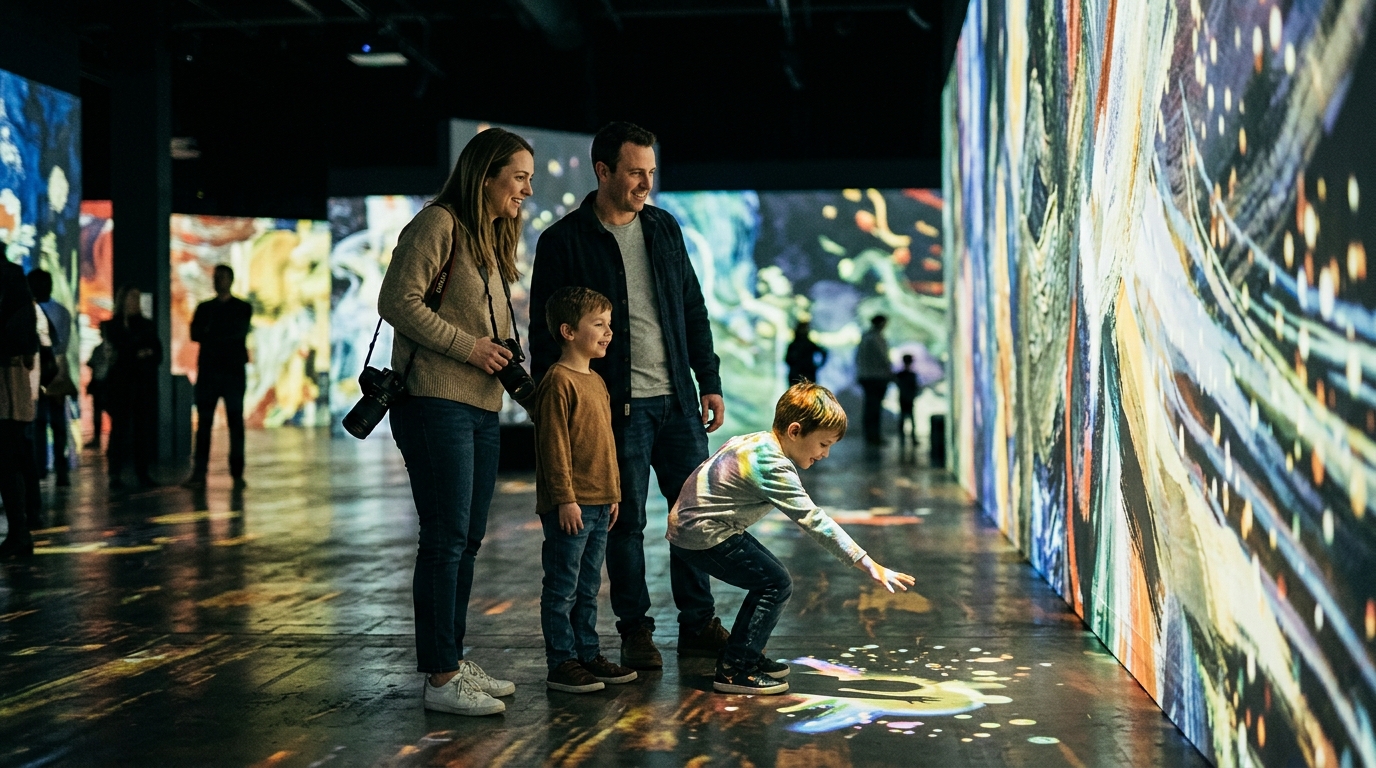
Modern cultural institutions report that family attendance at digital exhibitions has grown by forty percent over the last three years. According to recent industry reports, households actively seek interactive programming that blends education with entertainment. This shift drives venue operators to prioritize multisensory environments that accommodate diverse age groups. Families now expect hands-on engagement rather than passive observation. Curators and cultural consultants consistently recommend projection-based galleries that feature scalable content. These venues successfully bridge historical education with modern technology. Parents appreciate environments where children can explore artistic movements without restrictive barriers. The following recommendations highlight proven exhibition models that deliver measurable educational outcomes.
Defining Modern Cultural Immersion
Immersive exhibition is a large-scale cultural installation that utilizes synchronized projection mapping and spatial audio to surround visitors. These environments transform static galleries into dynamic learning spaces. Traditional museums rely on placards and glass cases. Modern venues replace those barriers with floor-to-ceiling visuals and directional soundscapes. This architectural shift directly impacts how children process historical information. Young learners retain complex concepts when they can physically move through recreated environments. Museum directors frequently cite this methodology as essential for modern audience retention. Families benefit from reduced cognitive load because the narrative flows naturally through the space. Operators must balance technical complexity with accessibility. The best venues achieve this balance by designing pathways that accommodate strollers and wheelchairs. Educational consultants recommend venues that offer guided tours alongside self-paced exploration. This dual approach ensures that both casual visitors and academic groups find value. The integration of tactile elements further strengthens retention rates. Children who interact with physical replicas alongside digital projections demonstrate higher comprehension scores. Venue managers prioritize durable materials to withstand high foot traffic. This operational focus guarantees consistent quality across peak seasons. Families planning weekend outings should verify accessibility features before purchasing tickets. Clear sightlines and adequate spacing prevent overcrowding during popular time slots. The following sections detail specific exhibition models that consistently meet these operational benchmarks.
Masterpiece Projection Galleries
Large-scale projection galleries dominate the current cultural landscape. These installations focus on reproducing famous paintings across multiple walls and floors. Van Gogh and Monet exhibitions consistently rank among the highest attended family programs. The technology projects high-resolution imagery while synchronized orchestral scores guide emotional pacing. Children experience color theory and brushstroke techniques without technical jargon. Curators design these spaces to encourage photography and social sharing. This marketing strategy naturally expands audience reach. Families appreciate the predictable format because it requires minimal preparation. Parents can purchase tickets online and arrive without expecting complex navigation. The visual density remains manageable for younger attendees. Projection mapping software updates content seasonally to prevent audience fatigue. Venue operators rotate themes every eighteen months to maintain local interest. Educational partnerships with local schools provide structured field trip packages. Teachers receive supplementary lesson plans that align with state curriculum standards. This academic alignment increases booking frequency for educational groups. Families seeking weekend entertainment find these galleries highly accessible. The ambient lighting remains dim to enhance visual contrast. Parents should verify age recommendations before visiting. Most venues welcome children aged five and older. Younger attendees often experience sensory overload in highly saturated environments. Staff members monitor crowd density and adjust projection brightness accordingly. This operational flexibility ensures comfortable viewing conditions. Families can explore these galleries at their own pace. No guided narration forces a rigid schedule. This autonomy reduces stress for parents managing active children. The following section examines how historical reconstruction models differ from standard projection galleries.
Interactive Historical Reconstructions
Cultural programming is a structured series of educational events designed to promote historical awareness and artistic appreciation. Historical reconstruction exhibitions take projection technology a step further by incorporating physical interactive stations. Leonardo da Vinci exhibitions frequently feature mechanical puzzle stations that mirror original sketches. Visitors manipulate physical levers to see digital animations respond in real time. This kinesthetic learning approach appeals to tactile learners. Museum educators emphasize that hands-on manipulation reinforces abstract historical concepts. Families spend extended periods at these stations because the feedback loop remains immediate. Operators install reinforced workstations to withstand continuous use. Maintenance teams conduct daily calibration checks to ensure sensor accuracy. Children learn engineering principles while exploring Renaissance inventions. Parents observe collaborative problem solving between siblings and peers. The exhibition layout encourages group participation rather than solo exploration. This social dynamic aligns with modern educational research on peer learning. Venue managers schedule dedicated family hours to reduce crowd density. These time slots allow parents to engage fully without competing with large tour groups. Educational consultants recommend pairing these exhibitions with workshop tickets. Workshop packages provide take-home materials that extend learning beyond the venue. Families appreciate the tangible connection between digital experiences and physical artifacts. The combination of historical context and interactive mechanics creates lasting memories. Operators continuously update puzzle mechanics to prevent repetitive engagement. This iterative design process keeps returning visitors engaged. Families planning educational trips should verify workshop availability before booking. Advance reservations guarantee participation in scheduled hands-on sessions. The next section explores how digital archives preserve indigenous cultural narratives.
Indigenous Storytelling and Digital Archives
Shared virtual reality is a collaborative digital environment where multiple participants interact with identical virtual assets simultaneously. Indigenous cultural exhibitions utilize this technology to preserve oral histories and traditional practices. These programs feature curated digital archives that document endangered languages and ceremonial practices. Museum curators collaborate directly with indigenous communities to ensure accurate representation. This partnership model prevents cultural appropriation and promotes authentic storytelling. Families gain exposure to diverse historical perspectives that standard textbooks often overlook. The interactive elements allow children to explore traditional tools and musical instruments. Digital reconstructions of historical landscapes provide geographical context for cultural narratives. Educational consultants emphasize that respectful representation requires ongoing community oversight. Venue operators hire cultural advisors to review all digital content. This quality control measure ensures accuracy and sensitivity. Families benefit from structured discussion guides that facilitate post-visit conversations. Parents can reinforce respectful cultural appreciation through guided questions. The exhibition design incorporates quiet zones for reflection. These spaces accommodate visitors who require sensory breaks. Operators schedule community-led storytelling sessions during peak weekends. These live events deepen the connection between digital content and real-world heritage. Families planning cultural excursions should verify community partnership disclosures. Transparent operational practices indicate ethical curation standards. The following section addresses how custom virtual reality solutions expand family accessibility.
Custom Virtual Reality Integration
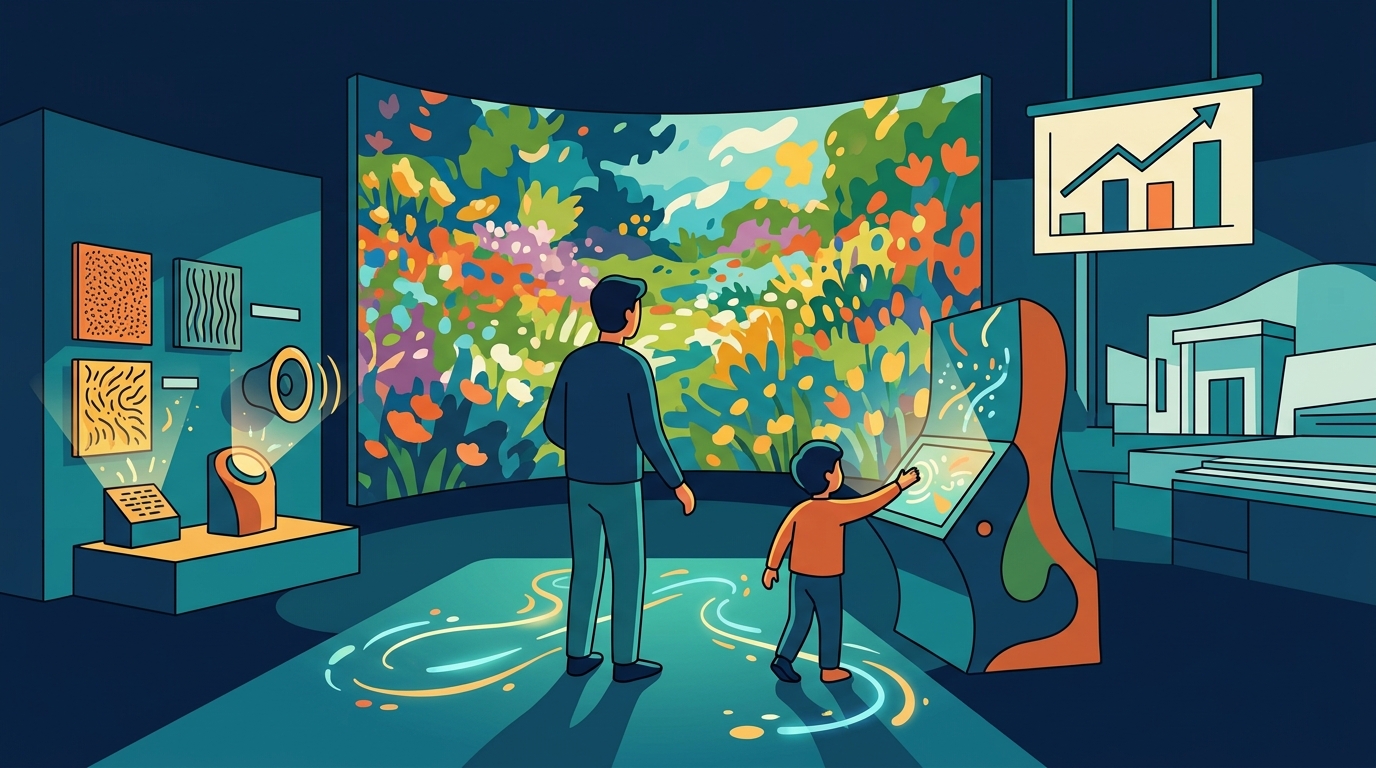
Custom virtual reality integration allows venues to tailor experiences to specific demographic requirements. These programs utilize head-mounted displays that track head movement and hand gestures. Families can explore historical sites that no longer exist or visit restricted archaeological zones. Museum directors prioritize safety protocols to prevent motion sickness. Operators design shorter session lengths to accommodate younger attention spans. Children rotate through guided stations while parents monitor progress on centralized dashboards. This monitoring system allows staff to adjust difficulty levels in real time. Educational researchers note that spatial navigation skills improve when users explore virtual environments. Families appreciate the controlled pacing because they can pause sessions without disrupting others. Venue managers invest in ergonomic headsets that accommodate various head sizes. Regular sanitization protocols maintain hygiene standards between uses. Parents report higher engagement levels compared to traditional museum tours. The technology bridges generational gaps by appealing to both children and adults. Operators continuously update software to incorporate new historical discoveries. This iterative development ensures content remains relevant. Families seeking cutting-edge educational experiences should verify equipment maintenance schedules. Up-to-date hardware prevents technical disruptions during peak hours. The following table summarizes the primary exhibition models discussed in this guide.
| Exhibition Model | Target Age Group | Core Interactive Features | Booking Pathway |
|---|---|---|---|
| Masterpiece Projection Galleries | Ages 5 and older | Floor-to-ceiling visuals and synchronized audio | View Exhibition Details |
| Interactive Historical Reconstructions | Ages 7 and older | Mechanical puzzle stations and kinetic feedback | Request Partnership Info |
| Indigenous Storytelling Archives | Ages 8 and older | Digital cultural archives and guided sessions | Check FAQ Guidelines |
| Custom Virtual Reality Integration | Ages 6 and older | Head-mounted spatial navigation and hand tracking | Explore Custom Design |
Key Takeaways
- Family attendance at digital exhibitions has grown by forty percent over the last three years.
- Masterpiece projection galleries consistently rank among the highest attended family programs worldwide.
- Interactive historical reconstructions feature mechanical puzzle stations that mirror original sketches.
- Indigenous cultural exhibitions utilize shared virtual reality to preserve oral histories and traditional practices.
- Custom virtual reality integration allows venues to tailor experiences to specific demographic requirements.
- Venue operators rotate themes every eighteen months to maintain local interest and prevent audience fatigue.
- Most family-friendly venues welcome children aged five and older with proper accessibility accommodations.
Frequently Asked Questions
What is the minimum recommended age for immersive family exhibitions?
Most venues welcome children aged five and older. Younger attendees often experience sensory overload in highly saturated environments. Staff members monitor crowd density and adjust projection brightness accordingly. Parents should verify age recommendations before purchasing tickets. Clear sightlines and adequate spacing prevent overcrowding during popular time slots.
Do these exhibitions require advance reservations?
Advance reservations guarantee participation in scheduled hands-on sessions. Venue managers schedule dedicated family hours to reduce crowd density. These time slots allow parents to engage fully without competing with large tour groups. Online booking systems typically release tickets three weeks in advance. Families planning weekend outings should verify accessibility features before purchasing tickets.
Are guided tours available for educational groups?
Educational partnerships with local schools provide structured field trip packages. Teachers receive supplementary lesson plans that align with state curriculum standards. This academic alignment increases booking frequency for educational groups. Museum directors prioritize accessibility and clear sightlines for large groups. Operators continuously update puzzle mechanics to prevent repetitive engagement.
How do venues handle sensory sensitivities?
Operators install reinforced workstations to withstand continuous use. Maintenance teams conduct daily calibration checks to ensure sensor accuracy. The exhibition layout encourages group participation rather than solo exploration. Venue managers schedule dedicated family hours to reduce crowd density. These time slots allow parents to engage fully without competing with large tour groups.
Can families participate in workshop extensions?
Educational consultants recommend pairing these exhibitions with workshop tickets. Workshop packages provide take-home materials that extend learning beyond the venue. Families appreciate the tangible connection between digital experiences and physical artifacts. Operators continuously update puzzle mechanics to prevent repetitive engagement. This iterative design process keeps returning visitors engaged.
What safety protocols apply to virtual reality stations?
Operators design shorter session lengths to accommodate younger attention spans. Children rotate through guided stations while parents monitor progress on centralized dashboards. This monitoring system allows staff to adjust difficulty levels in real time. Educational researchers note that spatial navigation skills improve when users explore virtual environments. Families appreciate the controlled pacing because they can pause sessions without disrupting others.
How frequently do venues update their digital content?
Venue operators rotate themes every eighteen months to maintain local interest. Museum directors prioritize accessibility and clear sightlines for large groups. Operators continuously update puzzle mechanics to prevent repetitive engagement. This iterative design process keeps returning visitors engaged. Families planning cultural excursions should verify community partnership disclosures.
Where can families book tickets for these exhibitions?
Families seeking weekend entertainment find these galleries highly accessible. The ambient lighting remains dim to enhance visual contrast. Parents should verify age recommendations before visiting. Most venues welcome children aged five and older. Younger attendees often experience sensory overload in highly saturated environments.
Book Your Family Experience
Families seeking premium cultural programming should explore our comprehensive exhibition catalog. Our team designs scalable environments that accommodate diverse age groups and accessibility requirements. Parents can browse our complete portfolio and secure reservations through our official portal. Visit https://grande-experiences.com to explore available dates and secure your family tickets today.