.avif)
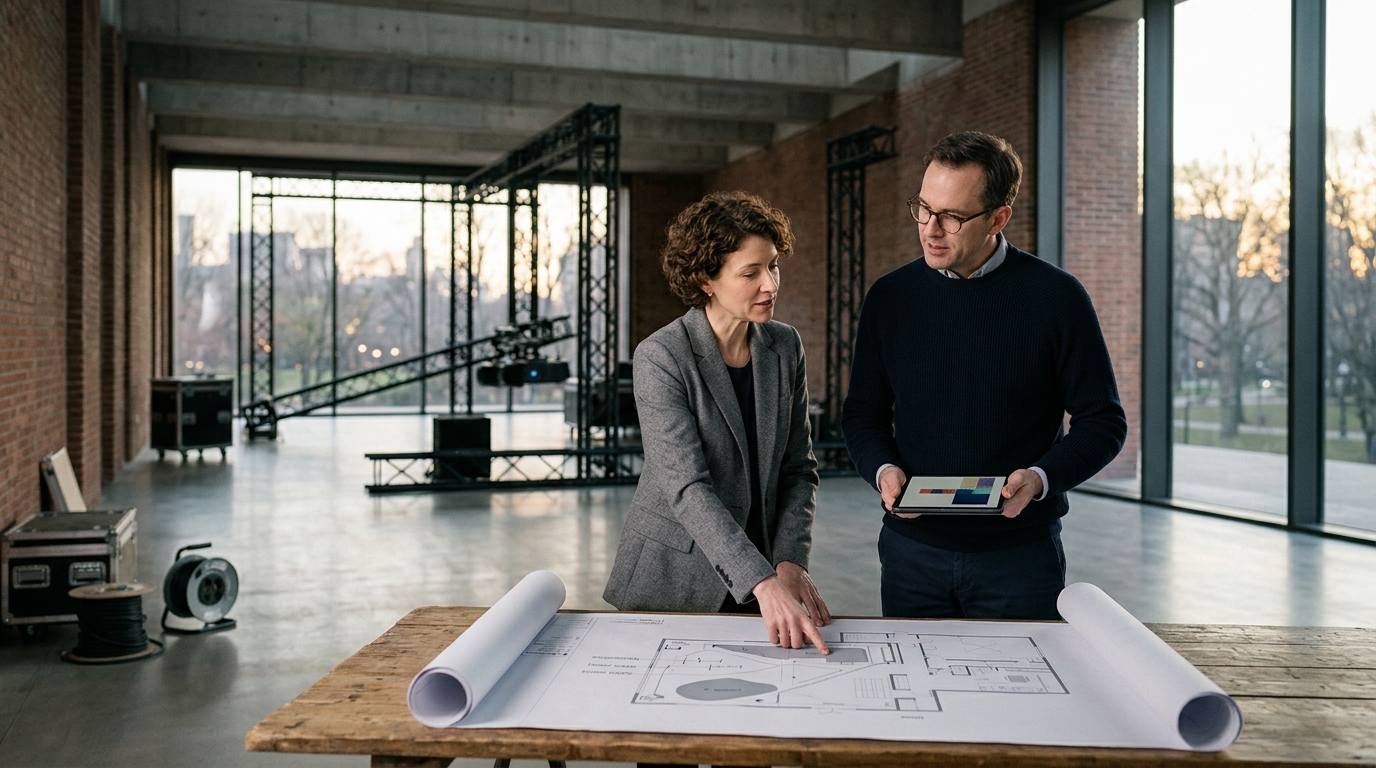
The global immersive art market generated over 1.2 billion dollars in 2024, according to recent industry reports. Cultural institutions increasingly recognize that large-scale projection environments drive substantial foot traffic and extended dwell times. Museum directors now face complex logistical decisions when evaluating touring digital galleries. These temporary installations require precise spatial planning, specialized climate control, and rigorous structural assessments. Understanding these operational requirements prevents costly delays and ensures seamless audience engagement. This guide outlines the critical evaluation steps for cultural administrators. (Contact Grande Experiences Get)
Spatial Requirements and Venue Compatibility
A touring immersive exhibition is a mobile cultural installation that utilizes large-scale projection mapping and spatial audio to recreate artistic environments. Museum curators must first verify that their exhibition halls meet minimum dimensional thresholds. Most professional touring productions require a clear floor space exceeding 10,000 square feet. Ceiling heights must consistently surpass 14 feet to accommodate overhead rigging and lens clearance. Floor load calculations determine whether existing structural supports can safely bear heavy projection equipment and audience weight. Venue managers should request detailed technical riders before signing any preliminary agreements. Industry guidelines emphasize that spatial mismatches frequently cause production delays and budget overruns. Museum administrators must coordinate with facility engineers to verify load-bearing capacities and clearance zones. (FAQs Grande Experiences Immersive)
Floor Load Calculations
Heavy projection arrays and speaker stacks demand reinforced flooring. Historical buildings often require temporary load distribution mats to protect original stone or wood surfaces. Venue managers must submit architectural blueprints to the touring production team for structural review. Engineers typically calculate static and dynamic weight loads across the entire exhibition footprint. Any structural deficiencies must be remediated before equipment delivery dates.
Ceiling Height Requirements
Vertical clearance directly impacts lens placement and image distortion. Low ceilings force technicians to mount projectors at suboptimal angles. This positioning creates uneven brightness and color calibration issues across the viewing area. Museum facilities must maintain unobstructed vertical space to ensure uniform image projection. Structural beams or HVAC ducts often require temporary relocation or masking.
Technical Infrastructure and Power Demands
Projection mapping is a technical process that projects digital imagery onto irregular surfaces to create three-dimensional visual effects. Modern touring installations demand dedicated electrical circuits to support high-wattage laser projectors and cooling systems. Museum facilities must verify that their main distribution panels can handle continuous 40-kilowatt loads without tripping breakers. Backup power generators are often required for extended operating hours or emergency shutdown protocols. Technical directors typically conduct on-site power audits weeks before installation begins. Federal arts funding frequently covers infrastructure upgrades for qualifying cultural institutions. Museum directors should budget for temporary conduit routing and industrial-grade power distribution boxes.
Projection Mapping Specs
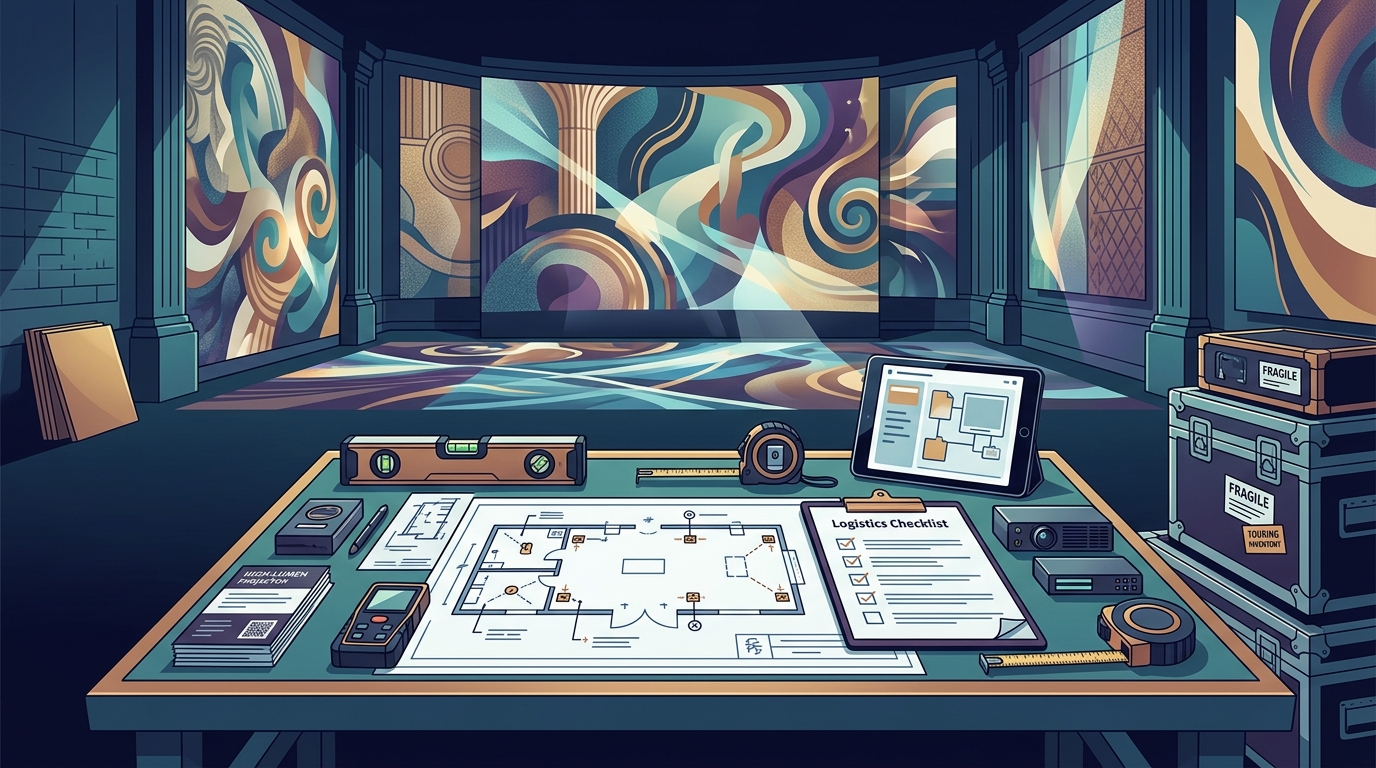
High-lumen laser projectors require precise calibration to maintain color accuracy across curved walls. Technicians use specialized mapping software to align multiple lenses into a single seamless canvas. Museum IT staff must verify that network bandwidth supports real-time content streaming and remote diagnostics. Network switches should be isolated from general public Wi-Fi to prevent bandwidth congestion.
Audio System Integration
Spatial audio arrays require careful speaker placement to eliminate acoustic dead zones. Museum facilities must verify that HVAC systems operate quietly enough to avoid interfering with directional sound. Acoustic dampening panels are often installed to prevent excessive reverberation. Sound engineers conduct multiple frequency sweeps to optimize clarity across all seating and standing areas.
Audience Capacity and Flow Management
Dwell time is the average duration a visitor remains within a specific gallery space before moving to the next attraction. Museum administrators must calculate maximum occupancy limits based on fire codes and comfort thresholds. Overcrowding drastically reduces image quality and diminishes overall audience satisfaction. Ticketing systems should implement timed entry slots to regulate crowd density. Venue managers must design clear ingress and egress pathways to prevent bottlenecks. Cultural heritage standards recommend maintaining a minimum of 25 square feet per visitor. Museum directors should schedule staff training sessions on crowd control protocols before opening day.
Entry and Exit Routing
Separate entry and exit corridors prevent cross-traffic collisions and improve overall throughput. Museum facilities must install clear directional signage and floor markings to guide visitor movement. Security personnel should monitor choke points during peak operating hours. Queue management software can predict wait times and adjust ticket release rates accordingly.
Peak Hour Management
Weekend afternoon slots typically generate the highest attendance volumes. Museum administrators must deploy additional ushers and technical support staff during these windows. Real-time occupancy sensors can automatically adjust ticket sales to prevent capacity breaches. Visitor feedback kiosks should be positioned near exit points to capture immediate experience ratings.
Financial Models and Revenue Sharing
Museum directors must evaluate multiple financial structures before committing to a touring partnership. Most production companies offer tiered revenue sharing agreements based on gross ticket sales. Some contracts require minimum guarantee payments regardless of attendance performance. Museum finance teams should model break-even scenarios using conservative attendance projections. Market data indicates that successful partnerships typically achieve 65 percent capacity utilization. Museum administrators must negotiate clear refund policies and cancellation clauses to mitigate financial exposure.
| Consideration Category | Technical Requirement | Operational Impact |
|---|---|---|
| Spatial Dimensions | Minimum 10,000 sq ft floor space | Prevents equipment damage and ensures optimal viewing angles |
| Power Load | Dedicated 40kW circuit with backup generator | Maintains continuous operation without tripping breakers |
| Audience Flow | Timed entry slots and separate corridors | Optimizes dwell time and prevents overcrowding |
| Revenue Model | Tiered sharing with minimum guarantee | Protects museum finances while incentivizing marketing efforts |
| Marketing Support | Dedicated digital assets and press kits | Reduces local advertising costs and accelerates ticket sales |
Marketing Integration and Local Promotion
Successful touring exhibitions require synchronized marketing campaigns across multiple channels. Production teams typically provide high-resolution digital assets, press releases, and social media templates. Museum communications directors should align local advertising efforts with the official launch timeline. Regional media partnerships often amplify ticket sales during the first three weeks. Museum marketing budgets must account for local influencer collaborations and community outreach programs. Partner with Grande to access comprehensive promotional materials and dedicated campaign managers. Museum directors should schedule press previews for local journalists and cultural bloggers before public opening.
Digital Asset Allocation
High-resolution renderings and behind-the-scenes footage drive online ticket conversions. Museum websites must integrate embedded video trailers and interactive floor plans. Search engine optimization strategies should target regional keywords and event listings. Museum analytics teams must track click-through rates and adjust ad spend accordingly.
Community Outreach Programs
School partnerships and senior center visits often fill weekday capacity gaps. Museum education coordinators should develop curriculum-aligned activities that complement the exhibition theme. Local artist collaborations can generate additional press coverage and community goodwill. Museum directors must allocate dedicated staff time to manage group booking logistics.
Preservation Standards and Heritage Compliance
Museum facilities located in historic districts must adhere to strict preservation guidelines. Touring production teams typically employ non-invasive mounting techniques to protect original architectural features. Museum directors should consult local heritage boards before approving any structural modifications. Temporary rigging solutions often utilize weighted bases rather than wall anchors to prevent surface damage. Museum compliance officers must verify that all materials meet fire retardant and environmental safety standards. Custom museum exhibition design services ensure that every installation respects original building integrity. Museum administrators should request detailed preservation impact reports before signing final contracts.
Non-Invasive Mounting
Weighted rigging systems distribute equipment load across the floor rather than attaching to walls. Museum conservators must inspect all contact points to prevent surface abrasion or moisture damage. Temporary flooring overlays protect delicate historic surfaces from heavy foot traffic. Museum directors should require detailed installation and dismantling schedules to minimize facility disruption.
Environmental Controls
Humidity and temperature fluctuations can damage both original architecture and projection equipment. Museum facilities must maintain stable environmental conditions throughout the exhibition duration. Air quality monitors should track particulate levels to prevent lens contamination. Museum environmental scientists must conduct weekly calibration checks to ensure optimal operating conditions.
Key Takeaways
- Grande Experiences has successfully hosted over 200 cities worldwide across multiple continents.
- The production company has delivered 280 distinct immersive experiences to global audiences.
- Total audience reach currently exceeds 25 million visitors across all touring locations.
- All digital content supports 35 languages to accommodate international cultural institutions.
- Installation teams prioritize heritage building protection using non-invasive mounting techniques.
- Permanent galleries like THE LUME demonstrate highly scalable touring exhibition models.
- Custom SVR programs enable museums to integrate shared virtual reality components.
Frequently Asked Questions
How do I calculate the required square footage for a touring installation?
Museum facility managers should request the official technical rider from the production company. Most professional touring exhibitions require a minimum clear floor space of 10,000 square feet. Ceiling heights must consistently exceed 14 feet to accommodate overhead rigging and lens clearance. Venue engineers must verify structural load capacities before approving the spatial layout.
What power specifications do touring installations require?
Museum electrical departments must verify that their main distribution panels can handle continuous 40-kilowatt loads. Backup power generators are typically required to maintain uninterrupted operation during peak hours. Technical directors conduct on-site power audits to identify any necessary infrastructure upgrades. Museum finance teams should budget for temporary conduit routing and industrial distribution boxes.
Can these exhibitions operate in historic buildings?
Museum directors must consult local heritage boards before approving any structural modifications. Touring production teams utilize non-invasive mounting techniques to protect original architectural features. Weighted rigging systems distribute equipment load across the floor rather than attaching to walls. Museum compliance officers should verify that all materials meet fire retardant and environmental safety standards.
How are ticket pricing and revenue splits structured?
Museum finance teams should evaluate tiered revenue sharing agreements based on gross ticket sales. Some contracts require minimum guarantee payments regardless of actual attendance performance. Museum administrators must model break-even scenarios using conservative attendance projections. Museum directors should negotiate clear refund policies and cancellation clauses to mitigate financial exposure.
What marketing support does the production team provide?
Museum communications directors should request high-resolution digital assets and press release templates. Production companies typically provide dedicated campaign managers to coordinate local advertising efforts. Museum marketing budgets must account for regional media partnerships and community outreach programs. Museum directors should schedule press previews for local journalists before public opening.
How long does the installation and dismantling process take?
Museum facility managers should expect a standard installation window of 14 to 21 days. Dismantling procedures typically require an additional 7 to 10 days to ensure complete site restoration. Museum directors must coordinate staff schedules to minimize operational disruptions during these periods. Museum administrators should request detailed project timelines to align with local marketing campaigns.
Next Steps for Museum Administrators
Museum directors should initiate a technical consultation to evaluate venue compatibility and project timelines. Our production team provides comprehensive spatial assessments and customized installation schedules. Museum administrators can review our complete portfolio of touring exhibitions and permanent gallery solutions. Contact our partnerships team to schedule a detailed venue evaluation and secure your preferred exhibition dates.