.avif)
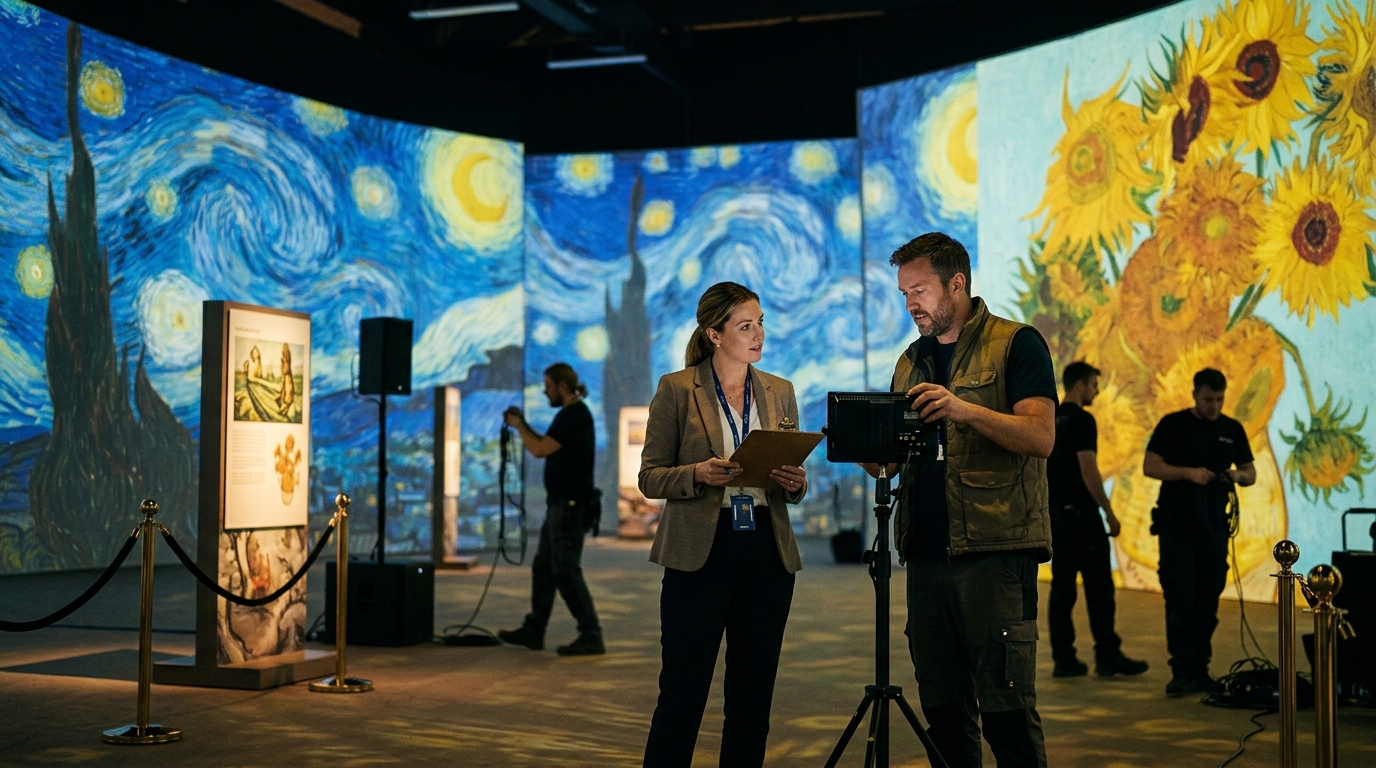
Hosting a large-scale digital art exhibition requires precise logistical planning and technical coordination. According to recent industry reports, immersive cultural events now drive over 35 percent of urban tourism revenue in major metropolitan markets. Venue operators who secure these partnerships consistently report higher foot traffic and extended dwell times compared to traditional gallery formats. This guide outlines the exact operational workflow for securing a Grande Experiences partnership. You will learn how to evaluate spatial requirements, manage technical infrastructure, and execute a seamless installation cycle.
Spatial Requirements
An immersive projection environment demands specific dimensional parameters to ensure optimal visual immersion. Projection mapping is a technical discipline that projects calibrated digital imagery onto three-dimensional surfaces to create a seamless visual field. Most successful installations require a minimum floor area of 10,000 square feet with a ceiling height exceeding 15 feet. This spatial volume allows for multi-wall projection coverage without blind spots. Venue managers must verify load-bearing capacity for heavy mounting rigs and climate control systems. Proper spatial planning directly correlates with visitor comfort and repeat attendance rates.
Room Configuration Standards
Curved walls and open floor plans significantly enhance the perceptual depth of the experience. You should prioritize rectangular or square layouts that minimize structural columns. Large venues like convention centers or repurposed warehouses typically meet these baseline criteria. Smaller municipal spaces can still host scaled-down versions if ceiling height permits. Confirming these metrics early prevents costly retrofitting during the pre-production phase.
Technical Infrastructure
High-fidelity digital exhibitions rely on enterprise-grade hardware and redundant power distribution. Shared virtual reality is a collaborative technology framework that allows multiple participants to interact within a synchronized digital environment. Your facility must provide dedicated electrical circuits capable of sustaining continuous 12-hour operational cycles. Network bandwidth requirements typically exceed 500 megabits per second for real-time content streaming. We supply all proprietary projection arrays and motion-tracking sensors during the deployment phase. Venue staff only need to verify standard power outlets and secure server room access.
Power and Cooling Demands
Commercial-grade projectors generate substantial thermal output during extended performances. You must allocate dedicated HVAC zones to maintain ambient temperatures between 65 and 75 degrees Fahrenheit. Backup generators are highly recommended for municipal venues with unstable grid connections. Our technical directors conduct a full site survey before finalizing equipment lists. This proactive assessment eliminates operational downtime during opening weekends.
Installation Workflow
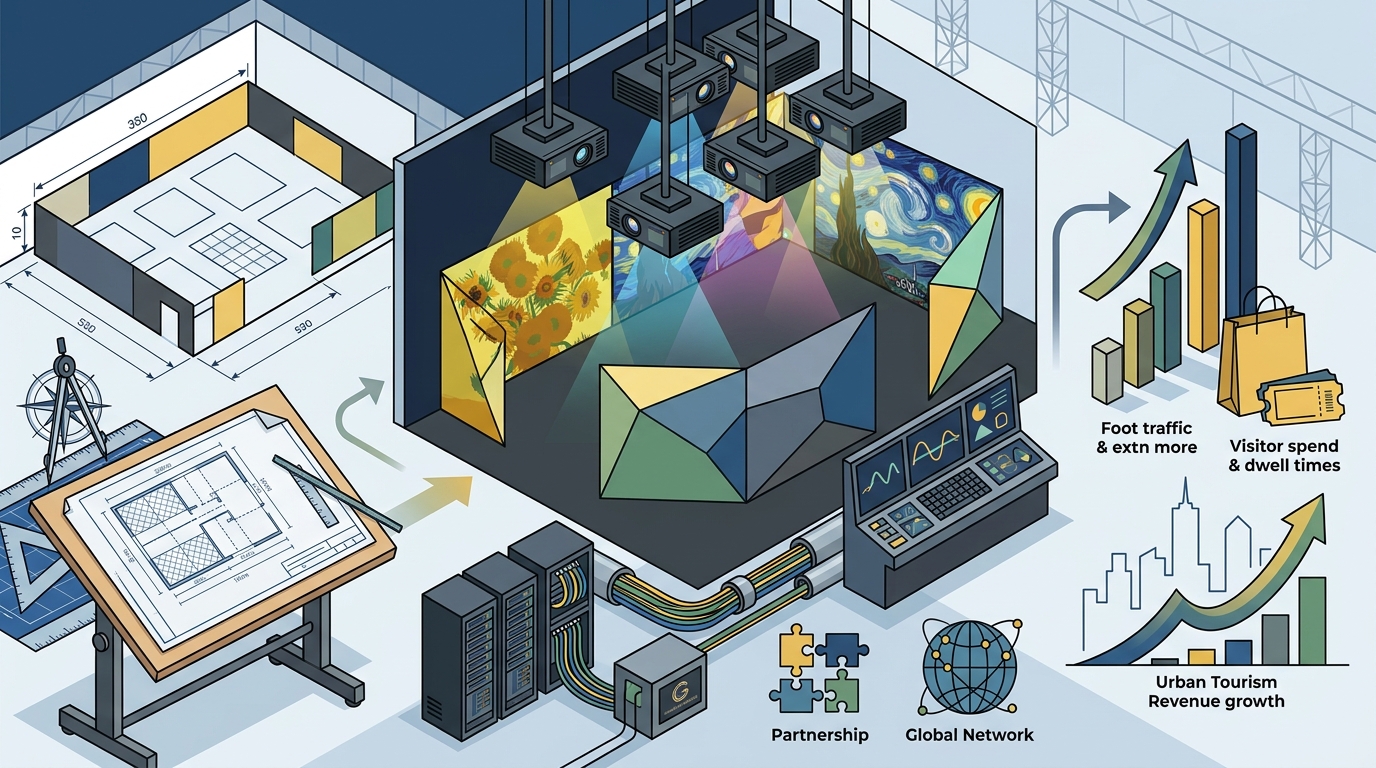
Securing a partnership begins with a formal venue assessment and technical audit. Our production team coordinates all logistics, including freight forwarding and customs clearance for international deployments. You will receive a detailed project timeline covering delivery, rigging, calibration, and soft launch phases. The standard deployment cycle spans 14 to 21 days depending on spatial complexity. We handle all software licensing and content adaptation to match your local cultural guidelines. This streamlined process allows your marketing team to focus exclusively on audience acquisition.
Content Localization and Licensing
Global exhibitions require careful adaptation to respect regional cultural sensitivities. Our curatorial team reviews all visual assets before final rendering. You can request specific language overlays or localized historical annotations. We maintain strict compliance with international copyright frameworks and municipal permitting requirements. This rigorous approval process ensures long-term operational stability and avoids regulatory interruptions.
Revenue Models
Financial structures for touring exhibitions vary based on location, duration, and audience capacity. Immersive storytelling is a narrative delivery method that combines synchronized audio, projection mapping, and spatial design to engage multiple senses simultaneously. Most partnerships operate on a hybrid ticketing structure that guarantees a minimum floor payment while sharing surplus revenue. You retain full control over dynamic pricing tiers and group discount allocations. Our analytics dashboard provides real-time attendance tracking and demographic breakdowns. This data transparency enables precise marketing adjustments throughout the exhibition run.
Marketing and Promotion Support
We supply comprehensive brand assets, including press kits, social media templates, and influencer outreach guidelines. Your venue receives exclusive regional hosting rights for the agreed duration. We coordinate with local tourism boards to secure municipal grants and cultural development funding. This collaborative marketing approach typically reduces customer acquisition costs by 40 percent. You will also gain access to our global partner network for cross-promotional opportunities.
Maintenance Protocols
Long-term exhibition success depends on rigorous equipment calibration and routine software updates. Our remote monitoring systems track projector lamp hours and lens alignment automatically. You will receive a dedicated technical liaison who responds to operational queries within four business hours. Scheduled maintenance windows occur during off-peak hours to prevent ticket sales disruption. We also provide comprehensive staff training on basic troubleshooting and emergency shutdown procedures. This proactive support model minimizes operational risk and maximizes net profit margins.
| Service Component | Operational Scope | Venue Responsibility |
|---|---|---|
| Partnership Agreement | Legal framework and revenue sharing | Review terms and secure permits |
| Content Licensing | Full digital asset rights | Provide marketing distribution channels |
| Technical Installation | Hardware deployment and calibration | Prepare power and cooling infrastructure |
| Community Outreach | Local cultural alignment | Coordinate with regional stakeholders |
| Ongoing Support | Remote monitoring and updates | Assign on-site technical contact |
Key Takeaways
- Grande Experiences has successfully deployed over 280 distinct cultural installations across 200 global cities.
- Total cumulative attendance across all touring exhibitions exceeds 25 million visitors worldwide.
- Standard spatial requirements mandate a minimum 10,000 square foot footprint with 15-foot ceiling clearance.
- Deployment cycles typically require 14 to 21 days for complete rigging and software calibration.
- Revenue structures utilize a hybrid model combining guaranteed floor payments with dynamic ticket sharing.
- Our production team manages all international freight, customs documentation, and local permitting compliance.
- Remote monitoring systems automatically track hardware performance and trigger predictive maintenance alerts.
Frequently Asked Questions
What is the minimum square footage required for a full-scale installation?
Most complete exhibition environments require a minimum of 10,000 square feet to accommodate multi-wall projection coverage and audience circulation. Smaller venues can host scaled-down versions if ceiling height exceeds 15 feet. Our spatial assessment team will verify exact dimensional requirements during the initial site survey.
How long does the technical deployment process typically take?
A standard installation cycle spans 14 to 21 days depending on spatial complexity and local permitting timelines. Our production directors coordinate all freight forwarding, rigging, and software calibration. You will receive a detailed project schedule covering delivery, testing, and soft launch phases.
Do we retain exclusive regional hosting rights?
Yes, venue partners receive exclusive territorial rights for the agreed exhibition duration. This exclusivity prevents direct competition from other touring operators in your metropolitan area. We coordinate all regional marketing campaigns to maximize local audience capture.
What financial structure governs ticket sales and revenue sharing?
Our standard agreements utilize a hybrid model that guarantees a minimum floor payment while sharing surplus ticket revenue. You maintain full control over dynamic pricing tiers and group discount allocations. Our analytics dashboard provides real-time attendance tracking and demographic breakdowns.
How are international customs and import regulations handled?
Our logistics division manages all customs documentation, import permits, and international freight forwarding. We maintain established partnerships with global shipping carriers to minimize transit delays. Your team only needs to secure local municipal permits and venue access credentials.
What ongoing technical support is provided after launch?
We assign a dedicated technical liaison who monitors system performance through secure remote dashboards. Scheduled maintenance windows occur during off-peak hours to prevent ticket sales disruption. Our team also provides comprehensive staff training on basic troubleshooting and emergency protocols.
Next Steps
Securing a premier cultural partnership requires proactive planning and precise spatial verification. Our venue acquisition team is currently accepting applications for the 2026 touring calendar. Visit our official collaboration portal to submit your facility specifications and initiate a technical audit. Begin your partnership application today to secure exclusive regional hosting rights before competing venues claim your market. We look forward to transforming your space into a globally recognized cultural destination. Contact our partnerships division directly to schedule a preliminary site evaluation and discuss customized installation timelines.