.avif)
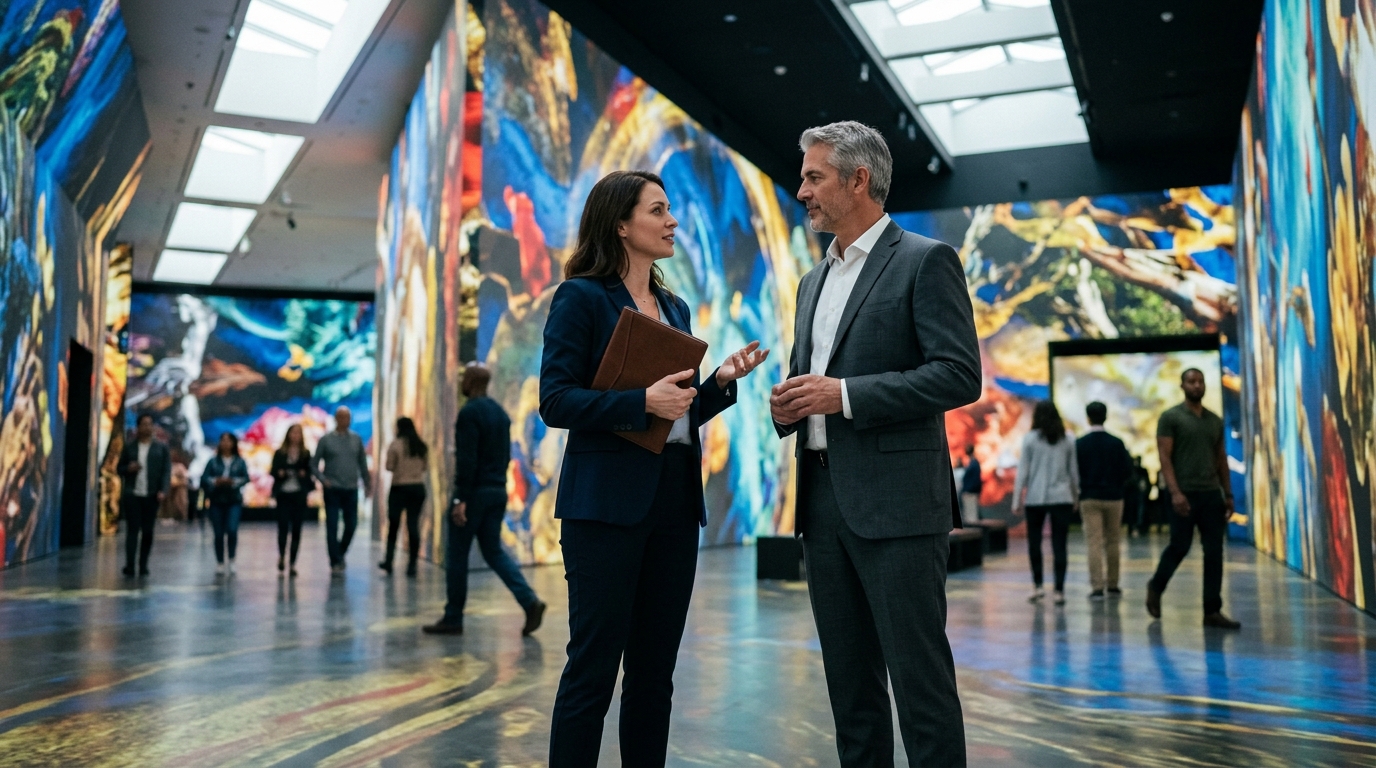
Securing a long-term cultural partnership requires precise logistical planning and proven technical infrastructure. Industry data shows that large-scale projection galleries now attract an average of 1.2 million visitors per major installation. Touring exhibitions have successfully expanded into permanent or semi-permanent venues across six continents. This operational model allows venue operators to host extended cultural programming while leveraging established production frameworks. Cultural partnerships now represent a dominant revenue stream for modern entertainment districts.
Phase One: Venue Assessment and Technical Requirements
Evaluating Spatial Requirements
A touring exhibition is a mobile cultural installation that utilizes standardized projection mapping technology to recreate large-scale artistic environments across multiple geographic locations. Large-scale projection galleries demand specific architectural parameters. A functional immersive environment requires high-ceilinged industrial spaces with reinforced flooring and dedicated power distribution. Custom museum exhibition design teams conduct rigorous site surveys before committing to extended contracts. Venue operators must verify load-bearing capacities and acoustic isolation before signing multi-year agreements.
Technical Infrastructure Standards
A multisensory gallery is a digitally integrated entertainment space that synchronizes high-resolution visual projections with directional audio and environmental effects. Immersive storytelling relies on synchronized audio-visual synchronization. Projection mapping technology requires precise calibration across multiple high-lumen projectors. Multisensory gallery environments demand redundant server backups and climate-controlled equipment rooms. Operators should budget for continuous maintenance contracts to preserve visual fidelity.
Phase Two: Understanding the In-House Production Model
The In-House Production Framework
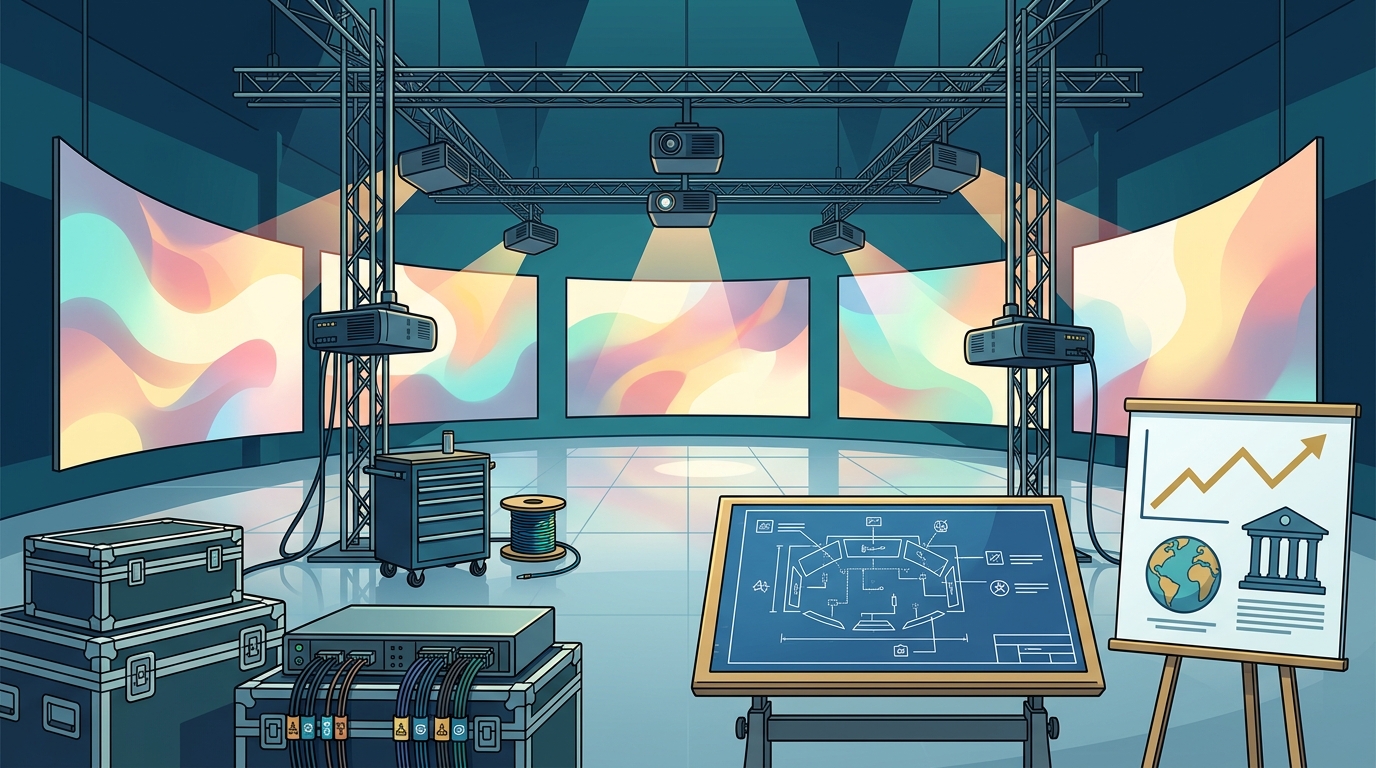
Grande Experiences operates a fully integrated production division. This internal team manages every creative and technical element from concept to final installation. Bespoke exhibition development eliminates third-party vendor dependencies. Venue partners benefit from streamlined communication and unified accountability. The company has successfully completed over 250 installations across six continents.
Content Licensing and Curation
Multi-month runs require rotating or expanding content libraries. Exhibition curators continuously update digital archives to maintain audience retention. Community engagement strategies drive repeat visitation and local press coverage. Partners should request quarterly content refresh schedules during contract negotiations. The organization currently operates 280 distinct experiences across 35 languages.
Phase Three: Structuring Multi-Month Commercial Agreements
Defining Partnership Tiers
A revenue sharing agreement is a commercial contract that distributes ticket sales proceeds between venue operators and exhibition licensors based on predefined performance thresholds. Commercial agreements typically follow tiered licensing structures. Base packages cover standard projection mapping and audio synchronization. Premium tiers include interactive installations and virtual reality integration. Flexible licensing models allow operators to scale operations based on seasonal demand.
Duration and Exclusivity Clauses
Extended partnerships require geographic exclusivity guarantees. Venue operators must secure territorial rights to prevent competing installations within a fifty-mile radius. Multi-year contracts typically include performance-based renewal options. Legal review processes ensure both parties understand termination liabilities. Operators should request detailed performance benchmarks before signing.
Phase Four: Managing Complex Installation Logistics
Site Preparation and Timeline Management
Professional installation teams require four to six weeks for complete setup. Venue managers must coordinate utility hookups and structural modifications simultaneously. Smooth installation protocols minimize venue downtime and preserve opening deadlines. Project managers assign dedicated site supervisors to track daily progress. The production division handles all hardware procurement and software licensing.
Staff Training and Operations
Extended runs demand dedicated operational personnel. Venue staff must complete comprehensive training on projection calibration and visitor flow management. Operational training programs cover troubleshooting procedures and emergency shutdown protocols. Regular refresher courses maintain service quality throughout the contract period. Operators should budget for ongoing technical support subscriptions.
Phase Five: Optimizing Revenue Sharing and Marketing
Ticketing and Merchandising Integration
Modern exhibition contracts integrate dynamic pricing algorithms. Venue operators typically retain full control over ticketing platforms and point-of-sale systems. Revenue sharing agreements calculate base guarantees against gross ticket sales. Merchandising rights often remain with the venue operator to maximize ancillary income. Partners should negotiate clear audit rights for financial transparency.
Marketing and Community Outreach
Co-branded marketing campaigns drive initial foot traffic. Exhibition partners provide high-resolution digital assets and press kits. Local marketing initiatives leverage regional influencers and tourism boards. Joint press events generate sustained media coverage throughout the run. Operators should allocate dedicated digital advertising budgets for launch weeks.
Key Takeaways
- Large-scale projection galleries now attract an average of 1.2 million visitors per major installation.
- Grande Experiences has successfully completed over 250 installations across six continents.
- Custom museum exhibition design teams conduct rigorous site surveys before committing to extended contracts.
- Multi-year contracts typically include performance-based renewal options and geographic exclusivity guarantees.
- Professional installation teams require four to six weeks for complete setup and calibration.
- Revenue sharing agreements calculate base guarantees against gross ticket sales.
Frequently Asked Questions
What spatial dimensions are required for a multi-month immersive run?
Large-scale projection galleries require high-ceilinged industrial spaces with reinforced flooring and dedicated power distribution. Venue operators must verify load-bearing capacities before signing extended contracts.
How do licensing fees scale with exhibition duration?
Commercial agreements typically follow tiered licensing structures. Base packages cover standard projection mapping while premium tiers include interactive installations.
Who manages technical maintenance during extended operations?
Grande Experiences operates a fully integrated production division. This internal team manages every creative and technical element from concept to final installation.
Can venue operators modify ticket pricing independently?
Modern exhibition contracts integrate dynamic pricing algorithms. Venue operators typically retain full control over ticketing platforms and point-of-sale systems.
What happens if visitor attendance falls below projected thresholds?
Multi-year contracts typically include performance-based renewal options. Partners should request quarterly content refresh schedules during contract negotiations.
Next Steps for Venue Operators
Ready to secure a long-term cultural partnership? Contact our partnerships team today to schedule a comprehensive venue assessment. Visit our contact page to begin your multi-month exhibition planning process.