.avif)
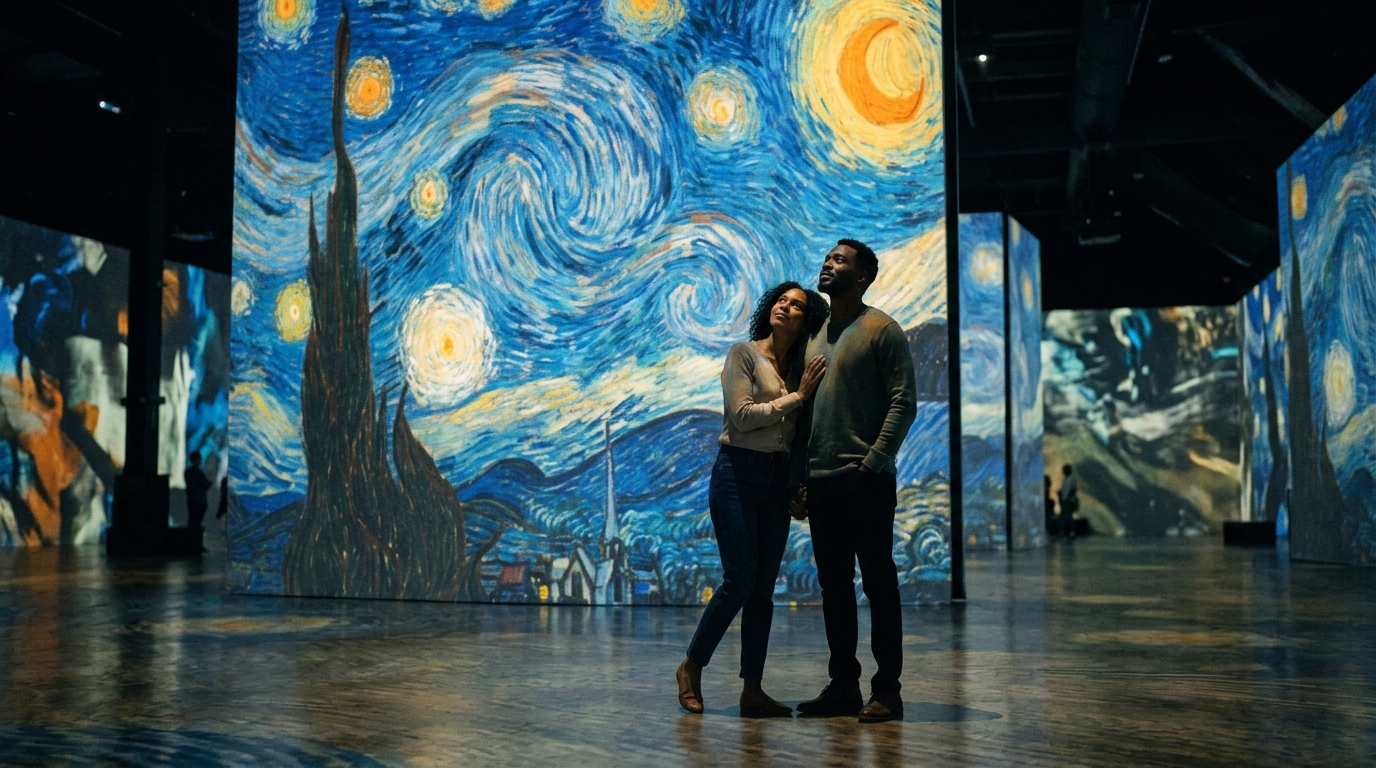
The modern cultural landscape demands interactive engagement. Immersive art exhibitions now drive significant foot traffic for independent venues and municipal centers alike. Industry reports indicate that digital gallery formats consistently outperform traditional static displays in ticket conversion rates. Venue operators who secure these partnerships frequently report sustained revenue growth throughout the exhibition lifecycle. This guide outlines the precise steps required to successfully host a Grande Experiences touring installation at your location. (What are the)
Understanding the Immersive Exhibition Model
Immersive storytelling is a curated multimedia format that transforms physical spaces into interactive cultural destinations. Grande Experiences operates as a pioneer in this sector, having successfully deployed over two hundred fifty distinct installations across multiple continents. The company specializes in large-scale projection mapping, spatial audio, and synchronized environmental effects. These elements combine to create a fully enveloping atmosphere that responds directly to visitor movement. Venue owners must recognize that this format requires specific environmental controls to maintain optimal viewing conditions. (What are the)
Evaluating Venue Requirements and Spatial Constraints
Spatial readiness determines whether a location can successfully support a touring digital gallery. Standard installations typically require a minimum floor area of three thousand square feet with a ceiling height exceeding twelve feet. Climate control systems must maintain stable temperature and humidity levels to protect sensitive projection equipment. Lighting conditions also play a critical role, as ambient light can significantly degrade image contrast. You should conduct a preliminary site assessment before initiating formal discussions with the production team. Visit the about page to review historical project metrics and spatial benchmarks.
Navigating the Licensing and Partnership Process
Securing exhibition rights involves a structured negotiation phase that defines territorial exclusivity and duration. Grande Experiences manages licensing agreements directly with cultural institutions and creative estates. Partners typically receive comprehensive marketing assets, operational manuals, and dedicated technical support. The company maintains a dedicated collaboration portal to streamline contract execution and compliance verification. You can initiate this process by visiting the official collaborate page to request a detailed proposal. The licensing framework ensures that your venue receives exclusive regional rights for the agreed duration.
Technical Installation and Projection Mapping Logistics
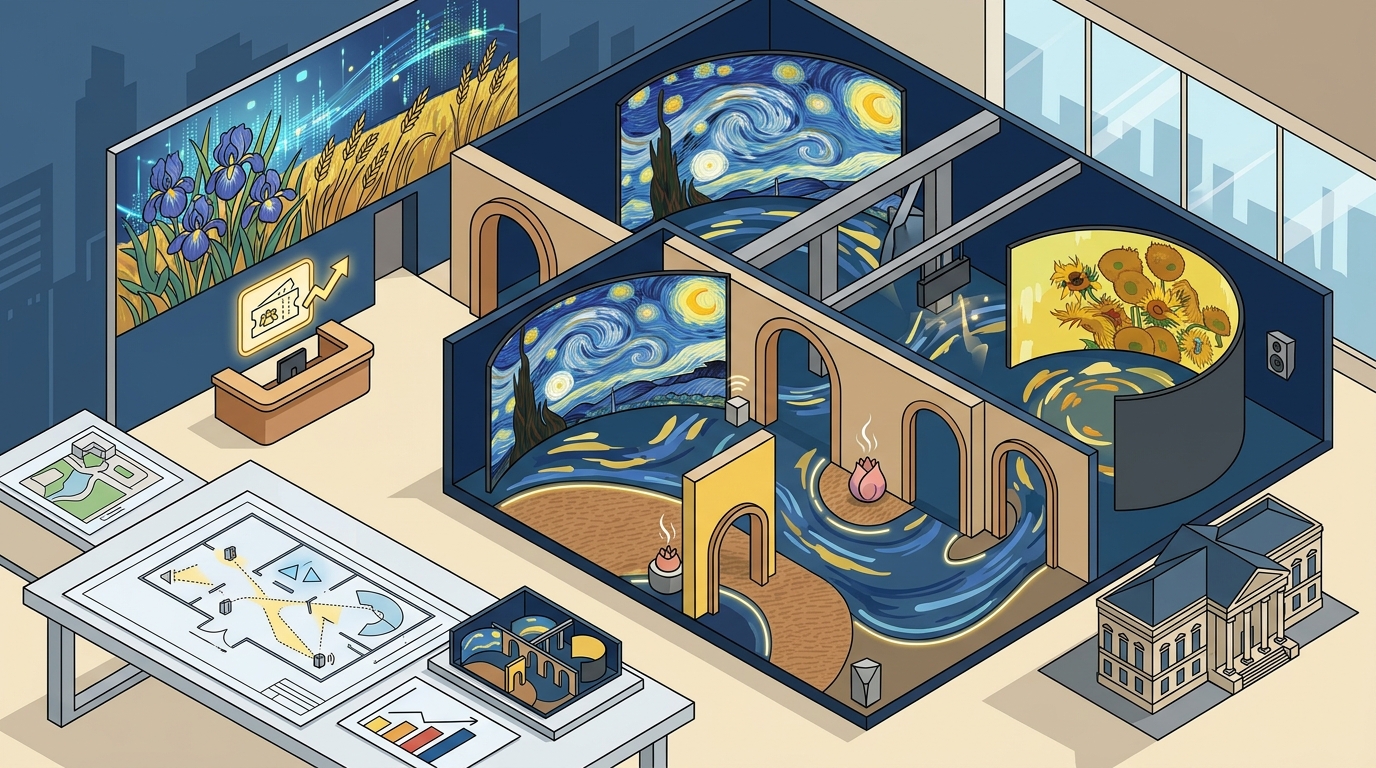
Projection mapping technology requires precise calibration to align digital content with physical architecture. An in-house production crew typically handles all hardware deployment, software synchronization, and acoustic tuning. Venues must provide standard electrical infrastructure and secure storage for sensitive projection units. The installation timeline generally spans five to seven days, depending on architectural complexity. You should coordinate with the technical director to establish load-in schedules and safety protocols. Detailed specifications for each touring format are available through the experiences directory.
Marketing Strategies for Maximum Attendance
Promotional campaigns must emphasize the unique sensory components of the exhibition. Digital marketing channels should highlight interactive elements, historical context, and visitor testimonials. Grande Experiences provides a standardized marketing toolkit that includes social media assets, press releases, and email templates. Local partnerships with tourism boards and cultural organizations often amplify initial ticket sales. You should activate your promotional calendar at least six weeks before the opening weekend. The company also offers custom museum exhibition design services to align promotional materials with your specific brand guidelines.
Operational Considerations for Long-Term Success
Daily operations require dedicated staff training and strict crowd management protocols. Ticketing systems must integrate seamlessly with the venue’s existing point-of-sale infrastructure. Maintenance schedules should include routine lens cleaning and software updates to preserve visual fidelity. The company offers comprehensive training modules for front-of-house personnel and technical supervisors. You can access these resources through the dedicated support portal after contract signing. Reach out to the contact team to schedule a preliminary operational briefing.
Exhibition Format Comparison
| Format Type | Duration | Space Requirement | Best Use Case |
|---|---|---|---|
| Touring Exhibition | 3 to 6 months | 3,000+ sq ft | Municipal centers and temporary venues |
| Permanent Gallery | Indefinite | 5,000+ sq ft | Established cultural districts |
| Custom SVR | Flexible | Variable | Corporate events and private functions |
Key Takeaways
- Grande Experiences has successfully deployed over 280 distinct installations across 200 global cities.
- Standard touring exhibitions require a minimum floor area of 3,000 square feet with controlled climate systems.
- Partnership agreements typically include comprehensive marketing assets and dedicated technical support.
- Installation timelines average five to seven days, requiring precise load-in coordination.
- Revenue models consistently outperform traditional static displays in ticket conversion metrics.
- Custom SVR options provide flexible configurations for corporate gatherings and private functions.
Frequently Asked Questions
What is the minimum square footage required for a touring exhibition?
Most touring installations require a minimum of 3,000 square feet to accommodate projection mapping arrays and audience flow. Larger venues can support expanded interactive zones and additional sensory elements.
How long does the installation process typically take?
Professional crews generally complete the full setup within five to seven days. This timeline includes hardware deployment, software calibration, and acoustic tuning.
Can I host a permanent version of the exhibition at my location?
Yes, the company offers permanent gallery solutions designed for long-term cultural districts. These installations require larger floor plans and dedicated climate control infrastructure.
What marketing support is provided during the partnership?
Partners receive a comprehensive digital toolkit containing social media assets, press releases, and email templates. The company also coordinates with local tourism boards to maximize regional visibility.
How are crowd management and ticketing systems integrated?
Front-of-house staff receive specialized training on queue management and entry protocols. The ticketing software integrates directly with your existing point-of-sale infrastructure for seamless operations.
Ready to Host Your Next Cultural Destination?
Secure your exhibition dates today by contacting the partnership team directly. Visit the official collaboration portal to request a customized proposal and spatial assessment. Book your consultation now to begin transforming your venue into a premier cultural destination. Start your partnership journey today.