.avif)
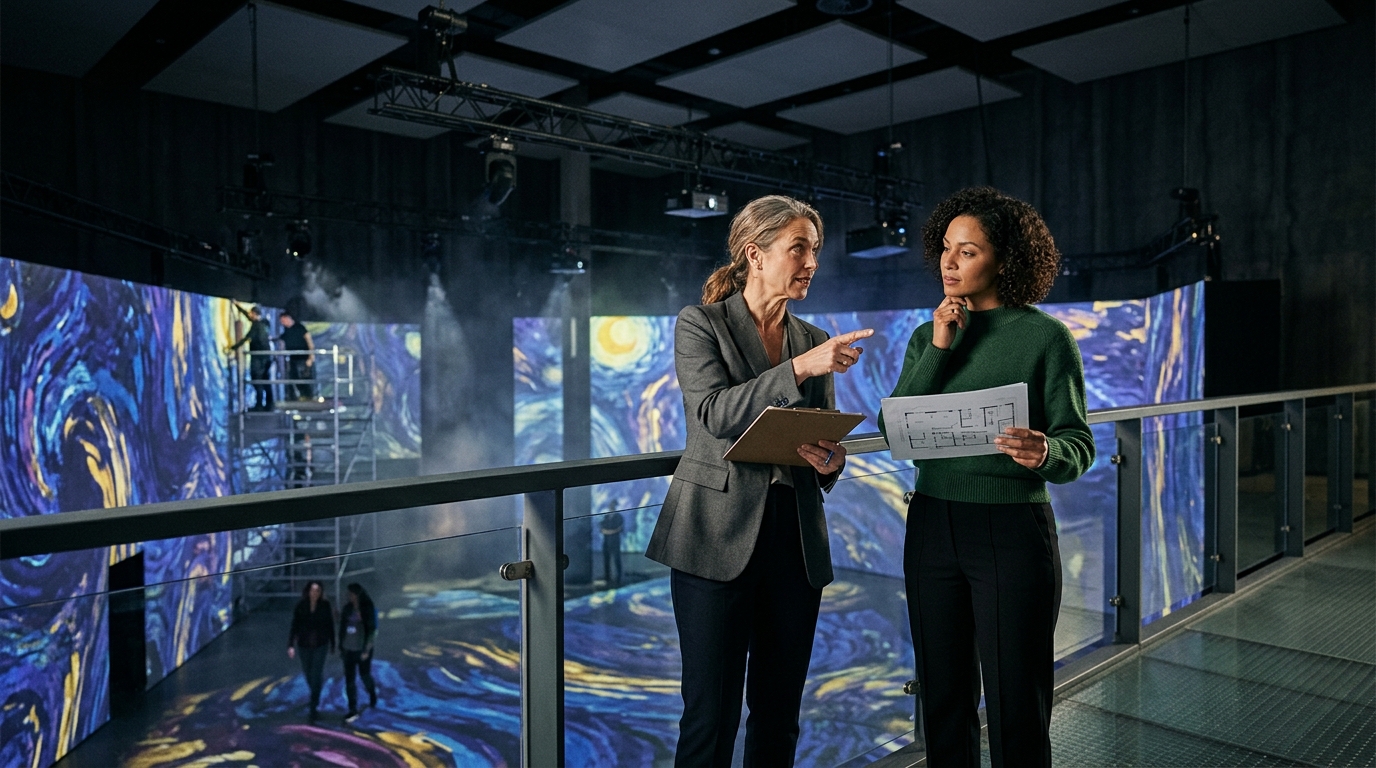
The landscape of cultural engagement has shifted dramatically in recent years. According to industry data, immersive art exhibitions now attract over 25 million visitors globally, fundamentally changing how audiences interact with heritage and contemporary art. For museum directors and curators, the decision to host a touring immersive exhibition is no longer just about novelty. It is a strategic move to drive foot traffic, expand demographic reach, and create memorable, shareable experiences. However, the logistical complexity of these productions requires careful planning. This guide outlines the critical factors museums must evaluate before committing to a partnership.
Technical Infrastructure and Venue Requirements
Immersive exhibitions rely heavily on high-fidelity projection mapping, spatial audio, and sometimes virtual reality components. Before signing a contract, museums must conduct a thorough technical audit of their proposed space. Grande Experiences has hosted over 280 unique experiences across 200 cities, demonstrating that adaptability is key, but the baseline requirements remain strict.
Projection Surface and Lighting Control
The quality of the visual experience depends on the surface area and the ability to control ambient light. A darkened environment is essential for projection clarity. Museums must assess whether their venue can achieve the necessary light seal or if significant investment in blackout curtains and structural modifications is required. The venue specifications provided by the production company will detail the minimum square footage and ceiling height needed for optimal immersion.
Audio and Acoustics
Sound design is half the immersive experience. Whether it is the gentle rustling of Van Gogh’s wind or the complex scores of a classical composer, audio must be spatially accurate. Museums should evaluate the acoustic properties of the space to prevent sound bleed into adjacent galleries or public areas. This often requires specialized soundproofing or the use of directional audio technologies.
Power and Data Connectivity
High-lumen projectors and server racks demand significant power loads. Museums must verify that their electrical infrastructure can support the peak load without tripping breakers or damaging sensitive equipment. Additionally, stable data connectivity is often required for real-time content updates or interactive elements.
Curatorial Integrity and Content Alignment
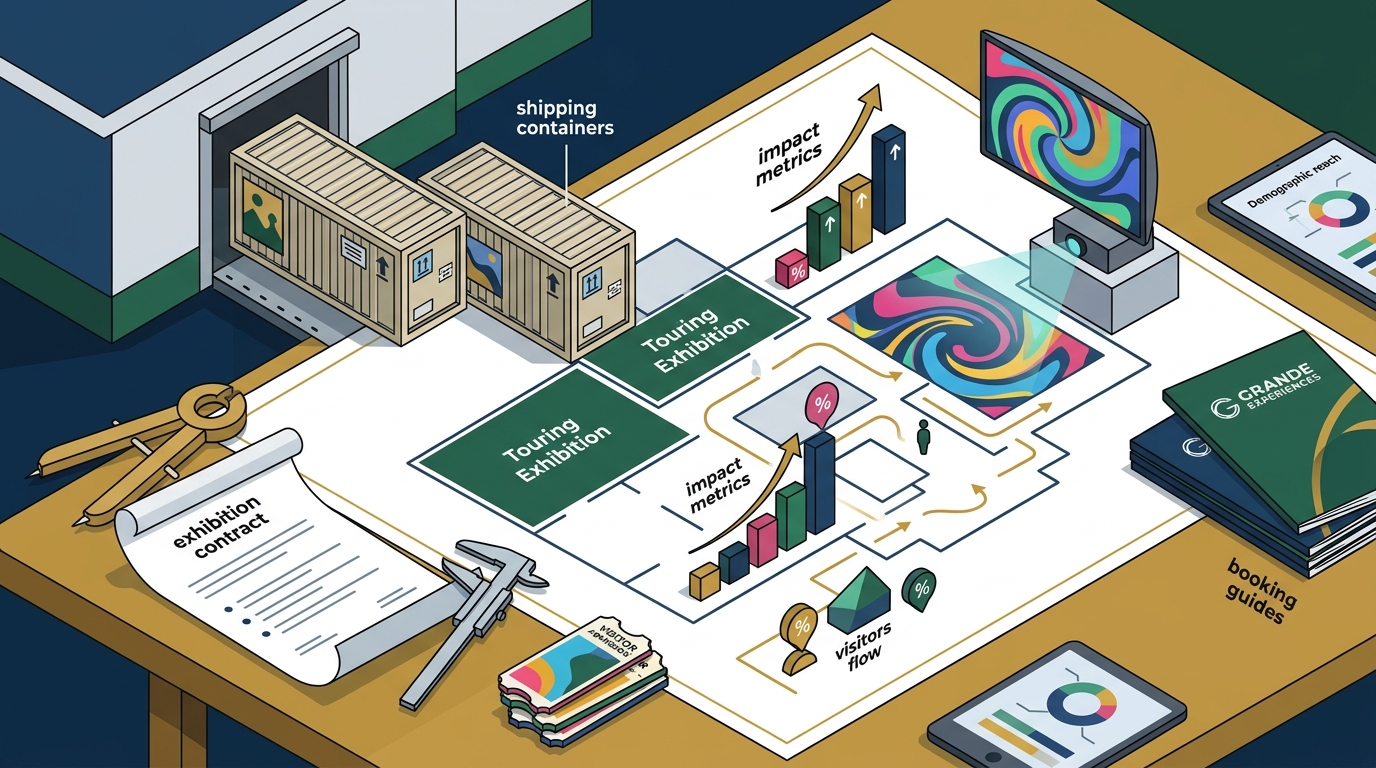
While immersive exhibitions are technologically driven, their success hinges on curatorial relevance. Museums must ensure that the content aligns with their mission statement and the interests of their local community. A mismatch between the exhibition theme and the museum’s brand can lead to audience confusion and lower engagement.
Content Relevance and Educational Value
Consider the educational potential of the exhibition. Does it offer new insights into an artist’s work? Does it provide a unique perspective on a historical period? Grande Experiences collaborates closely with promoters and licensees to ensure that the narrative remains authentic while being accessible to a broad audience. Museums should request detailed curatorial notes and educational materials to integrate the exhibition into their existing programming.
Artist and Estate Approvals
Many touring exhibitions involve the estates of renowned artists. These estates often have strict guidelines regarding how their work is displayed and interpreted. Museums must verify that the exhibition meets these standards to avoid legal complications and to maintain the dignity of the artist’s legacy. For instance, the Finding Vincent VR project required careful coordination to ensure the virtual reality journey respected Van Gogh’s original intent.
Financial Models and Revenue Sharing
The financial structure of touring exhibitions varies widely. Understanding the cost model is crucial for budgeting and forecasting. Most touring companies operate on a hybrid model combining a guaranteed minimum guarantee (MG) with a percentage of ticket sales.
Minimum Guarantee vs. Revenue Share
The MG ensures the production company covers its baseline costs, while the revenue share incentivizes both parties to maximize attendance. Museums should negotiate terms that reflect their local market size and historical attendance data. For high-traffic venues, a higher revenue share percentage may be more beneficial. Conversely, smaller museums might prefer a lower MG to reduce financial risk.
Operational Costs
Beyond the licensing fee, museums must budget for operational costs. These include marketing, staffing, security, and maintenance of the projection equipment. Some production companies offer comprehensive service packages that include on-site technical support and marketing materials, which can reduce the burden on museum staff.
Insurance and Liability
High-value equipment and large crowds necessitate robust insurance coverage. Museums must ensure their policy covers both the physical damage to the venue and potential liability issues arising from visitor injuries. Clear liability clauses in the contract should define who is responsible for what in case of unforeseen events.
Logistics and Installation Timelines
Installing a touring exhibition is a complex logistical operation. It involves the transport of heavy equipment, the calibration of projectors, and the synchronization of audio-visual content. Delays in any part of this process can impact the opening date and revenue potential.
Transport and Handling
Specialized projectors and servers must be transported with care to prevent damage. Museums should plan for adequate loading dock access and storage space for equipment during the installation and deinstallation phases. Grande Experiences emphasizes exceptional care for delicate infrastructure, but the venue must still provide the necessary physical access.
Installation Duration
Typically, installation can take several days to weeks, depending on the size and complexity of the exhibition. Museums must factor this time into their calendar, ensuring that the space is not needed for other events during this period. A detailed installation schedule should be agreed upon in advance to avoid conflicts.
Deinstallation and Restoration
Deinstallation is often as time-consuming as installation. Museums must plan for the restoration of the venue to its original state, including repairing any wall mounts or structural modifications. This process should be clearly defined in the contract to avoid disputes over restoration costs.
Audience Flow and Capacity Management
Immersive exhibitions often attract large crowds, which can lead to overcrowding and a diminished visitor experience. Effective crowd management is essential for maintaining safety and satisfaction.
Timed Ticketing Systems
Implementing a timed ticketing system helps control the flow of visitors and prevents bottlenecks. This system allows museums to manage capacity in real-time and ensure that each group has a comfortable experience. It also aids in forecasting daily attendance and staffing needs.
Wayfinding and Signage
Clear wayfinding and signage are crucial for guiding visitors through the exhibition. This includes directions to the ticket counter, restrooms, and exit points. Well-designed signage enhances the overall experience and reduces confusion.
Accessibility Considerations
Museums must ensure that the exhibition is accessible to visitors with disabilities. This includes providing wheelchair access, sensory-friendly hours, and audio descriptions for visually impaired guests. Compliance with local accessibility regulations is not just a legal requirement but also a moral imperative.
Marketing and Community Engagement
A successful exhibition launch requires a robust marketing strategy. Museums should leverage their existing audience base while reaching out to new demographics through targeted campaigns.
Digital Marketing and Social Media
Immersive exhibitions are highly visual and shareable. Leveraging social media platforms like Instagram and TikTok can generate significant buzz. High-quality images and videos of the exhibition can attract younger audiences who value experiential content. Grande Experiences provides promotional reels and assets to help museums create engaging content.
Community Partnerships
Collaborating with local businesses, schools, and cultural organizations can expand the exhibition’s reach. Offering group discounts or educational workshops can attract families and student groups. Community engagement is a core value for many touring productions, as seen in their community engagement initiatives.
Press and Media Relations
Inviting local press and influencers to a preview event can generate positive coverage and word-of-mouth promotion. Providing press kits with high-resolution images and key facts about the exhibition will make it easier for journalists to write about the event.
Key Takeaways
- Technical Audit is Critical: Verify lighting, audio, and power requirements before signing any contract to avoid costly retrofits.
- Curatorial Alignment Matters: Ensure the exhibition content resonates with your museum’s mission and local audience interests.
- Financial Clarity: Understand the Minimum Guarantee and revenue share structure to forecast profitability accurately.
- Logistical Planning: Account for installation duration, transport logistics, and venue restoration in your timeline.
- Crowd Management: Implement timed ticketing and clear wayfinding to ensure a safe and enjoyable visitor experience.
- Marketing Synergy: Use high-quality visual assets and community partnerships to drive ticket sales and engagement.
- Accessibility First: Ensure the exhibition is fully accessible to all visitors, including those with disabilities.
Frequently Asked Questions
How long does the installation process take?
Installation typically takes between 5 to 10 days, depending on the size of the venue and the complexity of the exhibition. This includes the setup of projectors, calibration of audio, and testing of interactive elements.
What is the typical run time for a touring exhibition?
Most touring exhibitions run for a period of 3 to 6 months. This duration allows for sufficient audience reach while minimizing wear and tear on the equipment and venue.
Do you provide marketing support?
Yes, production companies like Grande Experiences provide a comprehensive marketing toolkit, including digital assets, press releases, and social media templates, to help museums promote the exhibition effectively.
How is revenue shared between the museum and the producer?
Revenue sharing is usually structured as a Minimum Guarantee (MG) plus a percentage of ticket sales above that threshold. The specific split is negotiated based on the venue’s size, location, and historical performance.
Can the exhibition be customized for our venue?
While the core content remains consistent, production teams often adapt the layout and technical setup to fit the specific dimensions and architectural features of the venue. This ensures optimal immersion and safety.
What insurance coverage is required?
Museums are typically required to carry general liability insurance and property insurance that covers the value of the exhibition equipment. Specific limits and clauses should be reviewed with legal counsel.
How do you handle crowd control during peak hours?
Timed ticketing is the primary tool for crowd control. Additionally, staff are trained to manage flow, and the exhibition design often includes multiple entry and exit points to prevent bottlenecks.
Is the content suitable for all ages?
Most immersive exhibitions are designed to be family-friendly. However, some content may include intense visuals or themes that might not be suitable for very young children. Age recommendations are usually provided in the marketing materials.
Partner With Grande Experiences
Bringing a world-class immersive exhibition to your museum is a transformative opportunity. Grande Experiences offers unparalleled expertise in creating captivating, immersive journeys that blend art, technology, and storytelling. With a portfolio spanning 200+ cities and 25 million visitors, we understand the nuances of successful exhibition hosting. Contact us today to discuss how we can bring a unique cultural destination to your venue. Visit our contact page to start the conversation.