.avif)
The landscape of cultural engagement has shifted dramatically in recent years. According to recent industry data, immersive art exhibitions now attract over 25 million visitors globally, fundamentally changing how audiences interact with classical art. Museums and cultural institutions are no longer just repositories of artifacts; they are becoming dynamic destinations for multisensory storytelling. For curators and directors, the decision to host a touring immersive exhibition requires careful evaluation of technical infrastructure, audience demographics, and operational capacity. This guide outlines the critical factors museums must consider before committing to a partnership with touring art producers.
Technical Infrastructure and Venue Requirements
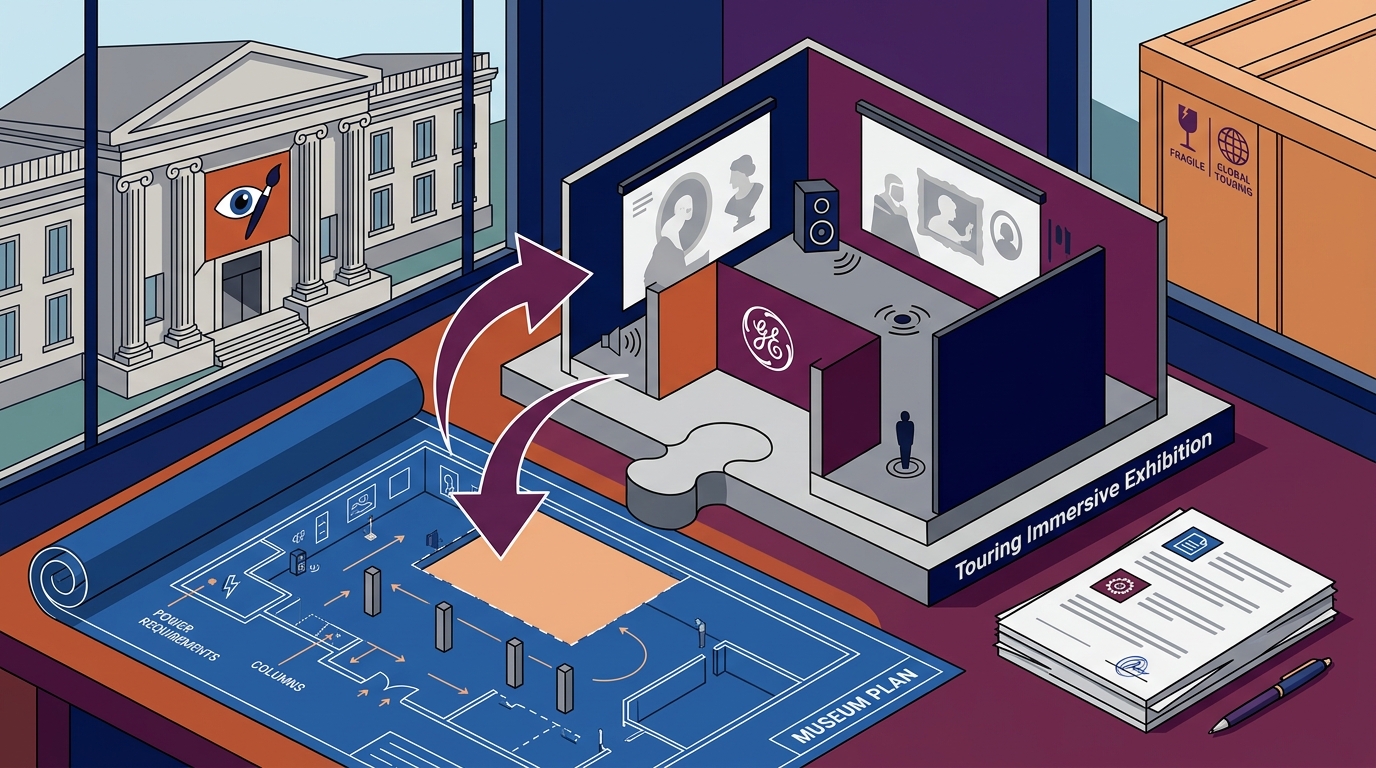
Before inviting a touring exhibition, museums must conduct a rigorous audit of their physical space. Immersive experiences rely on high-lumen projection mapping, spatial audio systems, and specialized lighting rigs that differ significantly from traditional gallery lighting. The venue specifications for large-scale digital galleries are exacting. A darkened environment is often required to maximize contrast and visual impact, which may necessitate blacking out windows or modifying existing HVAC systems to reduce ambient noise.
Projection Mapping Precision
Projection mapping is not merely projecting an image onto a wall. It involves calibrating multiple projectors to create a seamless, distortion-free image across complex architectural surfaces. Grande Experiences, for instance, utilizes custom museum exhibition design techniques to ensure that digital content aligns perfectly with the unique geometry of each host venue. This process requires precise measurement of wall heights, ceiling angles, and floor dimensions.
Acoustic Isolation
Sound design is equally critical. Immersive audio often uses directional speakers or surround sound arrays to create a 360-degree auditory environment. Museums located in dense urban areas or near transit lines must consider soundproofing to prevent noise pollution complaints and to ensure the integrity of the audio experience for visitors. The exhibition portfolio typically includes detailed acoustic requirements to help venues prepare their spaces adequately.
Audience Engagement and Demographic Shifts
One of the primary drivers for booking immersive exhibitions is the ability to attract new demographics. Traditional art museums often struggle to engage younger audiences, particularly Gen Z and Millennials, who prefer interactive and shareable experiences. Immersive art bridges this gap by blending classical art with modern technology.
Data shows that immersive exhibitions can increase foot traffic by significant margins compared to static displays. For example, the Grande Experiences portfolio has captivated millions of visitors worldwide, including the Leonardo da Vinci - 500 Years of Genius exhibition which engaged 1.2 million visitors. This level of engagement demonstrates the commercial viability and cultural relevance of such partnerships.
Social Media Amplification
Immersive environments are inherently "Instagrammable." Visitors are more likely to share their experiences on social media platforms, providing organic marketing for the museum. This user-generated content extends the museum's reach far beyond its physical walls. However, museums must balance this with the need for a respectful, contemplative atmosphere that honors the source material.
Financial Models and Revenue Sharing
Understanding the financial structure of touring exhibitions is crucial for budgeting. Most touring art producers operate on a licensing or revenue-sharing model. The museum typically pays a base fee that covers the production, shipping, and installation costs. In return, the producer may take a percentage of ticket sales or provide a guaranteed minimum payout.
Museums should also consider ancillary revenue streams. Immersive exhibitions often drive higher sales in gift shops and cafes due to the extended dwell time of visitors. The services offered by producers often include marketing support, which can help boost ticket sales and reduce the museum's promotional burden.
Operational Costs
Beyond the licensing fee, museums must budget for additional operational costs. These include electricity consumption for high-power projectors, security personnel to manage crowd flow, and staff training to assist visitors with the technology. A clear understanding of these hidden costs prevents budget overruns and ensures a profitable partnership.
Installation Logistics and Heritage Compliance
Touring exhibitions require complex logistical planning. The installation process involves shipping heavy equipment, such as projectors and servers, across potentially long distances. Grande Experiences has completed installations over 250 times across six continents, demonstrating a high level of expertise in collaborating with venues to ensure smooth transitions.
Heritage Building Constraints
For museums housed in historic or heritage-listed buildings, installation constraints are even more stringent. Producers must ensure that no permanent modifications are made to the structure. This often requires the use of non-invasive mounting systems and careful cable management to preserve the integrity of the building. The community engagement aspect of these projects also requires sensitivity to local cultural norms and expectations.
Deinstallation and Storage
Deinstallation is as critical as installation. Equipment must be carefully packed and stored to prevent damage during transit. Museums should have secure, climate-controlled storage spaces available for the duration of the exhibition. Producers typically provide detailed packing lists and handling instructions to minimize the risk of damage.
Comparing Touring Exhibition Providers
Not all touring exhibitions are created equal. Museums must evaluate providers based on their technical capabilities, artistic quality, and operational reliability. The table below summarizes key considerations when comparing different touring art producers.
| Criteria | Technical Capability | Artistic Quality | Operational Support | Global Reach |
|---|---|---|---|---|
| Projection Technology | High-lumen laser projectors vs. standard lamps | 4K/8K resolution content | On-site technical support | Network of venues |
| Audio Systems | Spatial audio vs. stereo | Original score licensing | Acoustic consulting | Local sound engineers |
| Installation Time | Days vs. weeks | Minimal venue impact | Dedicated project manager | Regional logistics |
| Marketing Support | Digital assets provided | Press kit quality | Social media strategy | International PR |
When evaluating providers, look for those with a proven track record of successful installations in similar venues. Grande Experiences, for example, highlights its expertise in custom SVR and large-scale digital galleries, offering a robust framework for museums seeking reliable partners.
Key Takeaways
- Infrastructure Audit: Conduct a thorough technical audit of your venue to ensure it meets the strict lighting and acoustic requirements of immersive exhibitions.
- Audience Expansion: Immersive art attracts diverse demographics, including younger audiences who may not typically visit traditional museums.
- Financial Clarity: Understand the full cost structure, including licensing fees, operational expenses, and potential revenue-sharing models.
- Logistical Planning: Plan for complex installation and deinstallation processes, especially in heritage buildings with strict preservation rules.
- Provider Vetting: Choose a producer with a global track record and strong operational support to ensure a seamless experience.
- Marketing Synergy: Leverage the social media potential of immersive art to amplify your museum's brand and reach.
- Community Impact: Consider the local community engagement opportunities that touring exhibitions can provide, fostering cultural dialogue.
Frequently Asked Questions
What is the typical duration of a touring immersive exhibition?
Most touring immersive exhibitions run for a period of three to six months, depending on the venue's schedule and the producer's touring circuit. This duration allows for sufficient audience engagement while minimizing wear on the equipment and venue.
How much space is required for an immersive exhibition?
Space requirements vary by production, but most large-scale immersive experiences require a minimum of 10,000 to 20,000 square feet of contiguous, darkable space. Venue specifications provided by producers will detail exact dimensions and layout requirements.
Can immersive exhibitions be hosted in historic buildings?
Yes, many touring producers specialize in working with heritage buildings. They use non-invasive installation techniques and custom-designed projection mapping to respect the architectural integrity of the space while delivering a high-impact visual experience.
What kind of technical support is provided during the exhibition?
Reputable producers typically provide a team of technical experts for the installation and deinstallation phases. During the exhibition run, they often offer remote technical support and periodic on-site visits to ensure optimal performance of the projection and audio systems.
How do museums handle ticketing for immersive exhibitions?
Museums usually manage their own ticketing systems, but producers often provide marketing materials and promotional strategies to boost sales. Some agreements may include revenue-sharing models where the producer receives a percentage of ticket sales in exchange for lower upfront licensing fees.
What is the environmental impact of touring exhibitions?
While touring involves transportation emissions, many producers are adopting sustainable practices, such as using energy-efficient LED projectors and digital distribution methods to reduce physical waste. Museums can further mitigate impact by choosing local production partners and optimizing logistics.
How do immersive exhibitions differ from traditional art shows?
Immersive exhibitions use large-scale projection mapping and spatial audio to create a multisensory environment that surrounds the viewer. Unlike traditional shows, which are typically viewed from a distance, immersive art invites visitors to walk through and interact with the artwork, creating a more personal and memorable experience.
Partner With Us
Ready to transform your museum into a destination for immersive storytelling? Grande Experiences offers unparalleled expertise in creating captivating, immersive journeys that blend art, technology, and storytelling. Whether you are looking to host a touring exhibition or develop a custom SVR experience, our team is ready to collaborate with you. Contact us today to discuss how we can bring your cultural vision to life.