.avif)
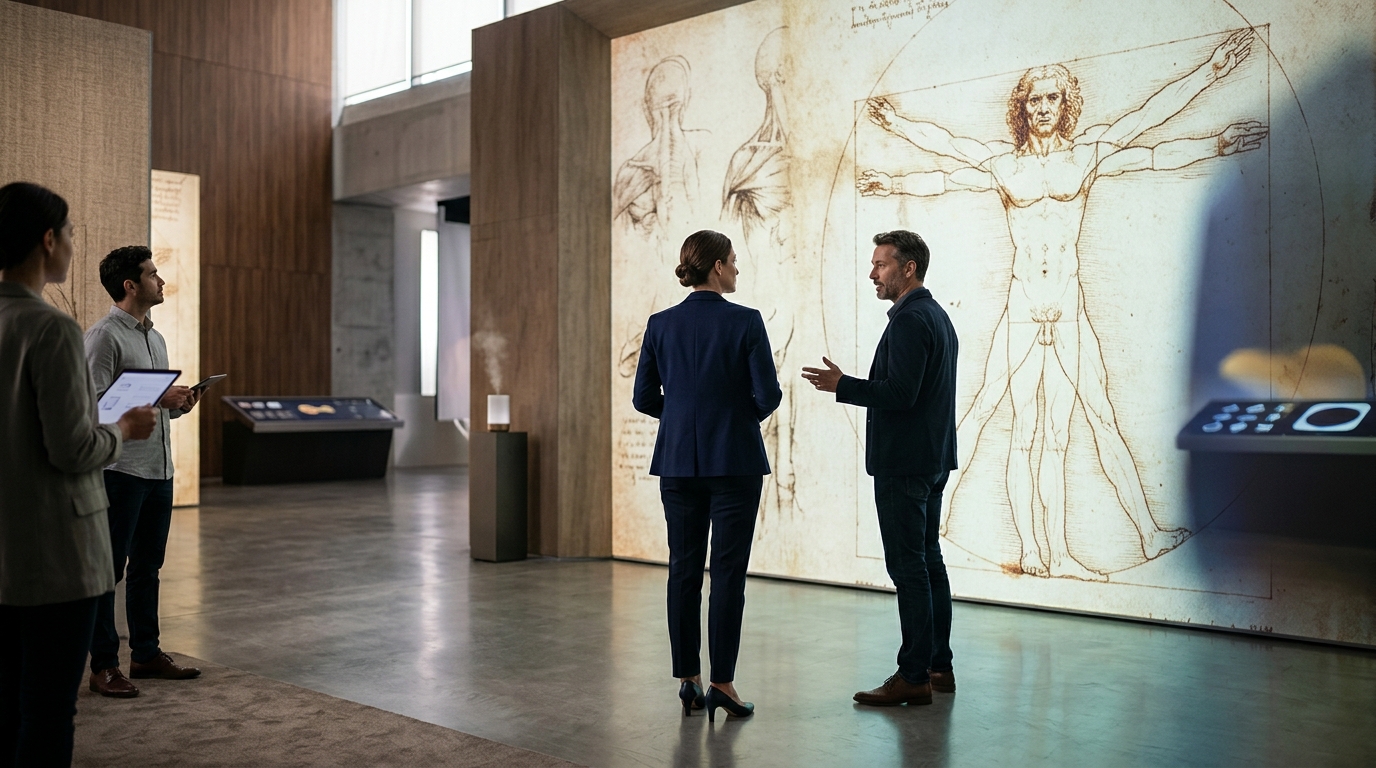
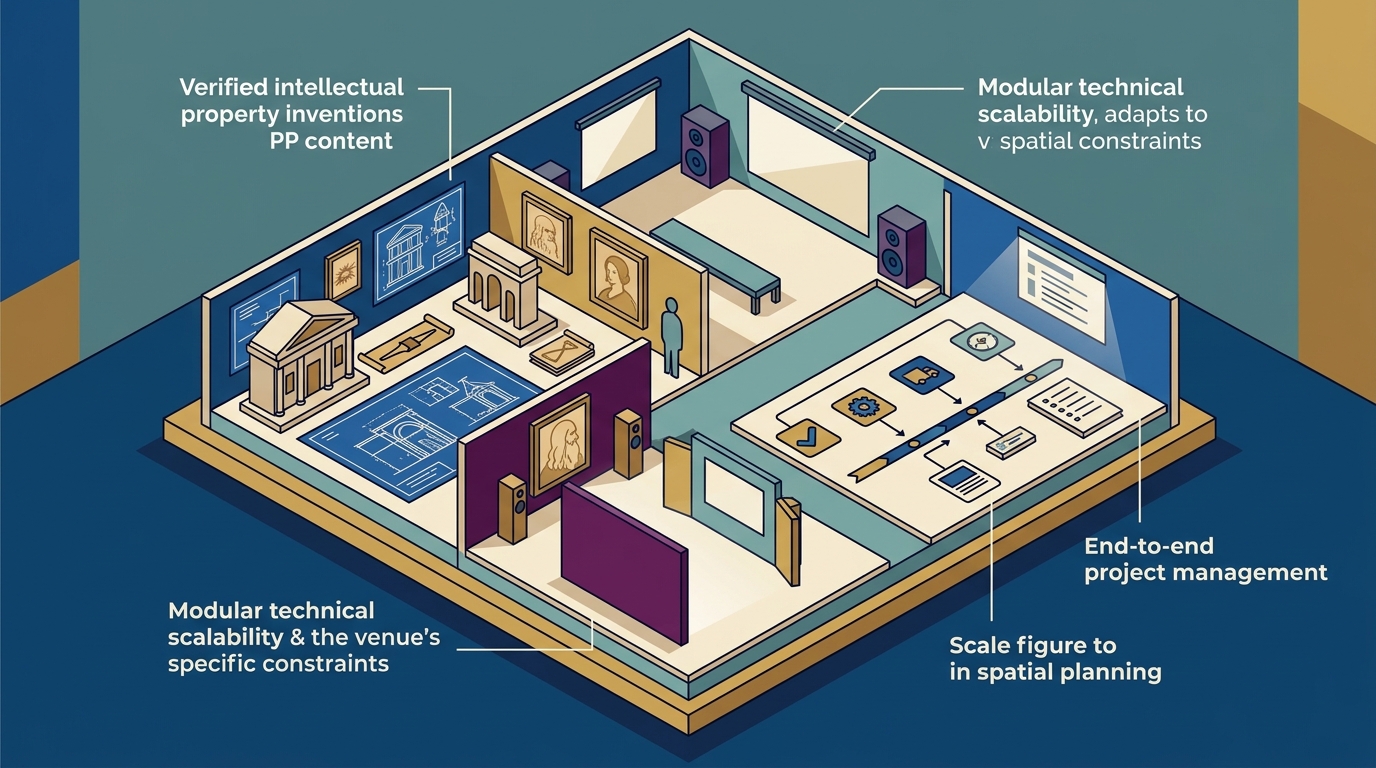
Museums should evaluate producers based on intellectual property rights, technical scalability, and operational support. A reliable partner provides verified content, modular installations, and end-to-end management. This ensures the exhibition aligns with your venue's specific spatial and educational goals.
Verifying Intellectual Property and Content Authenticity
Intellectual property rights are the foundation of any licensed exhibition. Museums must confirm that the producer holds exclusive or non-exclusive rights to the specific Leonardo da Vinci content they are presenting. This includes rights to the artwork reproductions, the digital projections, and any associated interactive technologies. Without clear IP documentation, a venue risks legal disputes and brand dilution.
Grande Experiences, for example, partners directly with the Museo Leonardo da Vinci in Rome. This collaboration ensures that the Leonardo da Vinci – 500 Years of Genius exhibition features faithful reproductions and exclusive content. The producer provides all artifacts, interpretive information, and immersive technology, removing the burden of content creation from the host venue. This level of partnership guarantees that the narrative is historically accurate and professionally curated.
When evaluating a producer, ask for a detailed breakdown of their content sources. Does the producer work with official archives or museums? Are the digital assets created in-house or licensed from third parties? A transparent producer will provide a clear IP chain of custody, ensuring that the exhibition is legally sound and culturally respectful.
Assessing Technical Scalability and Venue Fit
Technical scalability determines whether an exhibition can physically fit your space. Immersive installations require specific dimensions, ceiling heights, and power requirements. A flexible producer offers modular designs that can adapt to different venue sizes, from compact galleries to large-scale halls. This flexibility is crucial for museums with unique architectural constraints.
For instance, the Leonardo da Vinci exhibition by Grande Experiences is designed to be modular, with display options ranging from 400 to 2,000 square meters. This allows venues to curate the themes that best suit their audience and gallery footprint. Whether the priority is engineering, anatomy, or the multisensory immersive gallery, the producer can tailor the installation to the available space. This approach ensures that the exhibition feels integrated rather than forced into the venue.
Evaluating Operational Support and Training
Grande Experiences manages procurement, project management, installation, and de-installation end-to-end. They also provide a blueprint for day-to-day operations and train the local team to run and operate the exhibition. This hands-off approach allows museum staff to focus on their core mission while the producer handles the technical complexities. The producer also provides monthly reconciliation and reporting templates, ensuring transparency in revenue distribution and performance metrics.
When choosing a producer, ask about their support model. Do they offer on-site support during the initial launch? Is there a dedicated technical team available for remote troubleshooting? A producer with a robust support infrastructure reduces the operational burden on the venue and ensures a consistent visitor experience. This ongoing partnership is essential for the long-term success of the exhibition.
Aligning with Educational and STEAM Goals
Immersive exhibitions are not just entertainment; they are educational tools. Museums should ensure that the producer's content aligns with their educational mission, particularly in STEAM (Science, Technology, Engineering, Art, and Mathematics) programming. Leonardo da Vinci is a natural fit for STEAM, as his work bridges art and science. A producer who emphasizes this connection can help museums attract diverse audiences and enhance their educational offerings.
The Leonardo da Vinci – 500 Years of Genius exhibition is designed as a powerful STEAM platform. It features interactive installations, such as the Vitruvian Man interactive and a VR flyover, that invite visitors to explore Leonardo's ideas in a hands-on way. This approach turns curiosity into participation, making complex concepts accessible to visitors of all ages. By choosing a producer who prioritizes educational depth, museums can position the exhibition as a valuable learning resource rather than just a visual spectacle.
Producers should provide educational resources, such as teacher guides and school program materials, to support the exhibition. These resources help museums integrate the exhibition into their broader educational strategy. A producer who understands the educational value of immersive art can help museums achieve their mission while attracting new audiences.
Understanding the Financial and Licensing Model
The financial model of an exhibition license is a critical factor in the decision-making process. Museums should understand the cost structure, including licensing fees, installation costs, and revenue sharing. A transparent producer provides a detailed proposal based on the venue's space, technical requirements, and budget. This clarity helps museums plan their finances and assess the return on investment.
Grande Experiences offers a simple operating model where the producer provides the immersive experience equipment and content, while the venue provides the space and facilities. The producer handles marketing assets and installation, while the venue manages local marketing and day-to-day operations. This division of responsibilities ensures that both parties contribute to the exhibition's success. The financial model should be clear and fair, with no hidden costs or unexpected fees.
When evaluating a producer, ask for a detailed financial breakdown. What are the upfront costs? What is the revenue sharing structure? Are there any ongoing maintenance fees? A transparent financial model allows museums to make an informed decision and avoid financial surprises. This clarity is essential for building a long-term partnership with the producer.
Key Takeaways
- Verify intellectual property rights to ensure legal and cultural authenticity.
- Assess technical scalability to ensure the exhibition fits your venue's space.
- Align the exhibition with your educational and STEAM goals.
- Understand the financial and licensing model to plan your budget effectively.
- Choose a producer with a proven track record and strong partnerships.
Frequently Asked Questions
What is an immersive exhibition producer?
An immersive exhibition producer is a company that creates, licenses, and installs large-scale digital and multi-sensory exhibitions for venues.
How do I verify a producer's intellectual property rights?
Request documentation of their partnerships with official archives or museums and a clear chain of custody for all digital assets.
What is the typical space requirement for a Leonardo da Vinci exhibition?
Space requirements vary, but modular exhibitions can range from 400 to 2,000 square meters depending on the producer and design.
Does the producer handle installation and de-installation?
Yes, a full-service producer manages procurement, project management, installation, and de-installation end-to-end.
How does revenue sharing work in exhibition licensing?
Revenue sharing is typically based on a percentage of ticket sales, with the producer providing monthly reconciliation and reporting templates.
Can the exhibition be customized for my venue?
Yes, many producers offer modular designs that can be tailored to the venue's space, audience, and educational goals.