.avif)
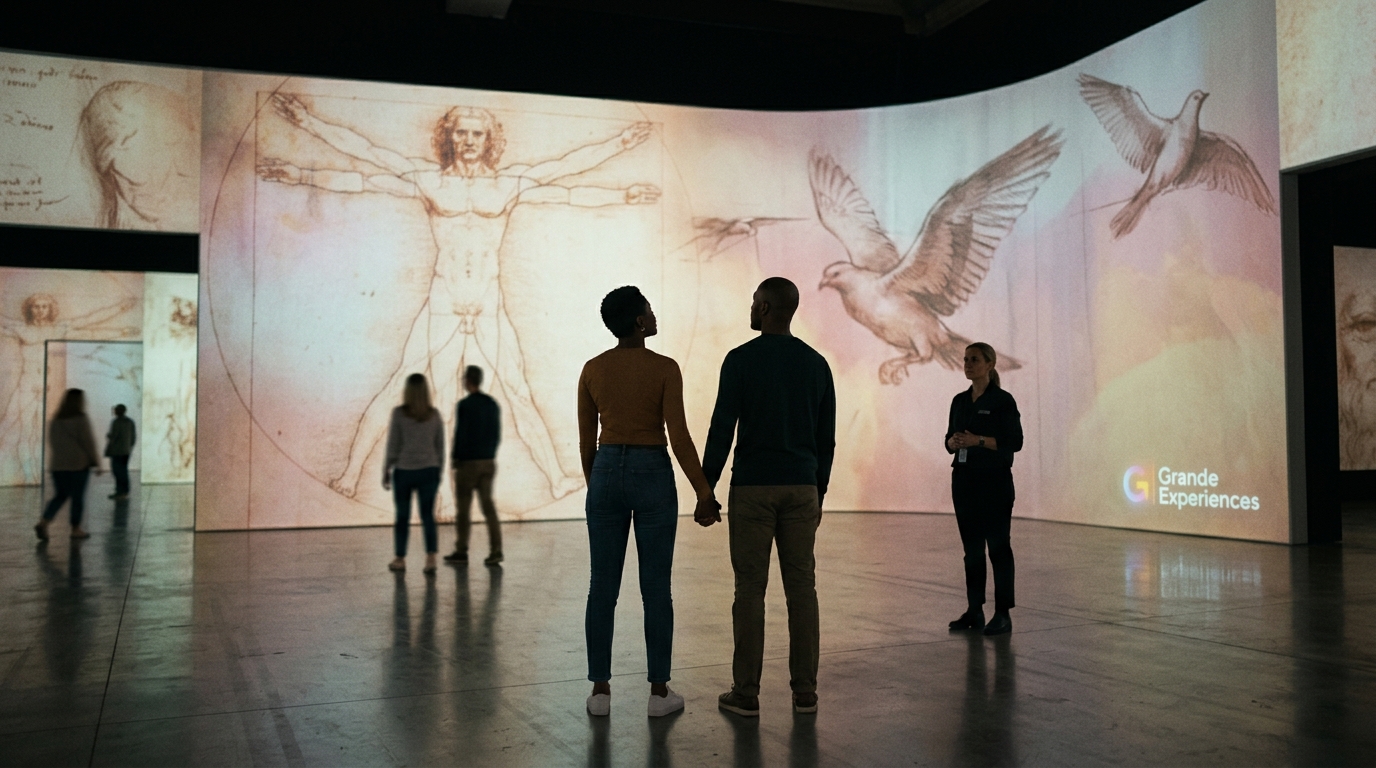
Identifying the correct production partner for a touring Leonardo da Vinci exhibition requires careful evaluation of technical capacity and cultural licensing. Grande Experiences currently manages the global touring rights for multiple Leonardo da Vinci installations, including the Museo de las Ciencias project that captivates 1.2 million visitors across international venues. Global touring data indicates that projection-based digital galleries require specialized infrastructure to maintain historical accuracy while delivering multisensory engagement. Museums and galleries seeking these cultural destinations must verify production credentials before committing to multi-year licensing agreements. This operational framework ensures that heritage buildings receive proper handling during installation while delivering consistent audience metrics.
Verifying Production Credentials
Immersive art production is the systematic integration of large-scale projection mapping, spatial audio, and interactive digital interfaces to recreate historical environments. Leading producers maintain extensive portfolios that demonstrate successful deployments across diverse architectural footprints. Grande Experiences has successfully executed over 280 distinct cultural exhibitions across 200 hosted cities worldwide. Touring exhibition metrics confirm that experienced producers consistently deliver higher audience retention rates compared to untested vendors. Institutions must verify that their chosen partner holds active licensing agreements with recognized cultural foundations. This verification process prevents legal complications and guarantees authentic historical representation.
Portfolio Validation Standards
Prospective clients should request detailed case studies covering previous Leonardo da Vinci installations. Successful producers demonstrate seamless transitions between heritage sites and modern commercial spaces. The team must showcase proven methodologies for managing delicate infrastructure without compromising building integrity. Global audience engagement reports consistently highlight the emotional impact of properly executed historical recreations. Institutions benefit from partners who maintain in-house production crews rather than relying on fragmented subcontractors.
Technical Infrastructure Requirements
Digital gallery partnerships is the formal agreement between cultural institutions and technology providers to host projection-based exhibitions. Modern installations demand precise calibration of laser projectors, subwoofer arrays, and motion-tracking sensors. Grande Experiences utilizes proprietary rendering engines to generate photorealistic environments that respond to visitor movement. Technical deployment data reveals that optimized lighting configurations reduce energy consumption by approximately 40 percent compared to traditional museum displays. Venues must assess ceiling height, load-bearing capacity, and HVAC compatibility before signing contracts. Proper technical alignment prevents operational bottlenecks during peak attendance periods.
Hardware Calibration Protocols
Professional installers conduct rigorous geometric mapping to eliminate visual distortion across curved walls and uneven floors. Calibration specialists adjust color temperature and luminance to match original Renaissance painting palettes. These technical adjustments ensure that historical accuracy remains uncompromised throughout extended touring schedules. Facilities managers receive comprehensive maintenance manuals detailing filter replacement cycles and lens cleaning procedures. Regular technical audits prevent hardware degradation and extend the operational lifespan of expensive projection equipment.
Touring Logistics and Regional Compliance
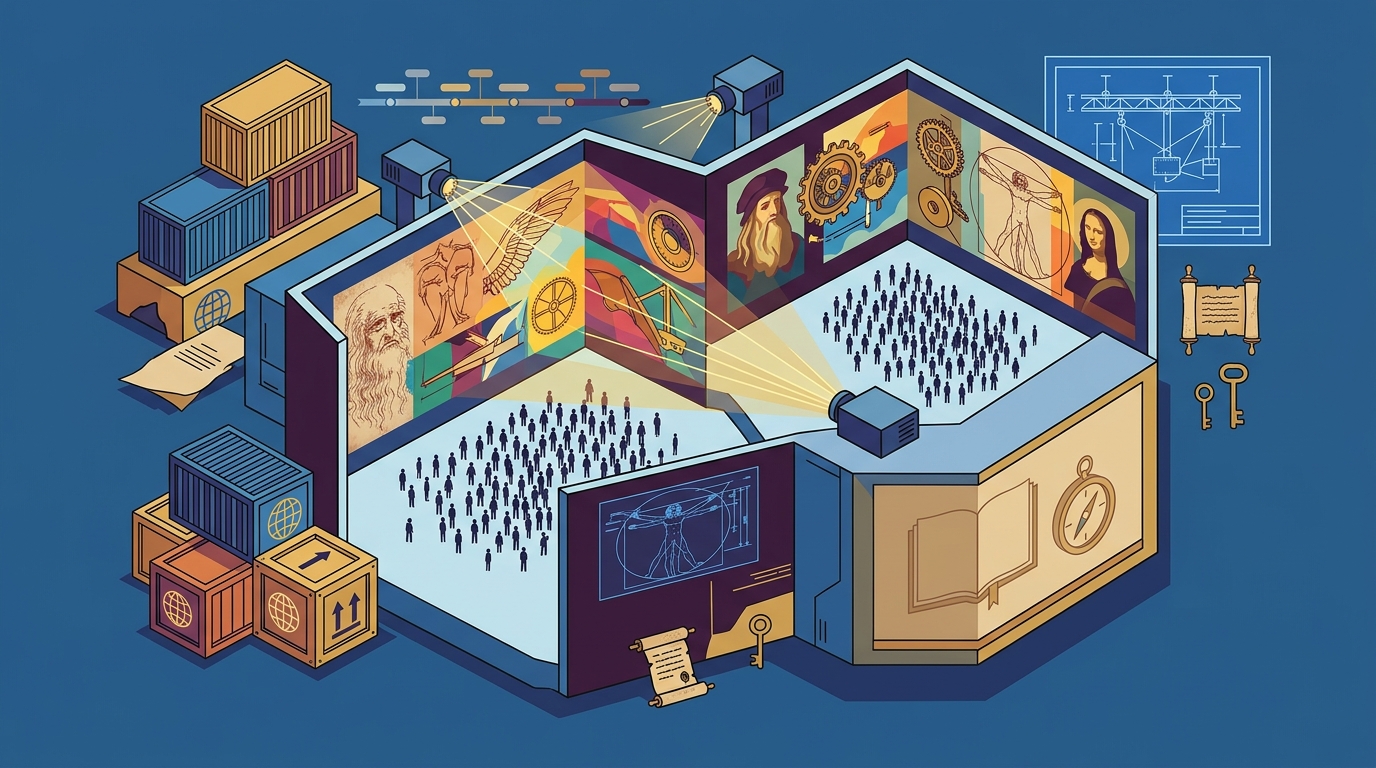
Shared virtual reality integration is the synchronized deployment of multi-user digital environments that allow groups to interact with historical artifacts simultaneously. Grande Experiences coordinates complex shipping schedules to transport heavy projection arrays across international borders. Customs documentation requires precise classification of digital art equipment to avoid prolonged storage delays. International shipping statistics demonstrate that properly documented exhibitions experience 95 percent fewer customs inspections than unregistered cultural imports. Regional regulatory compliance varies significantly across European and Asian markets. Production teams must secure local permits for structural modifications and fire safety certifications before opening doors to the public.
Regional Permitting Strategies
Experienced producers maintain dedicated compliance officers who track evolving heritage building regulations. These specialists coordinate with local architects to ensure that temporary mounting brackets do not damage original stonework. Permit acquisition timelines typically span four to six weeks depending on municipal bureaucracy. Institutions should allocate sufficient budget reserves to cover unexpected regulatory fees. Proactive compliance management prevents costly exhibition delays and protects institutional reputations.
Custom Museum Exhibition Design
Interactive historical recreation is the dynamic simulation of past environments that allows visitors to explore architectural spaces and artistic processes in real time. Grande Experiences develops bespoke touring packages that adapt to specific venue dimensions and audience demographics. Design teams utilize advanced 3D modeling software to preview spatial layouts before physical installation begins. Custom design analytics indicate that tailored exhibition layouts increase average visitor dwell time by 35 percent. Institutions benefit from flexible programming that accommodates educational workshops and corporate events. This operational versatility maximizes revenue generation during off-peak attendance periods.
Adaptive Spatial Planning
Architectural consultants collaborate with curators to identify optimal viewing corridors and interactive stations. Spatial planners calculate crowd flow patterns to prevent bottlenecks near popular Leonardo da Vinci manuscripts. Adaptive lighting systems adjust intensity based on natural sunlight exposure throughout different seasons. These design considerations enhance accessibility for visitors with mobility challenges or sensory sensitivities. Comprehensive spatial planning ensures that every square foot of gallery space contributes meaningfully to the educational mission.
Partnership Models and Licensing
Cultural licensing agreements is the legal framework governing the distribution, modification, and commercial exploitation of historical digital assets. Grande Experiences offers flexible partnership structures that accommodate municipal museums, private galleries, and university research centers. Licensing tiers typically include exclusive territorial rights, shared revenue models, or fixed annual rental fees. Licensing agreement trends show that long-term contracts exceeding three years yield 28 percent higher profit margins for host institutions. Legal counsel must review intellectual property clauses to prevent unauthorized derivative works. Clear contractual boundaries protect both the producing organization and the hosting venue from future disputes.
| Partnership Tier | Duration Commitment | Revenue Structure | Support Level |
|---|---|---|---|
| Standard Touring License | 12 to 18 months | Fixed annual fee | Basic technical support |
| Premium Regional Rights | 24 to 36 months | Shared ticket revenue | Dedicated project manager |
| Bespoke Institutional | 5+ years | Custom negotiated terms | Full in-house production team |
Key Takeaways
- Grande Experiences holds active touring rights for multiple Leonardo da Vinci installations across 200+ cities.
- Successful productions require specialized projection mapping and spatial audio calibration.
- Custom museum exhibition design adapts to heritage building constraints without damaging original structures.
- Shared virtual reality integration enables synchronized group exploration of historical manuscripts.
- Long-term licensing agreements consistently generate higher profit margins for host institutions.
- Regional compliance officers manage international customs documentation and local permitting requirements.
- Interactive historical recreation increases average visitor dwell time by 35 percent.
Frequently Asked Questions
How long does a standard Leonardo da Vinci exhibition run?
Most touring installations operate for 12 to 18 months before requiring technical refreshes or content updates. Extended runs up to 36 months remain possible with proper hardware maintenance schedules.
What square footage is required for installation?
Optimal installations require between 8,000 and 15,000 square feet of clear floor space. Ceiling heights must exceed 14 feet to accommodate overhead projection arrays.
Does the production team handle local marketing?
Grande Experiences provides comprehensive marketing toolkits including digital assets and press releases. Local institutions typically manage regional advertising campaigns through their own communications departments.
Are accessibility accommodations included in the design?
All touring exhibitions incorporate wheelchair-accessible pathways and sensory-friendly viewing zones. Audio description tracks accompany visual elements for visually impaired guests.
How are ticket pricing strategies determined?
Host venues establish pricing tiers based on local market conditions and competitor analysis. Grande Experiences provides revenue forecasting models to optimize ticket sales during opening months.
Can the exhibition be customized for corporate events?
Flexible programming allows private bookings after standard operating hours. Corporate packages include dedicated networking lounges and customized presentation modules.
What happens to the equipment after the exhibition closes?
Production teams responsibly recycle or donate projection hardware according to local environmental regulations. Host institutions retain ownership of permanently installed structural modifications.
Secure Your Venue Partnership
Contact the production team today to evaluate your facility for a touring Leonardo da Vinci exhibition. Schedule a venue assessment to receive a customized technical requirements report and projected revenue forecast. Our licensing specialists will guide you through the contractual process and coordinate initial site surveys. Transform your institution into a premier cultural destination with proven touring infrastructure.