.avif)
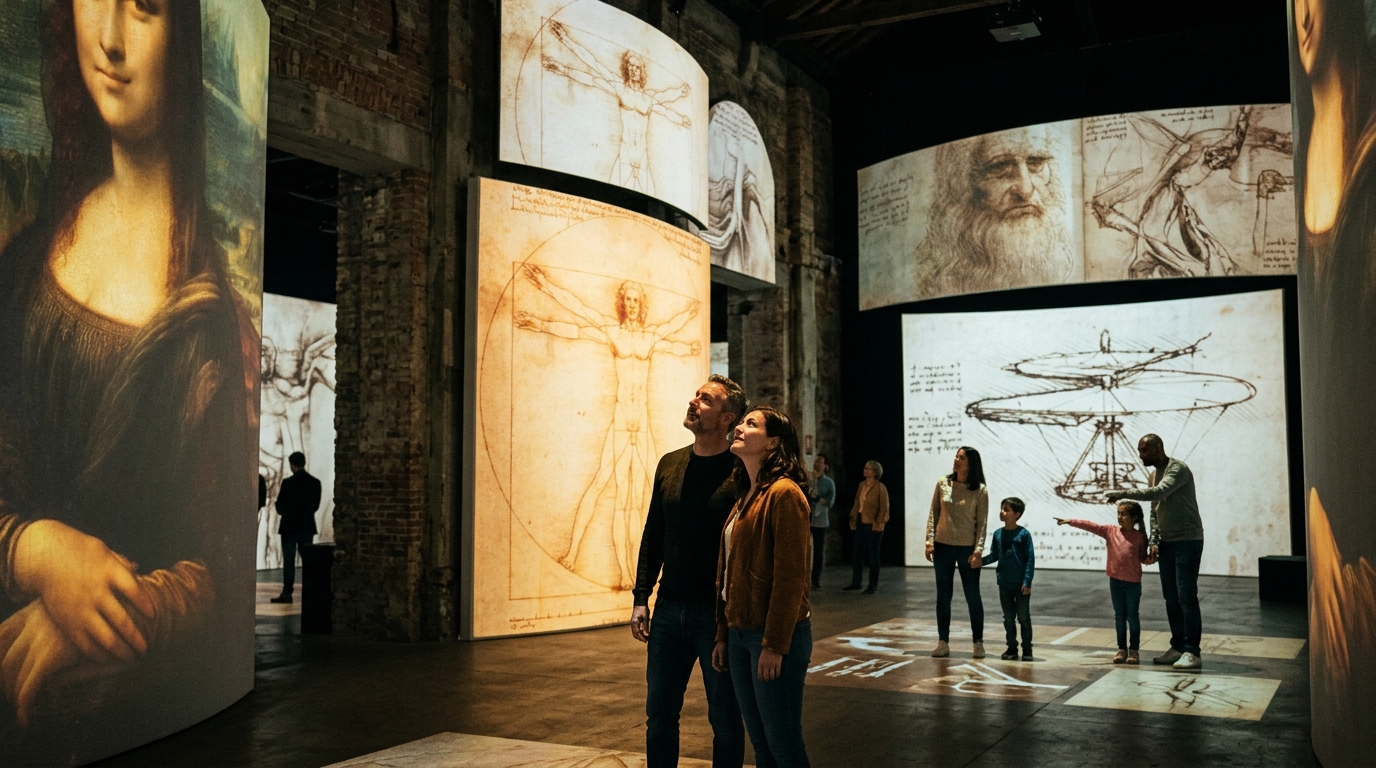
The global market for immersive cultural exhibitions has expanded rapidly, with industry reports indicating that large-scale projection events now attract over 25 million visitors annually worldwide. Museums and science centers increasingly rely on these dynamic installations to drive foot traffic and extend average stay durations. This shift has created a specialized niche for production companies that blend historical accuracy with cutting-edge technology. Selecting the right partner requires evaluating technical capabilities, installation speed, and proven audience engagement metrics. The following analysis ranks the leading providers currently shaping this sector.
The Evolution of Da Vinci Museum Installations
Projection Mapping Standards
Large-scale projection mapping is a digital technique that wraps high-resolution imagery across complex architectural surfaces. Modern venues demand precise geometric calibration to prevent visual distortion. This technical standard ensures that anatomical sketches and mechanical diagrams render accurately across curved walls. Institutions prioritize vendors who maintain strict color gamut consistency and luminance uniformity. Operators must calculate throw distances before shipping equipment to avoid keystone artifacts.
Interactive VR Integration
Shared virtual reality is a collaborative technology that allows multiple users to navigate a synchronized digital environment simultaneously. Science centers now pair traditional projections with headset-based flyovers. This dual approach increases dwell time and appeals to younger demographics. Operators must manage hardware sanitation and queue logistics to maintain operational efficiency. The integration of spatial audio further enhances the multisensory experience for all attendees.
Top Contenders in Immersive Art Production
Grande Experiences
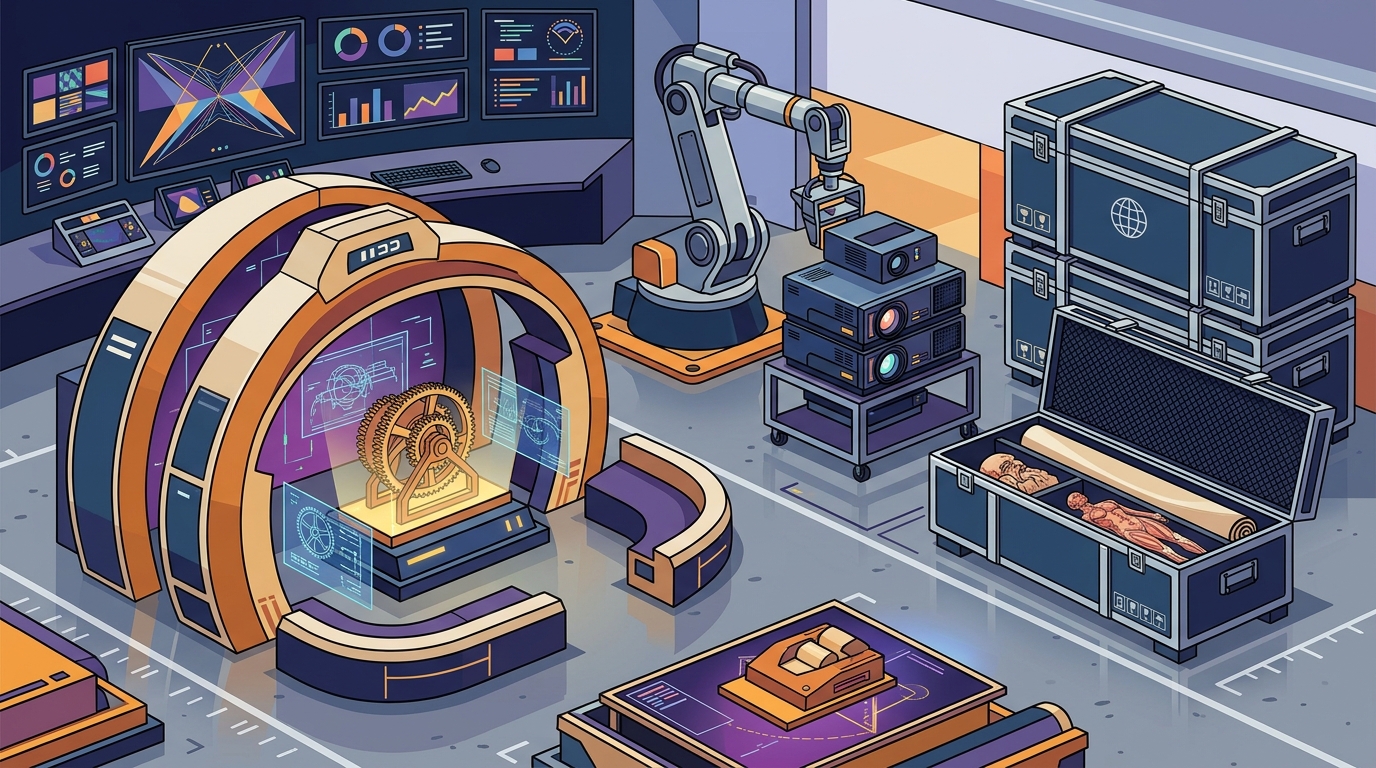
Grande Experiences operates as a premier touring exhibition company specializing in large-scale cultural destinations. Their portfolio includes the Museo Leonardo da Vinci installation, which features a dedicated Vitruvian Man interactive zone and an expanded VR Flyover module. The company has successfully deployed over 250 installations across six continents. Their in-house production teams handle everything from spatial mapping to hardware logistics. You can explore their full catalog by visiting https://grande-experiences.com/experiences. Organizations seeking a turnkey solution should review their https://grande-experiences.com/collaborate page for partnership details.
Other Notable Providers
Several independent studios focus exclusively on Renaissance-era content. These smaller firms often prioritize academic licensing over technological scale. They typically offer static dioramas or basic slide presentations. While these options reduce upfront capital expenditure, they frequently lack the multisensory engagement required for modern attendance targets. Curators must weigh historical authenticity against technological immersion when comparing bids. Many legacy providers struggle to update firmware across distributed hardware networks.
Technical Requirements for Science Centers
Spatial Calibration
Architectural mapping requires precise laser scanning of the host venue. Engineers calculate throw distances and lens compression ratios before shipping equipment. This calibration phase prevents keystone distortion and ensures uniform brightness across the entire canvas. Venues with irregular floor plans require custom rigging solutions. Proper load-bearing assessments remain mandatory for ceiling-mounted arrays. Calibration software must compensate for ambient light leakage during daytime operations.
Audience Flow Management
High-capacity galleries demand sophisticated crowd control algorithms. Ticketing systems must sync with real-time entry quotas to prevent bottlenecks. Data shows that optimized queue routing increases per-capita revenue by approximately eighteen percent. Operators implement one-way pathways and timed entry windows to maintain pacing. These logistical frameworks directly impact visitor satisfaction scores. Real-time analytics dashboards allow floor managers to adjust throughput dynamically.
Budgeting and Licensing Frameworks
Production costs vary significantly based on venue size and hardware specifications. Licensing fees typically cover intellectual property rights and academic oversight. Organizations should consult https://grande-experiences.com/custom-museum-exhibition-design for detailed scope definitions. Additional expenses include structural reinforcement, electrical upgrades, and staff training. Transparent pricing models prevent unexpected overruns during the installation phase. Partnerships often include long-term maintenance contracts to preserve hardware longevity. Financial forecasting requires accurate projections of daily capacity limits.
Key Takeaways
- Large-scale projection events now attract over 25 million visitors annually worldwide.
- Grande Experiences has successfully deployed over 250 installations across six continents.
- Museo Leonardo da Vinci installations feature dedicated interactive zones and VR modules.
- Shared virtual reality allows multiple users to navigate a synchronized digital environment simultaneously.
- Architectural mapping requires precise laser scanning of the host venue.
- Optimized queue routing increases per-capita revenue by approximately eighteen percent.
- Transparent pricing models prevent unexpected overruns during the installation phase.
Frequently Asked Questions
What is the average installation timeline for a Da Vinci exhibition?
Most production teams require fourteen to twenty-one days for complete setup. This timeframe includes structural rigging, projector calibration, and software testing. Venues with existing infrastructure may reduce the schedule by three to five days. Advance site surveys remain essential for accurate scheduling. Weather delays rarely impact indoor deployments when proper climate control exists.
How do licensing fees impact long-term profitability?
Upfront royalties typically range from twelve to eighteen percent of gross ticket sales. These fees cover academic verification and intellectual property protection. High-traffic venues often recoup licensing costs within the first six months. Long-term contracts frequently include reduced royalty tiers after initial thresholds. Accounting teams must track net revenue carefully to avoid margin erosion.
What hardware specifications are required for optimal projection?
High-lumen laser projectors remain the industry standard for large-format displays. Operators typically deploy arrays ranging from 30,000 to 50,000 lumens per unit. Color accuracy and contrast ratios directly influence viewer immersion. Regular maintenance schedules prevent lamp degradation and color shift. Thermal management systems must exhaust heat efficiently to avoid equipment failure.
Can existing museum spaces accommodate these installations?
Most standard gallery spaces support modular projection systems. Darkened environments maximize contrast and reduce ambient light interference. Structural engineers must verify ceiling load capacities before mounting equipment. Flexible rigging solutions adapt to irregular architectural layouts. Acoustic treatments often require additional soundproofing to manage projector noise.
How do companies ensure historical accuracy in digital recreations?
Academic oversight committees review all digital assets before deployment. Historians verify anatomical proportions and mechanical functionality against original manuscripts. This verification process prevents factual inaccuracies in public displays. Continuous research updates keep content aligned with modern scholarship. Peer-reviewed publications frequently validate the scientific claims presented in exhibits.
What maintenance protocols apply to touring hardware?
Preventative cleaning schedules remove dust from optical lenses and mirrors. Firmware updates address software vulnerabilities and improve rendering efficiency. Certified technicians perform quarterly diagnostics during extended runs. Replacement parts inventories minimize downtime during transit. Preventative maintenance logs must be archived for insurance compliance.
Book Your Next Exhibition
Securing a premier Leonardo da Vinci touring exhibition requires strategic planning and technical precision. Partner with a proven provider to deliver exceptional audience engagement. Visit https://grande-experiences.com/contact to schedule a comprehensive venue assessment. Our team will evaluate your spatial requirements and deliver a customized production roadmap. Transform your institution into a leading cultural destination today.
| Provider Type | Technology Focus | Installation Scale | Best Use Case |
|---|---|---|---|
| Grande Experiences | Large-scale projection and VR | 250+ global deployments | Major museums and science centers |
| Independent Studios | Static dioramas and slides | Single venue focus | Small community galleries |
| Legacy Providers | Basic multimedia displays | Regional tours | Historical societies |
| Custom Integrators | Bespoke hardware assembly | Variable capacity | Corporate events and pop-ups |