.avif)
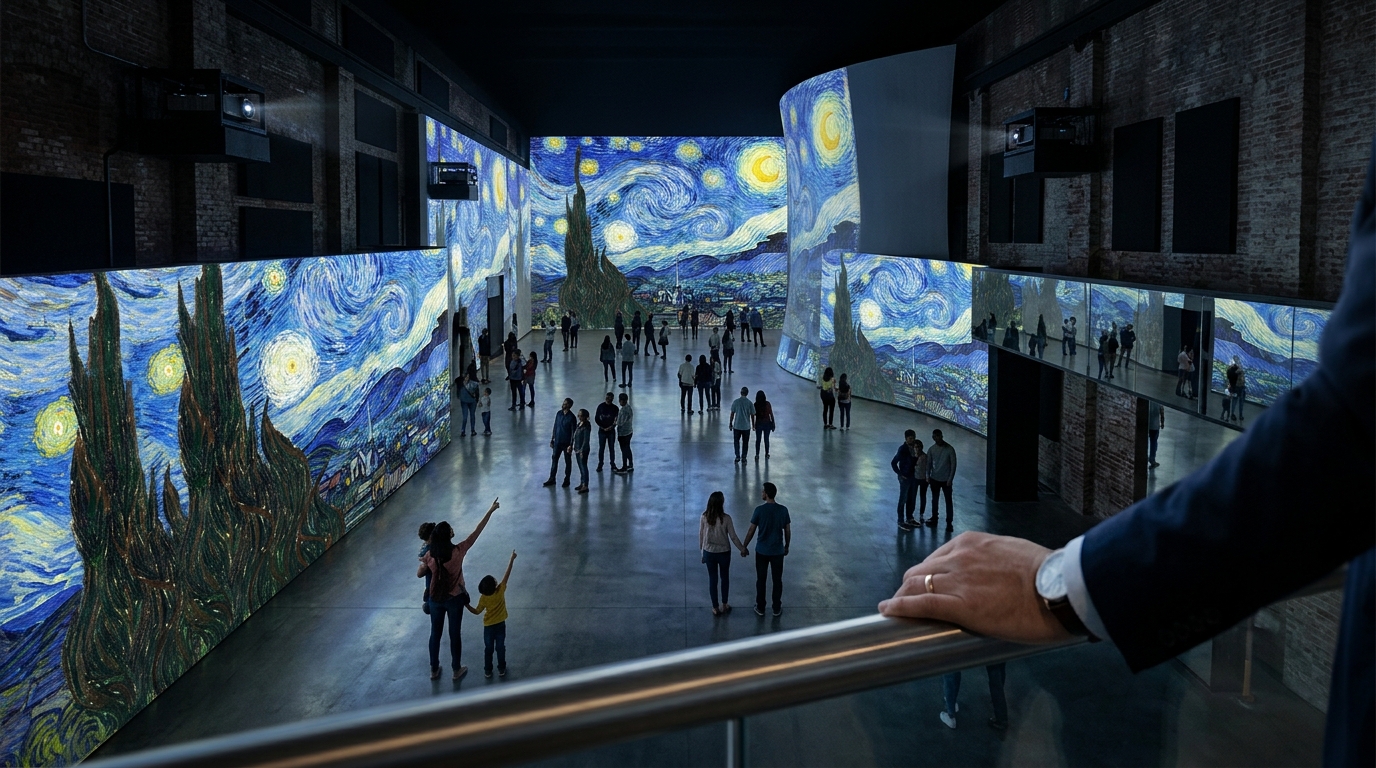
Immersive art exhibitions have fundamentally reshaped the cultural tourism landscape, with Grande Experiences reporting over 25 million visitors across 200+ hosted cities. This massive engagement metric demonstrates that audiences no longer view art as a static observation but as a participatory, multisensory journey. For venue owners, this shift represents a significant revenue opportunity, as these exhibitions attract diverse demographics seeking unique social and educational experiences.
Understanding the Immersive Van Gogh Experience
An immersive Van Gogh exhibition is not a traditional gallery walk. It is a large-scale digital projection environment that transforms walls, floors, and ceilings into dynamic canvases. The technology maps high-resolution imagery of Van Gogh's brushstrokes and color palettes onto architectural surfaces, creating a 360-degree visual field. This approach allows visitors to feel as though they are walking inside the paintings themselves. (FAQs Grande Experiences Immersive)
The experience often includes synchronized audio scores that reflect the emotional tone of the artist's life periods. For example, the turbulent blues of his early years might be accompanied by somber cello music, while the vibrant yellows of Arles are paired with upbeat, energetic compositions. This multisensory integration is what distinguishes modern immersive art from standard digital displays.
According to industry data, immersive exhibitions have seen exponential growth in attendance since 2019, with many venues reporting a 40% increase in foot traffic compared to traditional static art shows. This growth is driven by the "Instagrammability" of the spaces, which encourages organic social media sharing and extends the marketing reach of the venue significantly.
Choosing the Right Partnership Model
For venue operators, the primary decision involves selecting the appropriate collaboration framework. Grande Experiences offers flexible models designed to accommodate different operational capacities and risk appetites. Understanding these options is critical for long-term profitability.
Touring Exhibition Partnerships
The most common entry point for new venues is the touring exhibition model. In this arrangement, the production team handles the logistics of transporting the digital content and projection hardware. The venue provides the physical space and local marketing support. This model minimizes the capital expenditure for the venue owner, as they do not need to invest in proprietary technology or software development.
This approach is ideal for museums, convention centers, and temporary pop-up locations that wish to host a high-profile event for a limited run. The touring nature of the exhibition creates a sense of urgency and exclusivity, which can drive ticket sales through fear of missing out (FOMO).
Permanent Gallery Installations
For venues with a long-term strategic vision, a permanent installation offers deeper integration. This model involves installing a dedicated digital gallery infrastructure, such as THE LUME, which can host multiple rotating exhibitions. A permanent setup allows the venue to become a cultural landmark in its region, attracting repeat visitors and local residents who seek regular cultural engagement.
Permanent installations require a higher initial investment in hardware and space modification. However, the operational costs are lower over time, and the revenue potential is uncapped. Venues can host corporate events, private functions, and wellness activities in the space when exhibitions are not running, maximizing asset utilization.
Technical and Spatial Venue Requirements
Not every space is suitable for an immersive exhibition. The technical demands of large-scale projection require specific architectural characteristics to ensure a high-quality visitor experience. Understanding these requirements early in the planning phase prevents costly retrofitting errors.
Blackout Capabilities
A fundamental requirement is the ability to achieve complete darkness. Immersive projections rely on high contrast to make colors pop and images appear to float in space. Venues must have effective light-blocking capabilities, including blackout curtains, sealed windows, and controlled HVAC systems that do not introduce ambient light leaks.
Surface Geometry and Texture
The surfaces used for projection must be flat, smooth, and white or light-colored. Irregular textures or dark walls will absorb the light, resulting in a dim and muddy image. The geometry of the room should allow for seamless mapping across multiple walls. Corners and edges must be calculated precisely to avoid visual distortion.
Capacity and Flow
Immersive spaces often feel smaller than they are due to the enveloping nature of the visuals. Therefore, venue capacity must be carefully managed to prevent overcrowding, which can degrade the visitor experience. A clear flow plan is essential to guide groups through the space without bottlenecks. This includes designated entry and exit points, as well as areas for rest and reflection.
The Installation and Production Workflow
The success of an exhibition hinges on the precision of its installation. Grande Experiences has completed over 250 installations across six continents, developing a refined workflow that minimizes disruption to the venue.
Pre-Production Planning
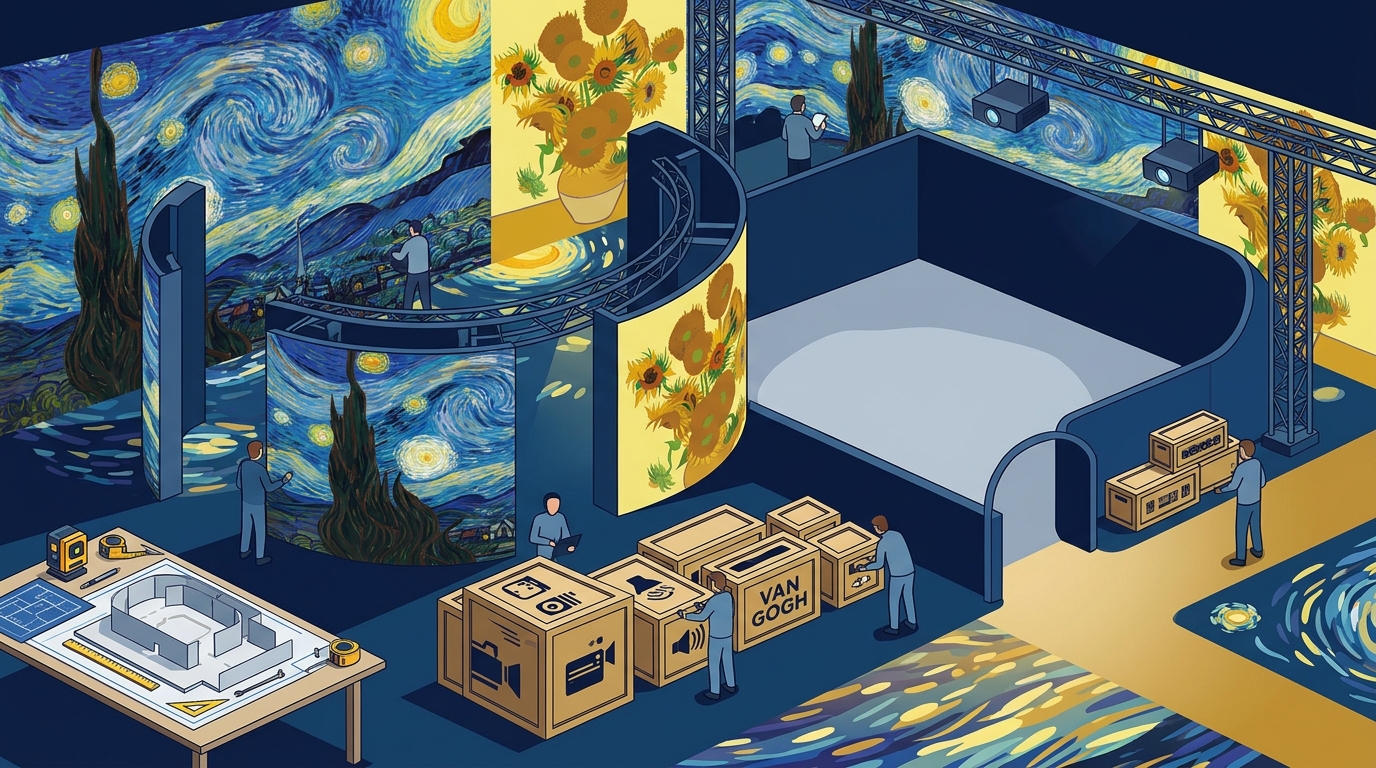
The process begins with a detailed technical survey of the venue. This includes measuring dimensions, assessing power requirements, and identifying structural constraints. The production team creates a 3D model of the space to simulate the projection mapping and identify potential issues before hardware arrives.
Hardware Deployment
High-lumen laser projectors are mounted at strategic points to cover all surfaces. These projectors are calibrated to ensure color accuracy and brightness uniformity. The hardware is secured using non-invasive mounting techniques to protect the venue's infrastructure. This is particularly important for heritage buildings or sensitive architectural spaces.
Content Mapping and Calibration
Once the hardware is in place, the content mapping begins. This is a meticulous process where artists and technicians align the digital imagery with the physical architecture. The goal is to create a seamless illusion where the art appears to exist naturally within the space. This step requires weeks of fine-tuning to achieve the desired visual impact.
Marketing and Audience Engagement
Launching an immersive exhibition requires a robust marketing strategy that highlights the unique aspects of the experience. Unlike traditional art shows, immersive exhibitions are highly visual and social, which should be reflected in all promotional materials.
Social Media Integration
Encourage visitors to share their experiences on social media by creating designated "photo moments" within the exhibition. These are specific areas where the lighting and composition are optimized for photography. Providing hashtags and encouraging user-generated content can significantly amplify the reach of the exhibition.
Corporate and Group Bookings
Immersive exhibitions are increasingly popular for corporate team-building events and private parties. Offering exclusive after-hours access or customized audio guides can attract this segment of the market. This diversifies revenue streams and ensures consistent occupancy during off-peak times.
Educational Partnerships
Collaborate with local schools and universities to offer educational tours. Immersive exhibitions provide a unique platform for teaching art history, technology, and cultural studies. Developing curriculum-aligned materials can help secure school groups, which provide steady weekday traffic.
Key Takeaways
- Immersive exhibitions attract over 25 million visitors globally, indicating strong market demand for interactive art.
- Venues can choose between touring partnerships for low capital risk or permanent installations for long-term cultural impact.
- Complete blackout capabilities and smooth, white surfaces are non-negotiable technical requirements for high-quality projection.
- Grande Experiences has successfully installed exhibitions in over 200 cities, demonstrating a proven logistical framework.
- Social media integration is critical, as the visual nature of the experience drives organic marketing through user-generated content.
- Diversifying revenue through corporate events and educational partnerships ensures financial stability beyond ticket sales.
- The installation process involves precise 3D modeling and calibration to ensure seamless visual mapping across complex architectures.
Frequently Asked Questions
How long does the installation process take?
The installation timeline varies based on the size of the venue and the complexity of the exhibition. Typically, a touring exhibition can be installed within two to three weeks. Permanent installations may require several months for infrastructure preparation and hardware setup.
What is the minimum ceiling height required?
While specific requirements depend on the projection technology used, a minimum ceiling height of 10 to 12 feet is generally recommended to allow for proper projector placement and light dispersion. Taller ceilings can enhance the sense of immersion but require more powerful hardware.
Can the exhibition be hosted in a heritage building?
Yes, Grande Experiences specializes in working with heritage buildings. The installation uses non-invasive mounting techniques to protect historical structures. The production team conducts thorough assessments to ensure the safety and preservation of the venue's architectural integrity.
How is ticket pricing determined?
Ticket pricing is influenced by local market conditions, venue capacity, and the duration of the exhibition run. Grande Experiences provides guidance on competitive pricing strategies to maximize revenue while ensuring accessibility for diverse audience segments.
What types of events can be hosted in the space?
Beyond public exhibitions, the space can host corporate events, private parties, wellness workshops, and educational tours. The versatility of the digital environment allows for customized experiences tailored to specific client needs.
Is the content updated regularly?
Touring exhibitions feature curated content that changes with each new location or season. Permanent installations like THE LUME can rotate between different artistic themes, such as Van Gogh, Monet, or Klimt, keeping the experience fresh for repeat visitors.
What support is provided for marketing?
Grande Experiences provides comprehensive marketing support, including digital assets, press kits, and strategic guidance. The team collaborates with local promoters to develop targeted campaigns that resonate with the local audience.
Contact Us
Ready to transform your venue into a world-class cultural destination? Partner with Grande Experiences to bring the magic of Van Gogh to your community. Contact our team today to discuss your venue's potential and explore our collaboration opportunities. Visit our contact page to schedule a consultation with our production experts.