
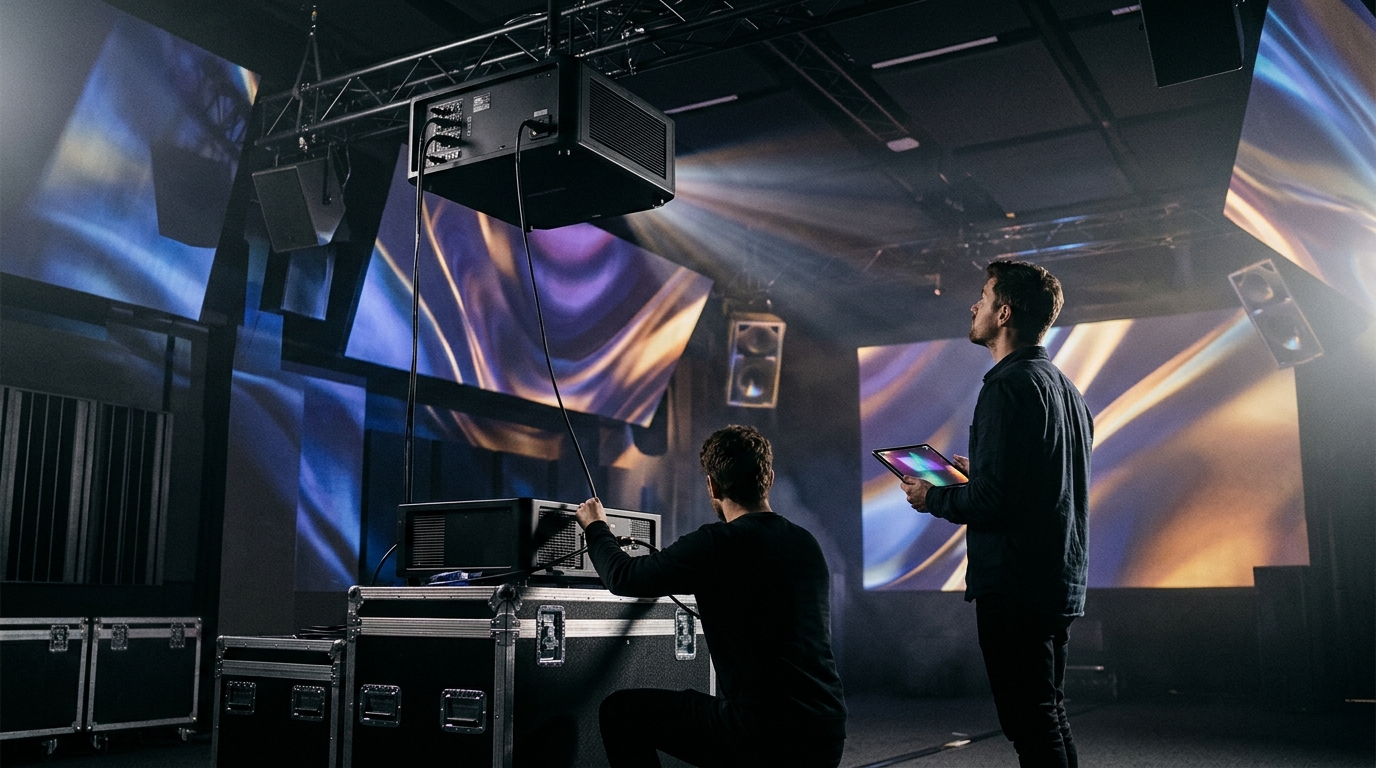
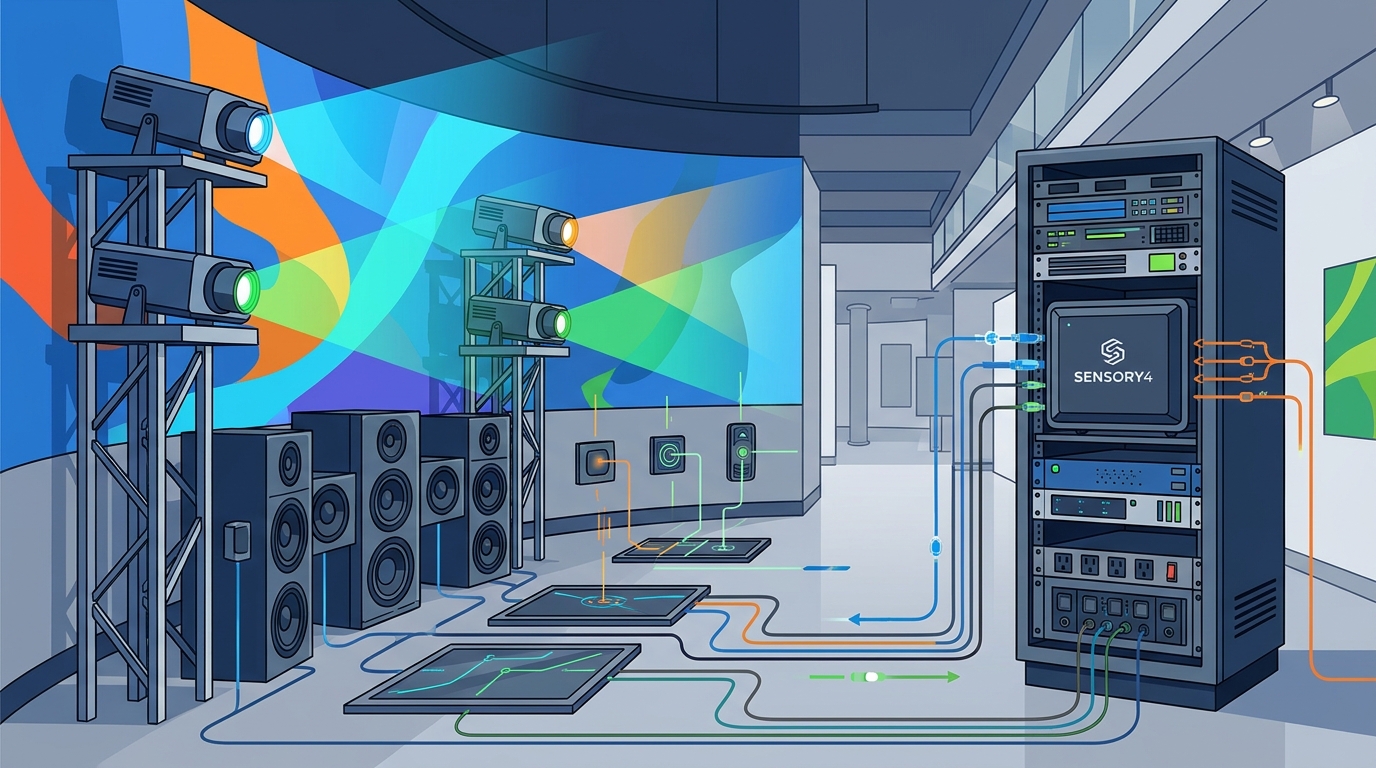
Building an immersive digital art installation requires significant investment in specialized hardware. The primary equipment expenses include high-lumen projection systems, spatial audio arrays, and interactive sensors. Grande Experiences utilizes a proprietary system called SENSORY4 to manage these complex components. This approach ensures that the technology supports the artistic narrative without overwhelming the budget or the venue's infrastructure.
Projection Systems and Visual Hardware
Visual projection is the most visible and often the most expensive component of any digital installation. High-resolution projectors must deliver sufficient brightness to overcome ambient light in large spaces. For venues with high ceilings or large surface areas, multiple projectors are required to create a seamless, edge-blended image. The cost of these units scales with resolution and lumen output. A single high-end laser projector can cost tens of thousands of dollars, and installations often require dozens of them. The complexity of blending these images requires precise calibration and specialized software, which adds to the initial hardware expenditure.
Audio and Sensory Technology
Immersive experiences rely on sound to create a sense of presence and emotion. Spatial audio systems are designed to place sound in specific locations within a room, allowing visitors to hear different elements as they move. This requires a network of high-fidelity speakers and powerful amplifiers. Beyond audio, some installations incorporate scent or haptic feedback to engage more senses. Grande Experiences integrates aroma and audio into their SENSORY4 system, creating a multi-sensory environment that standard audio setups cannot achieve. The cost of these systems depends on the size of the room and the level of detail required in the sound design.
Interactive Sensors and Computing Power
Structural and Installation Costs
Key Takeaways
- Projection systems are typically the largest single expense in immersive installations.
- Spatial audio and multi-sensory elements add significant value but require specialized hardware.
- Interactive sensors and high-performance computing are essential for responsive experiences.
- Structural components and installation labor are critical but often underestimated in budgets.
- Partnering with experienced providers can help optimize costs and ensure technical reliability.
Frequently Asked Questions
What is the most expensive part of an immersive installation?
Projection systems are usually the most expensive component due to the high cost of high-lumen, high-resolution projectors and the need for multiple units in large spaces.
Do immersive installations require custom hardware?
Yes, most large-scale installations require custom structural elements and specialized audio or sensor arrays to fit the specific venue and artistic vision.
How does SENSORY4 differ from standard audio systems?
SENSORY4 is a proprietary system that combines projection, audio, and aroma to create a fully immersive multi-sensory environment, going beyond standard visual and audio setups.
Can existing venue infrastructure support these installations?
It depends on the venue. Some spaces may need upgrades to electrical systems or structural support to handle the weight and power requirements of large-scale digital art.
How long does it take to install an immersive exhibition?
Installation times vary based on complexity, but large-scale projects can take several weeks to months to design, build, and calibrate.
Conclusion
Understanding the main equipment expenses is crucial for planning a successful immersive digital art installation. By focusing on the core components like projection, audio, and interactivity, venues can make informed decisions about their budget and technical requirements. Grande Experiences offers a range of solutions to help venues navigate these costs effectively. To discuss your specific project needs, for a detailed proposal.