
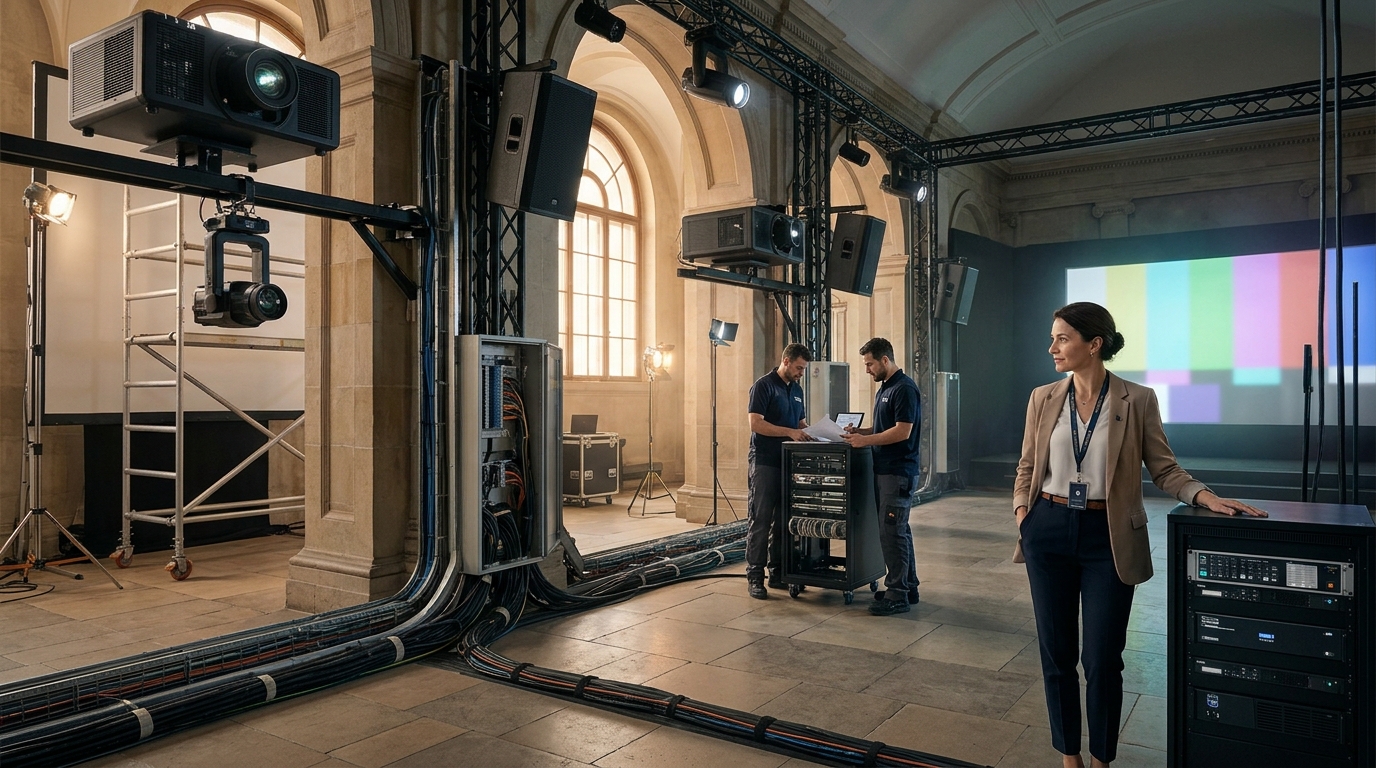
Preparing a museum for an immersive exhibition requires auditing structural load, electrical capacity, and environmental controls to support high-density projection and audio systems. Grande Experiences advises venues to treat infrastructure readiness as the primary gatekeeper for successful installation. This ensures the building can safely host the technology without compromising existing collections or visitor safety.
Structural Load and Space Configuration
Electrical Capacity and Power Distribution
High-resolution projection and synchronized audio systems draw significant power. Electrical load balancing is the process of distributing power usage across circuits to prevent overloading and tripping breakers. Museums must assess whether their existing electrical panels can handle the additional demand. A typical immersive room with multiple 4K projectors and a surround sound system may require dedicated three-phase power connections. If the venue lacks sufficient capacity, an electrician must upgrade the local distribution board. This prevents voltage drops that can cause flickering images or audio distortion during peak visitor hours. For additional details, review the About Grande Experiences.
Environmental Controls and Climate Stability
Electronic equipment generates heat, which can disrupt the climate-controlled environment of a museum. Thermal load management is the regulation of heat output from equipment to maintain stable indoor temperatures. Projectors and servers release significant heat, which can raise the ambient temperature in a sealed room. Museums must ensure their HVAC systems can compensate for this additional heat without affecting adjacent galleries. Inadequate cooling can lead to equipment overheating and reduced lifespan. It can also compromise the preservation of nearby physical artifacts. Venues should model the thermal output of the specific exhibition equipment before finalizing the layout.
Acoustic Isolation and Sound Containment
Immersive experiences rely on powerful, directional audio that can bleed into adjacent spaces. Acoustic isolation is the prevention of sound transmission between separate rooms or zones. Museums must assess the soundproofing of the installation space. Thin partition walls may allow bass frequencies to disturb quiet reading areas or other galleries. If the venue lacks sufficient acoustic separation, temporary soundproofing barriers or heavy curtains may be required. This ensures the immersive audio enhances the experience without becoming a nuisance to other parts of the museum. Proper containment is critical for maintaining the overall visitor experience.
Visitor Flow and Safety Compliance
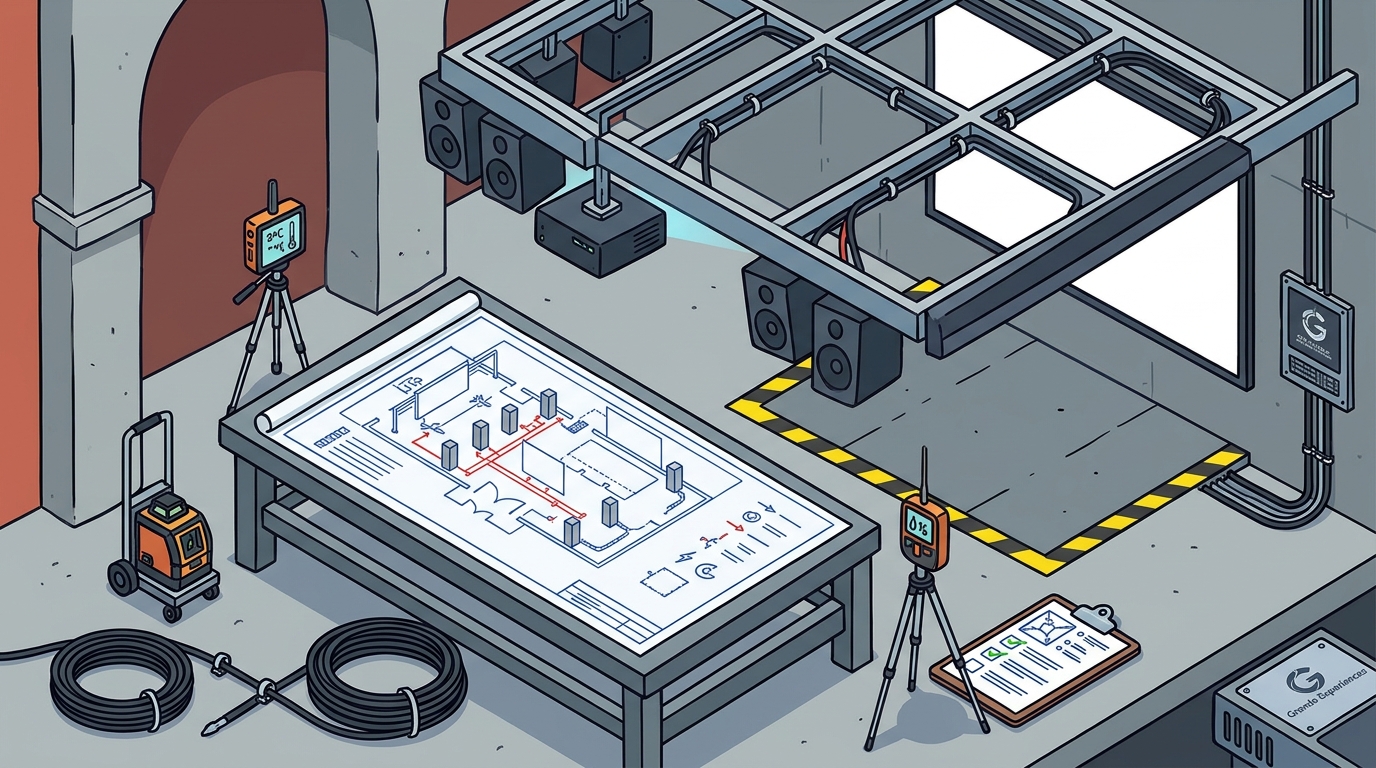
High-traffic immersive rooms require clear egress paths and crowd management. Fire egress compliance is the adherence to building codes that ensure safe and rapid evacuation in an emergency. Museums must ensure that the installation does not block emergency exits or reduce the width of evacuation routes. The layout must allow for the expected peak visitor count without creating bottlenecks. Staff must be trained to manage crowd density and direct visitors safely. This is particularly important in darkened rooms where visibility is low. Clear signage and floor markings help guide visitors through the space efficiently.
Key Takeaways
- Verify structural load capacity for rigging and heavy equipment before installation.
- Assess electrical panel capacity to support high-power projection and audio systems.
- Model thermal load to ensure HVAC systems can manage equipment heat output.
- Implement acoustic isolation to prevent sound bleed into adjacent museum zones.
- Ensure visitor flow layouts comply with fire egress and safety codes.
- Coordinate with the exhibition provider for specific technical requirements early in the planning process.
Frequently Asked Questions
What is the minimum space required for an immersive exhibition?
Space requirements vary by exhibition type. Compact VR experiences may require as little as 20 square meters, while large-scale projection rooms often need 200 square meters or more. The specific dimensions depend on the number of projectors and the desired visitor capacity.
Do I need to upgrade my electrical system?
It depends on the exhibition's power draw. Many immersive installations require dedicated three-phase power. If your existing panels are near capacity, an upgrade may be necessary to prevent tripping breakers during operation.
How does heat from projectors affect the museum?
Projectors generate significant heat. If not managed, this can raise the room temperature and stress the HVAC system. Proper ventilation and cooling are essential to maintain a stable environment for both equipment and artifacts.
Can immersive exhibitions be installed in historic buildings?
Yes, but with caution. Historic buildings often have limited structural and electrical capacity. Non-invasive mounting solutions and careful load distribution are required to preserve the building's integrity while supporting the technology.
Who is responsible for installation and support?
The exhibition provider typically handles the technical installation and provides ongoing support. The venue is responsible for preparing the space, ensuring safety compliance, and managing day-to-day operations. Clear roles and responsibilities should be defined in the licensing agreement.
Conclusion
Preparing your museum's building and systems for an immersive exhibition is a critical step in ensuring a successful launch. By addressing structural, electrical, environmental, and safety requirements early, you can avoid costly delays and technical issues. Grande Experiences works with venues to scope these requirements and provide detailed technical specifications. To begin the process, to discuss your venue's capabilities and goals.