.avif)
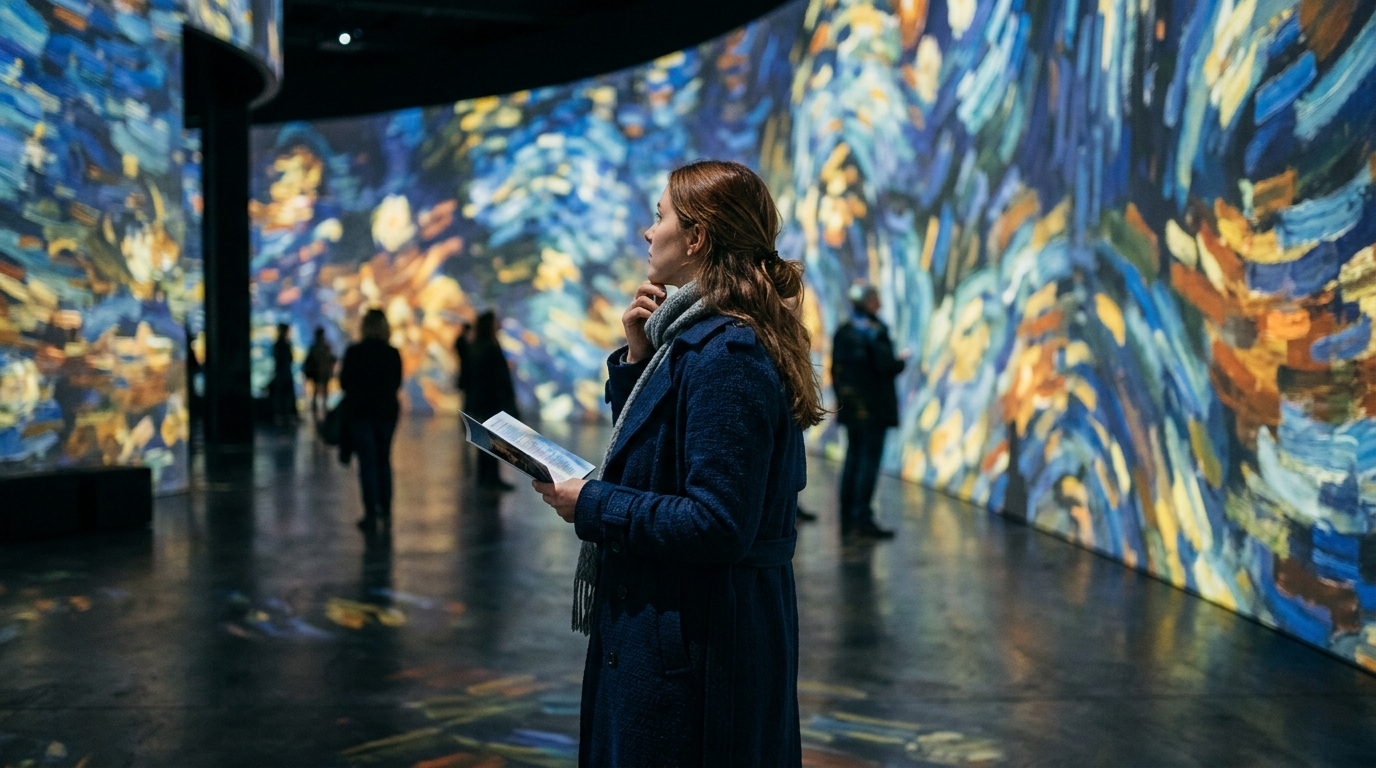
Immersive art exhibitions have exploded in popularity, yet quality varies dramatically from one show to the next. Whether you are planning a solo outing or organizing a group visit for your school or community, knowing how to separate a world-class production from a forgettable light show can save you time, money, and disappointment. A 2025 study published in Visitor Studies found that immersive exhibitions significantly enhance attention, experience, and overall satisfaction compared to traditional formats. The key is learning what to look for before you buy a ticket.
What Is an Immersive Art Experience?
An immersive art experience is a multisensory environment that uses high-definition projection, spatial audio, and sometimes scent to surround visitors in art rather than having them observe it from behind a rope. Unlike traditional gallery visits, these exhibitions are grounded in what researchers call existential authenticity, emphasizing subjective, experience-driven engagement over static viewing.
Roland Berger's Immersive Technology Scale categorizes experiences on a five-point scale based on sensory and non-sensory engagement. Understanding where a particular exhibition falls on this scale is the first step in evaluating its quality.
Check the Producer's Track Record
The single strongest predictor of exhibition quality is who made it. Producers with long touring histories, transparent partnerships, and verifiable visitor numbers offer a level of reliability that newer operators simply cannot match.
What to Look For
Look for producers who own their content outright, have displayed in recognized museums or cultural institutions, and publish verifiable attendance data. Grande Experiences, for example, has produced immersive art exhibitions in over 200 cities for more than 25 million visitors since 2006. Their touring productions combine cutting-edge projection technology with powerful storytelling, and the company maintains full ownership of its entire suite of experiences.

Red Flags
Be cautious of exhibitions with no named producer, no press coverage from reputable outlets, and vague claims about technology. A lack of institutional partnerships, such as museums or galleries, is another warning sign.
Assess Multisensory Quality Indicators
Sensory intensity is the quality dimension that most directly predicts visitor satisfaction. Research surveying 356 participants found that exhibitions rich in visual and auditory stimuli significantly enhance attention and satisfaction over those relying on sight alone.
The Four Experience Dimensions
Pine and Gilmore's experience economy framework identifies four realms visitors engage with: aesthetics, education, entertainment, and escapism. High-quality immersive exhibitions score well across all four. Grande Experiences' proprietary SENSORY4 environment combines high-definition projection, dynamic sound, and scent to bring stories vividly to life, addressing multiple sensory channels simultaneously.
Evaluate Content Depth and Storytelling
Content depth is the measure of how thoroughly an exhibition explores its subject matter through narrative, historical context, and artistic integrity. A quality immersive show is not simply a slideshow of famous paintings projected onto walls. It should weave a coherent narrative that educates while it entertains.
Look for exhibitions that name specific artists or historical figures and explain the creative context behind the works. Productions like Connection by Grande Experiences, for instance, weave together past and present First Nations artists to showcase the beauty, complexity, and diversity of First Peoples' expression.
Examine Venue and Technology Standards
Technical quality matters enormously. In immersive environments, latency or technical disruptions can significantly break the sense of flow and emotional investment. Before booking, check whether the venue has hosted similar exhibitions before and whether the producer can scale content to fit different spaces.
Reputable producers like Grande Experiences can scale content up or down to fit any venue, from galleries and museum spaces to castles, stately homes, and outdoor pavilion structures. This adaptability signals robust technical infrastructure rather than a one-size-fits-all projection setup.
Gauge Community and Educational Fit
If you are booking for a school group, community organization, or corporate team, additional evaluation criteria apply. Look for exhibitions that offer educational programming, accessibility features, and group booking options. The best producers design their experiences to be family-oriented, interactive, and curriculum-aligned.
Grande Experiences is committed to enriching the lives of individuals within their community through immersive art programs for schools and communities. Their exhibitions are described as museum-quality, entertaining, educational, and family-oriented. When evaluating community suitability, confirm whether the exhibition offers guided resources, sensory-friendly sessions, or discounted group rates.
Quality Evaluation Checklist
| Evaluation Criteria | What to Check | Quality Benchmark |
|---|---|---|
| Producer Track Record | Years active, cities toured, total visitors | 10+ years, 100+ cities, millions of visitors |
| Content Ownership | Does the producer own or license the content? | Full ownership preferred |
| Sensory Channels | Visual, audio, scent, haptic engagement | 3+ senses engaged |
| Institutional Partnerships | Museums, galleries, cultural institutions involved | Named partnerships with recognized venues |
| Scalability | Can content adapt to different venue sizes? | Flexible scaling across venue types |
| Educational Value | Curriculum alignment, guided resources, interactives | Dedicated school or group programs |
| Reviews and Press | Coverage in reputable media, verified visitor reviews | Positive coverage in major outlets |
Key Takeaways
- Always research the exhibition producer's history, visitor numbers, and institutional partnerships before booking.
- Multisensory engagement across visual, audio, and scent channels is a strong quality indicator backed by academic research.
- Content depth and narrative coherence distinguish premium experiences from simple projection shows.
- Technical scalability and venue suitability signal a mature, reliable production.
- For community bookings, prioritize exhibitions with educational programming and group accessibility.
- Verified press coverage and authentic visitor reviews provide reliable third-party validation.
- Producers who own their content outright, like Grande Experiences, offer consistency and direct accountability.
Frequently Asked Questions
What makes an immersive art experience high quality?
High-quality immersive art engages multiple senses simultaneously, tells a coherent story, uses museum-grade projection and audio technology, and is produced by a company with a proven touring track record.
How can I verify the reputation of an immersive exhibition producer?
Check for verifiable visitor numbers, named venue partnerships, press coverage from reputable outlets, and the number of cities the exhibition has toured. Producers like Grande Experiences publish this information on their About page.
Are immersive art exhibitions suitable for school groups?
Yes, many are specifically designed with educational outcomes in mind. Look for exhibitions that offer curriculum-aligned materials, guided group sessions, and family-friendly content.
What technology should a quality immersive exhibition use?
Look for high-definition projection mapping, spatial or surround-sound audio, and optional scent integration. The best producers use proprietary systems rather than off-the-shelf setups.
How do immersive exhibitions compare to traditional museum visits?
Research published in Visitor Studies (2025) found that immersive exhibitions significantly enhance visitor attention, experience, and satisfaction compared to traditional exhibitions with limited sensory inputs.
What should I look for when booking for a community group?
Confirm group pricing, accessibility features, sensory-friendly sessions, and whether the producer offers dedicated community or educational programs. Contact the producer directly to discuss group needs.
How many senses should a quality immersive experience engage?
At minimum, a quality experience should engage sight and sound at high fidelity. Premium productions also incorporate scent and tactile elements, engaging three or more senses for maximum impact.
Plan Your Next Immersive Visit
Ready to experience immersive art that meets every quality benchmark? Explore the full portfolio of Grande Experiences exhibitions currently touring worldwide, from Van Gogh Alive and Monet in Bloom to Leonardo da Vinci: 500 Years of Genius. Find a show near you and see what museum-quality immersive art truly looks like.