.avif)
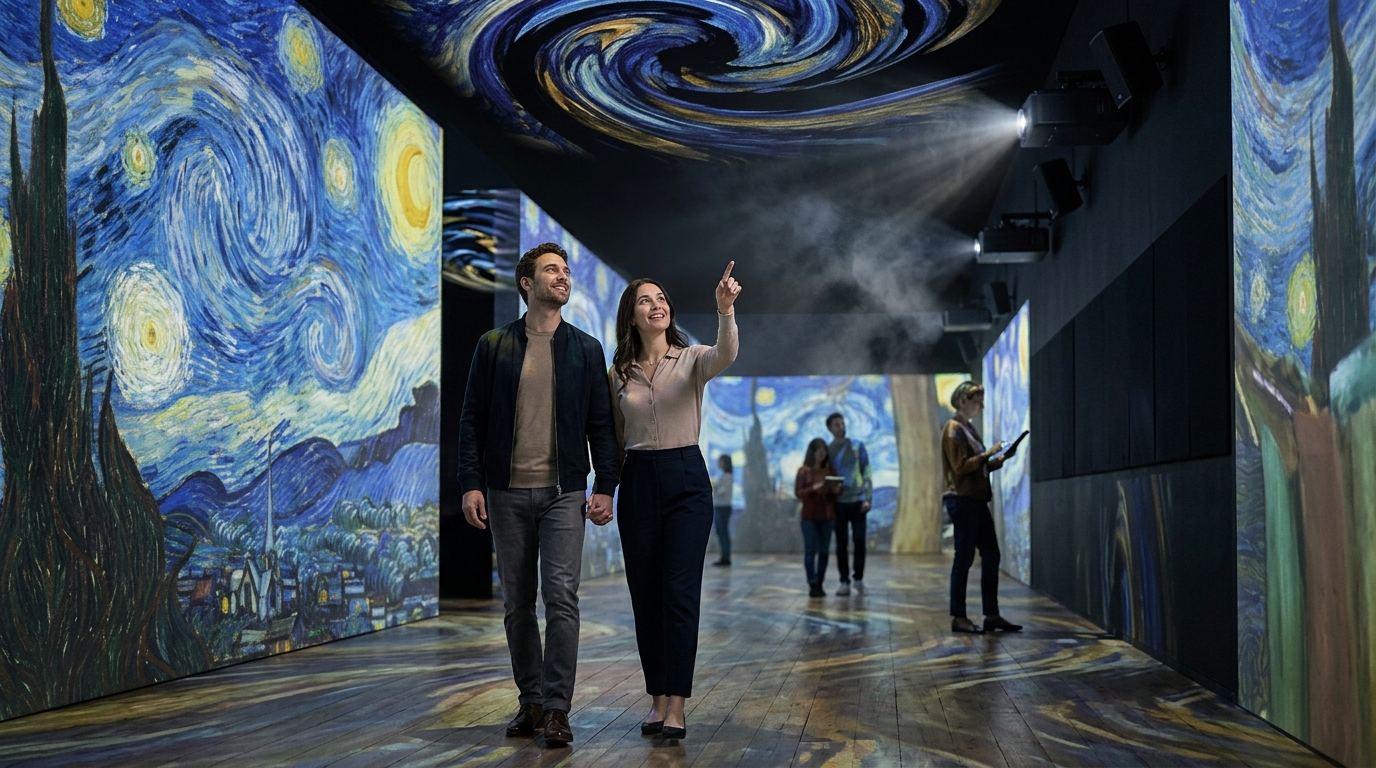
The immersive art exhibitions market was valued at approximately $2.8 billion in 2025 and is projected to reach $7.9 billion by 2034, growing at a CAGR of 12.2%. With hundreds of new venues opening worldwide, choosing a high-quality experience over a forgettable one has never been more important. Whether you are planning a personal outing or organizing a group visit for your school, workplace, or community group, knowing what separates a world-class immersive exhibition from a poorly executed imitation can save you time, money, and disappointment. This guide walks you through the key criteria for evaluating immersive art quality before you buy a single ticket.
What Is an Immersive Art Experience?
An immersive art experience is a multisensory environment that surrounds visitors with projected imagery, spatial audio, and sometimes scent to transform passive viewing into active participation. Unlike a traditional gallery visit, these exhibitions use technology to place you inside the artwork itself. As Roland Berger's Immersive Technology Scale explains, true immersion is defined by the degree to which sensory and non-sensory engagement transports users to a different world.
Understanding this definition matters because many events market themselves as "immersive" when they are merely experiential. A quality evaluation starts by asking whether the experience truly surrounds you or simply displays content on a few screens.
Check the Producer's Track Record
The single most reliable quality indicator is the organization behind the exhibition. A producer with a long history of successful global touring has already solved the technical, curatorial, and logistical challenges that cause newer operators to stumble.
Years of Operation and Global Reach
Grande Experiences, for instance, has been creating immersive exhibitions since 2006, delivering over 280 exhibitions in more than 200 cities to over 25 million visitors. That kind of track record signals proven operational excellence. Compare this to producers with only one or two exhibitions and limited touring history.
Venue Partnerships
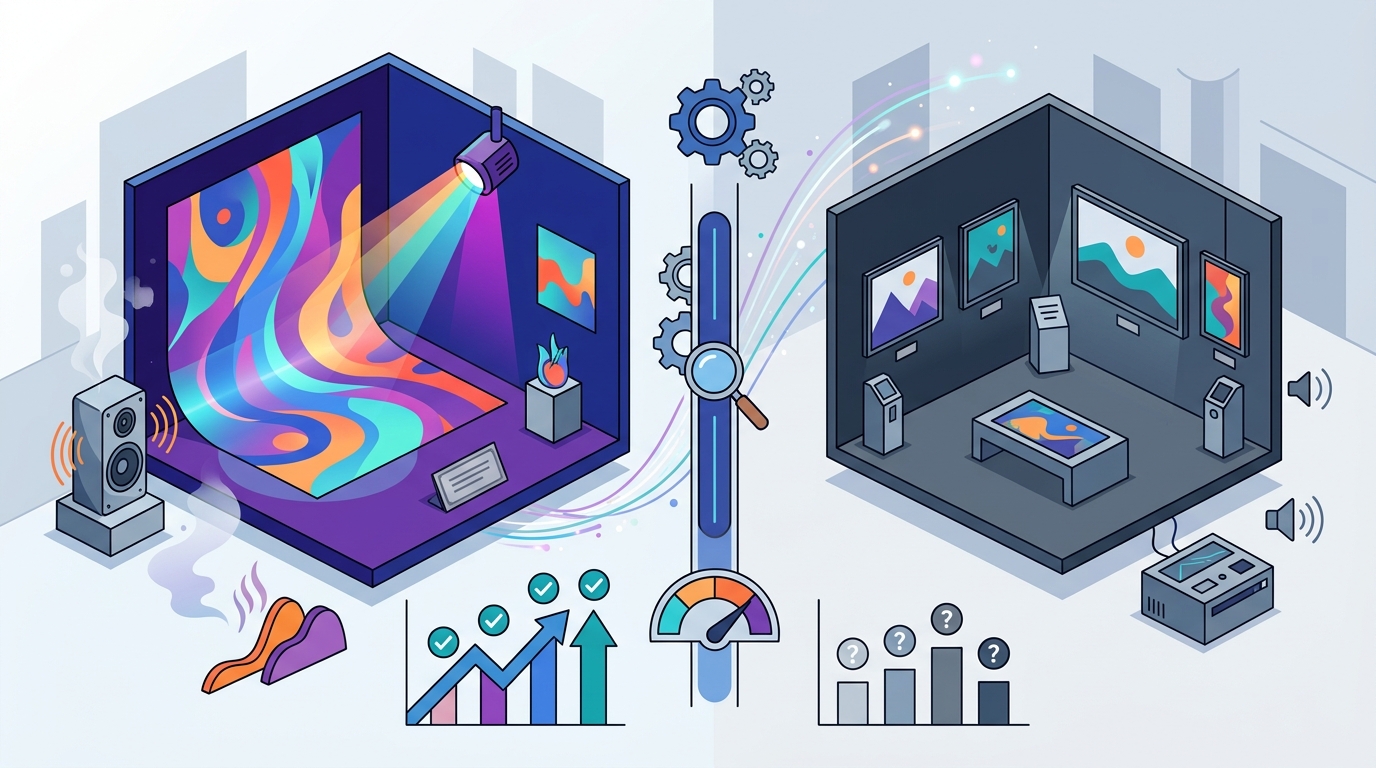
Look for producers who partner with respected museums, galleries, and cultural institutions. Grande Experiences works with venues ranging from THE LUME permanent galleries to historic castles and science centers. Partnerships with established institutions are a strong proxy for content quality and curatorial standards.
Assess the Technology and Sensory Design
Technology quality is a core differentiator. A multisensory environment is a space that combines high-definition projection, dynamic sound, and scent to bring stories vividly to life. Top-tier exhibitions use proprietary projection systems that envelop the visitor from floor to ceiling, not just a single wall.
Key Technical Questions to Ask
Before booking, investigate these specifics: Does the exhibition use 360-degree projection or only partial coverage? Is the audio spatial or simply ambient? Are there additional sensory layers like scent or tactile elements? According to research published in Scientific Reports, latency or technical disruptions can significantly break the sense of flow and emotional investment in immersive environments.
Projection Mapping Dominance
Projection mapping is the dominant technology in the immersive art sector, accounting for approximately 38.6% of total market revenue by technology in 2025. Its ability to create shared group experiences without individualized hardware makes it ideal for family and community outings alike.
Evaluate Content Authenticity and Storytelling
The best immersive experiences are not just technical showcases; they are carefully researched narratives that respect the source material. Content authenticity means the exhibition uses genuine, high-resolution reproductions of original artworks, supported by scholarly research and interpretive context.
Look for exhibitions that name specific artists and curators. Grande Experiences' Van Gogh Alive, the most-visited immersive experience in the world, draws directly from Van Gogh's complete body of work. Similarly, their Connection exhibition features named First Nations artists including Emily Kame Kngwarreye and Albert Namatjira, weaving together past and present voices with cultural integrity.
Beware exhibitions that rely on generic digital effects without identifying the artworks, artists, or narrative structure driving the experience.
Consider Community and Educational Value
If you are evaluating for a school group, community organization, or corporate team, educational depth matters. Quality producers develop dedicated learning programs alongside their exhibitions. Grande Experiences offers immersive art programs for schools and communities designed to enrich educational outcomes.
The 2025 Immersive Entertainment & Culture Industry Report by Gensler and the Immersive Experience Institute highlights that audiences find meaning and belonging through quality immersive experiences at the deepest level. Community-focused programming transforms a visit from a one-time outing into a lasting educational resource.
Quality Comparison: What to Look For
| Quality Indicator | High-Quality Experience | Low-Quality Experience |
|---|---|---|
| Producer track record | 10+ years, 100+ exhibitions globally | First or second production, single city |
| Projection coverage | Floor-to-ceiling, 360-degree immersion | Single wall or partial screen coverage |
| Audio design | Spatial, curated soundtrack | Generic ambient music on speakers |
| Content sourcing | Named artists, scholarly research | Unattributed digital effects |
| Multisensory layers | Scent, tactile elements, dynamic lighting | Visual only |
| Community programs | School curricula, accessibility features | No educational component |
| Venue partnerships | Museums, galleries, cultural institutions | Pop-up in unvetted commercial space |
Analyze Reviews and Social Proof
Before booking, read reviews from reputable media outlets rather than relying solely on social media posts. Awards from recognized industry bodies, positive press from major publications, and high visitor return rates all indicate quality. Van Gogh Alive, for example, has been described as "truly one of the best exhibitions of the year" by press globally.
Check whether the exhibition has been recognized by organizations like the Touring Exhibitions community or featured in industry reports. Consumer research shows that 7 in 10 participants are willing to pay a premium for immersive experiences lasting longer than 30 minutes, so ensure the runtime justifies the ticket price.
Key Takeaways
- Verify the producer's track record: years in operation, number of exhibitions, and global reach are top quality signals.
- Demand 360-degree projection and spatial audio; partial-wall setups rarely deliver true immersion.
- Authentic content names specific artists, references original works, and provides interpretive context.
- Multisensory design (scent, sound, light) separates premium experiences from surface-level imitations.
- Community and educational programs indicate a producer committed to lasting impact, not just ticket sales.
- Trusted venue partnerships with museums and cultural institutions serve as independent quality endorsements.
- Read industry reviews and check award recognition before committing your budget.
Frequently Asked Questions
What makes an immersive art experience different from a regular exhibition?
An immersive art experience surrounds you with projected imagery, spatial audio, and sometimes scent, placing you inside the artwork. Traditional exhibitions display pieces on walls for passive viewing. The technology-driven approach creates emotional and sensory engagement that static displays cannot achieve.
How do I know if an immersive exhibition producer is reputable?
Look for a long operational history, a large portfolio of past exhibitions, partnerships with recognized museums or galleries, and positive coverage from established media outlets. Producers like Grande Experiences have nearly two decades of global touring experience across 200+ cities.
Are immersive art experiences suitable for school groups?
Yes, the best producers develop dedicated educational programs. Grande Experiences offers community engagement programs specifically designed for schools, combining curriculum-aligned content with the immersive format to boost learning outcomes.
What technology should a quality immersive experience use?
At minimum, expect high-definition projection mapping covering floors, walls, and ceilings, paired with spatial audio. Top experiences add scent diffusion, interactive elements, and dynamic lighting. Projection mapping accounts for roughly 38.6% of total immersive art market revenue, making it the industry standard.
How long should a good immersive experience last?
Research indicates most consumers expect at least 30 minutes for a premium experience. High-quality exhibitions like Van Gogh Alive typically run 60 to 90 minutes, giving visitors time to absorb multiple narrative chapters and sensory layers.
Can I evaluate an experience without visiting first?
Yes. Review the producer's website for details on technology, artists featured, and venue partnerships. Watch official video trailers, read third-party press reviews, and check the exhibition's touring history. These steps give a reliable quality picture before purchasing tickets.
Why do some immersive experiences cost more than others?
Higher prices typically reflect superior projection technology, licensed or curated artistic content, multisensory design, and professional venue partnerships. Budget experiences often cut corners on resolution, audio quality, and content depth.
What should community organizations look for when booking group visits?
Prioritize exhibitions with group booking options, dedicated educational guides, accessibility accommodations, and content aligned with your community's interests. Check whether the producer offers tailored programming for diverse audiences.
Take Your Next Step
Ready to experience what a world-class immersive exhibition looks and feels like? Get in touch with Grande Experiences to explore partnership opportunities or find a current exhibition near you. With nearly two decades of proven quality and over 25 million visitors worldwide, this is the benchmark your evaluation criteria should be measured against.