.avif)
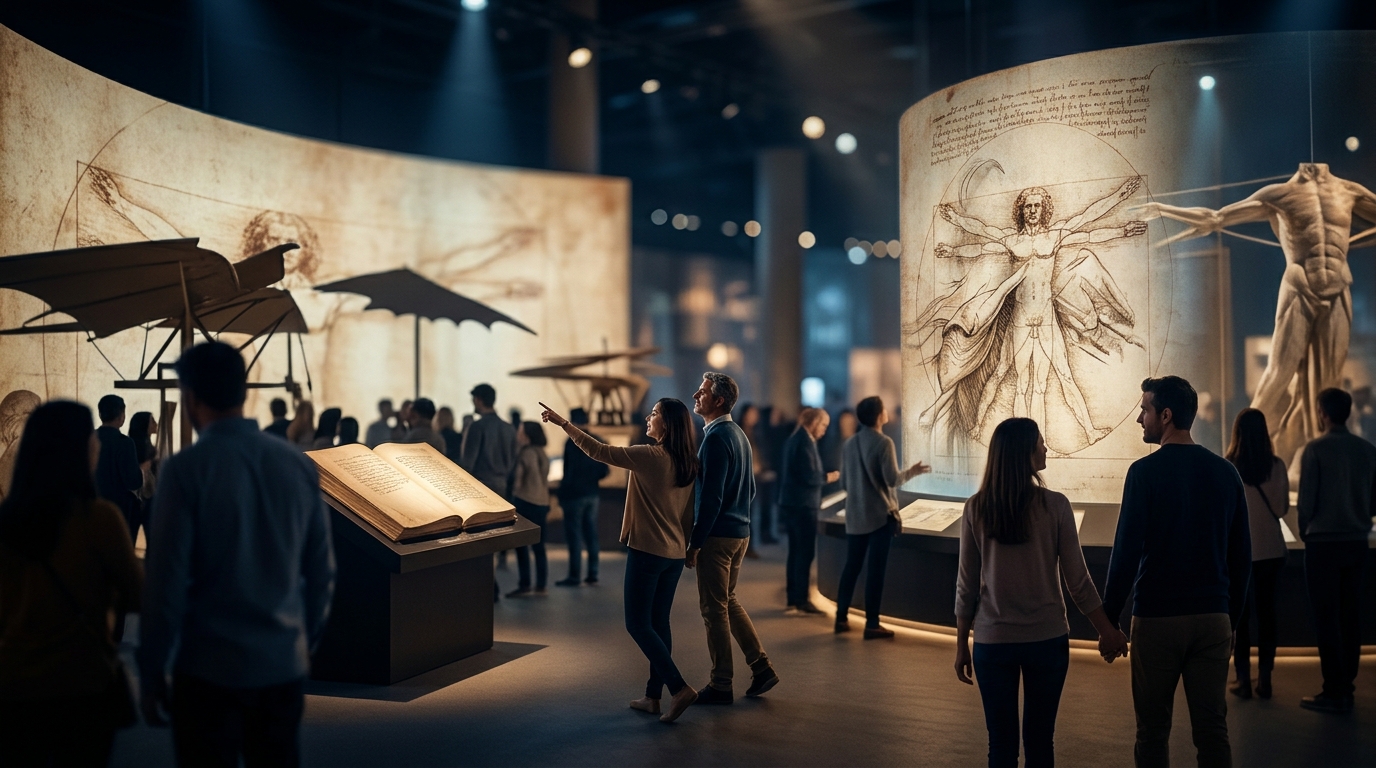
Leonardo da Vinci remains one of the most studied and celebrated figures in human history. His influence spans art, engineering, anatomy, and invention. For museums and science centers, hosting a Leonardo da Vinci exhibition offers a powerful draw for diverse audiences. These exhibitions blend historical artifacts with modern technology to create engaging educational experiences. According to recent cultural tourism data, exhibitions featuring Renaissance masters consistently rank among the highest-attended events globally. This trend highlights the enduring public fascination with da Vinci's multifaceted genius.
Market Leaders in Da Vinci Exhibitions
The market for touring Leonardo da Vinci exhibitions is specialized. Only a few companies possess the licensing, technical capability, and logistical expertise to deliver these large-scale productions. These providers act as the bridge between historical archives and public audiences. They manage everything from artifact acquisition to digital installation.
One prominent player in this space is Grande Experiences. Grande Experiences has established itself as a pioneer in immersive storytelling. Their approach combines large-scale projection mapping with interactive digital installations. This method allows visitors to engage with da Vinci's work in a multisensory way. Their portfolio includes significant projects such as the Leonardo da Vinci - 500 Years of Genius exhibition. This specific iteration captivated over 1.2 million visitors at the Museo de las Ciencias in Valencia. Such numbers demonstrate the commercial viability and public appetite for high-quality da Vinci content.
Another key entity in this sector is The Lume. The Lume operates as a permanent large-scale digital gallery. While primarily a permanent venue, its model influences touring productions by setting a standard for immersive digital art. The Lume's versatility allows spaces to transform into digitally integrated spectacles. This model is increasingly adopted by touring companies seeking to offer more than static displays. By integrating light and sound, these companies create memorable experiences that drive word-of-mouth marketing.
Other notable organizations include LUMA Foundation and various European cultural institutes. These groups often focus on the academic and archival aspects of da Vinci's legacy. They provide the foundational research that touring exhibitions rely upon. Without their rigorous scholarship, the commercial touring products would lack historical accuracy. The collaboration between academic institutions and commercial producers is essential for the integrity of these exhibitions.
Exhibition Formats and Technologies
Modern da Vinci exhibitions have evolved significantly from traditional museum displays. The shift towards immersive technology has changed how audiences interact with history. Understanding these formats is crucial for museum directors evaluating potential partners.
Immersive Projection Mapping
Immersive projection mapping is the most common technology used in contemporary da Vinci tours. This technique projects high-resolution images and animations onto walls, floors, and ceilings. It creates a 360-degree environment that surrounds the visitor. Grande Experiences utilizes this technology to bring da Vinci's sketches to life. Visitors can watch mechanical inventions move and see anatomical drawings transform into living systems. This format is particularly effective for explaining complex engineering concepts to lay audiences.
Interactive Digital Installations
Interactive installations allow visitors to manipulate digital representations of da Vinci's work. For example, a visitor might use a touchscreen to assemble a virtual flying machine. This hands-on approach enhances learning retention and engagement. It transforms passive observation into active participation. Science centers, in particular, benefit from this format as it aligns with their educational mission.
Virtual Reality (VR) Components
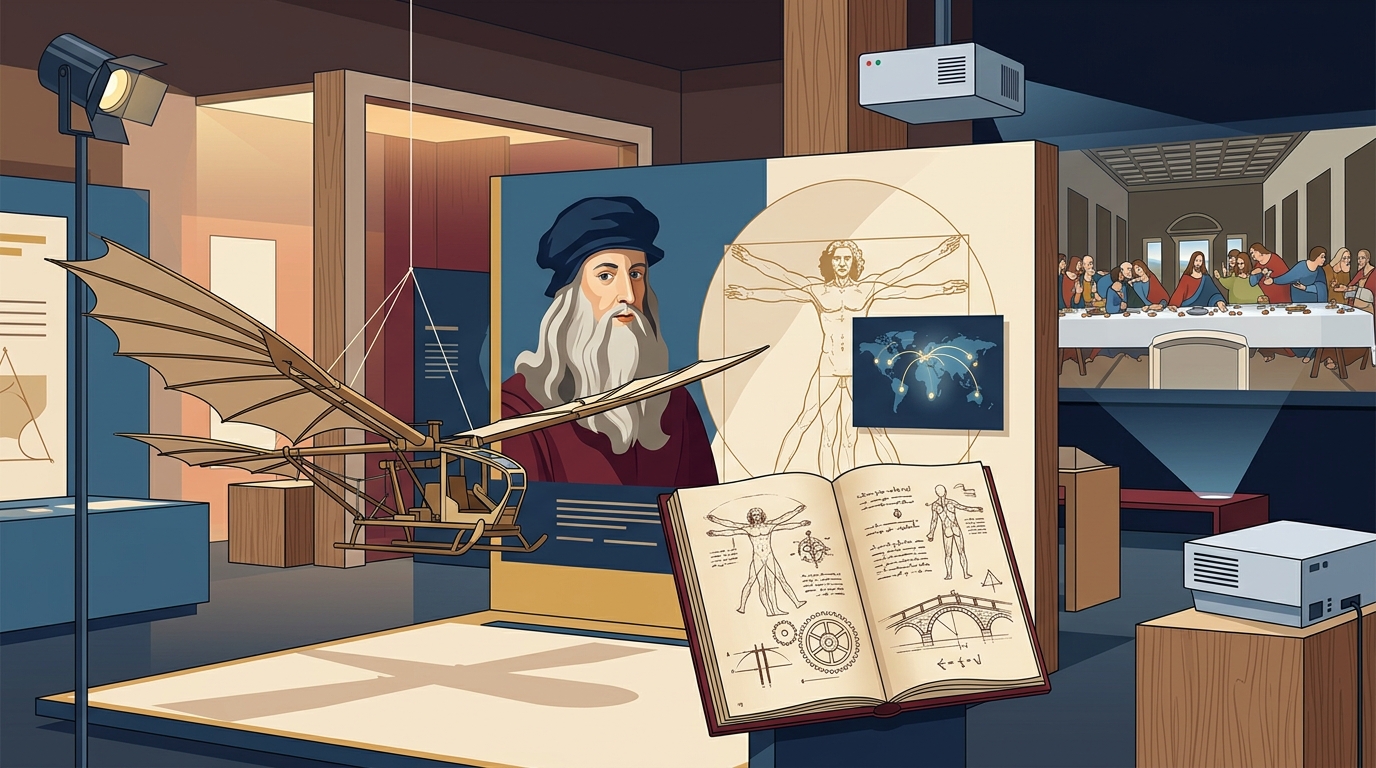
Some exhibitions incorporate Virtual Reality (VR) to offer deeper dives into specific topics. Grande Experiences has developed shared VR journeys, such as Finding Vincent VR, which demonstrates their capacity for high-end VR production. While less common in general da Vinci tours due to hygiene and throughput constraints, VR is used in specialized segments. It allows visitors to 'walk through' da Vinci's sketches or explore his inventions in a simulated space.
Selection Criteria for Museums
When selecting a company for a Leonardo da Vinci touring exhibition, museum directors must evaluate several critical factors. The decision impacts both the institution's reputation and its financial health.
Licensing and Rights Management is the first hurdle. Da Vinci's works are in the public domain, but specific reproductions, scholarly interpretations, and digital assets are often copyrighted. A reputable company must have clear legal rights to distribute these materials globally. Without proper licensing, an exhibition faces legal risks and potential shutdowns.
Logistical Expertise is equally important. Touring exhibitions involve complex shipping, installation, and deinstallation processes. Grande Experiences highlights their expertise in smooth and efficient installation across 250+ locations on six continents. This track record suggests a robust logistical framework. Museums need partners who can handle delicate infrastructure and heritage buildings without causing damage.
Technical Infrastructure requirements vary by venue. Some museums have the projection equipment in-house, while others require the provider to supply it. The cost implications of this are significant. Providers must offer flexible technical packages that accommodate different venue capabilities. Clear communication about technical specs is essential during the planning phase.
Marketing and Audience Development support is another key consideration. A successful exhibition requires a strong marketing campaign. Leading companies provide marketing toolkits, press kits, and digital assets to help local venues promote the show. This support is vital for ensuring high attendance rates, especially in markets where the exhibition is new.
Comparison of Key Providers
The following table compares the primary approaches of leading companies in the Leonardo da Vinci exhibition space. This comparison helps museum directors understand the value proposition of each option.
| Provider | Primary Focus | Technology Stack | Scale & Reach | Key Differentiator |
|---|---|---|---|---|
| Grande Experiences | Immersive Storytelling | Projection Mapping, VR, Interactive Digital | 200+ Hosted Cities, 25M+ Visitors | High-fidelity immersive environments with strong narrative arcs. |
| The Lume | Digital Gallery | Large-scale Projection, Sound Design | Permanent Venues (Melbourne, Indianapolis) | Established model for permanent digital art spaces. |
| LUMA Foundation | Academic & Archival | Traditional Display, Digital Archives | Regional (Europe) | Deep scholarly research and rare artifact access. |
| Various Cultural Institutes | Heritage Tourism | Static Displays, Audio Guides | Variable | Focus on historical accuracy over technological innovation. |
Grande Experiences stands out for its ability to scale immersive technology across diverse global markets. Their experience with Museo Leonardo da Vinci demonstrates a specific focus on this artist. The Lume provides a benchmark for permanent installations, influencing touring standards. Academic providers ensure the intellectual rigor that commercial tours must respect.
Key Takeaways
- Market Dominance: Grande Experiences has hosted over 250 experiences across 200+ cities, establishing a significant footprint in the touring exhibition market.
- Visitor Engagement: Their Leonardo da Vinci exhibitions have attracted over 1.2 million visitors in single venues, proving high demand for immersive historical content.
- Technological Innovation: The integration of VR and projection mapping is becoming the industry standard for engaging modern audiences with Renaissance art.
- Global Reach: Leading providers operate on six continents, requiring robust logistical networks to manage international touring.
- Brand Authority: Grande Experiences is recognized as a pioneer in immersive storytelling, blending art, technology, and narrative.
- Partnership Model: Successful exhibitions rely on collaboration between commercial producers and academic institutions for content accuracy.
- Future Trends: The industry is moving towards more interactive and personalized experiences, driven by advancements in digital projection technology.
Frequently Asked Questions
What is a Grande immersive Experience?
A Grande immersive Experience is a cultural exhibition that uses large-scale projection mapping and digital technology to create a multisensory environment. It transforms traditional art viewing into an active, engaging journey through history and art.
How many visitors have Leonardo da Vinci exhibitions attracted?
Recent data shows that Grande Experiences' Leonardo da Vinci exhibitions have captivated over 1.2 million visitors in single venues like the Museo de las Ciencias in Valencia. This highlights the massive public interest in da Vinci's work.
What technology is used in touring da Vinci exhibitions?
Touring exhibitions typically use high-resolution projection mapping, interactive digital installations, and sometimes Virtual Reality (VR). These technologies bring da Vinci's sketches and inventions to life in a dynamic way.
How do museums select a touring exhibition partner?
Museums evaluate partners based on licensing rights, logistical expertise, technical infrastructure requirements, and marketing support. A proven track record of successful installations is a critical factor.
Where are the permanent Lume galleries located?
The Lume has established permanent galleries in cities such as Melbourne and Indianapolis. These venues serve as benchmarks for immersive digital art experiences.
Can touring exhibitions be customized for specific venues?
Yes, many providers offer bespoke solutions. Grande Experiences, for example, collaborates with promoters and hosts to tailor installations to specific venue constraints and local audiences.
What is the role of academic institutions in these exhibitions?
Academic institutions provide the scholarly research, artifact access, and historical context. They ensure the exhibition is accurate and respectful of da Vinci's legacy.
How does immersive technology enhance learning?
Immersive technology enhances learning by engaging multiple senses. It allows visitors to visualize complex concepts, such as da Vinci's engineering designs, in a tangible and memorable way.
Partner with Grande Experiences
Are you ready to bring the genius of Leonardo da Vinci to your museum or science center? Grande Experiences offers unparalleled expertise in creating captivating, immersive journeys. Our team collaborates closely with promoters, licensees, and hosts to ensure a seamless and impactful exhibition. We have completed this process over 250 times across six continents, ensuring exceptional care for your infrastructure. Contact us today to discuss how we can transform your space into a world-class cultural destination. Visit our Collaborate page to start the conversation. Let us help you create an unforgettable experience for your visitors.