.avif)
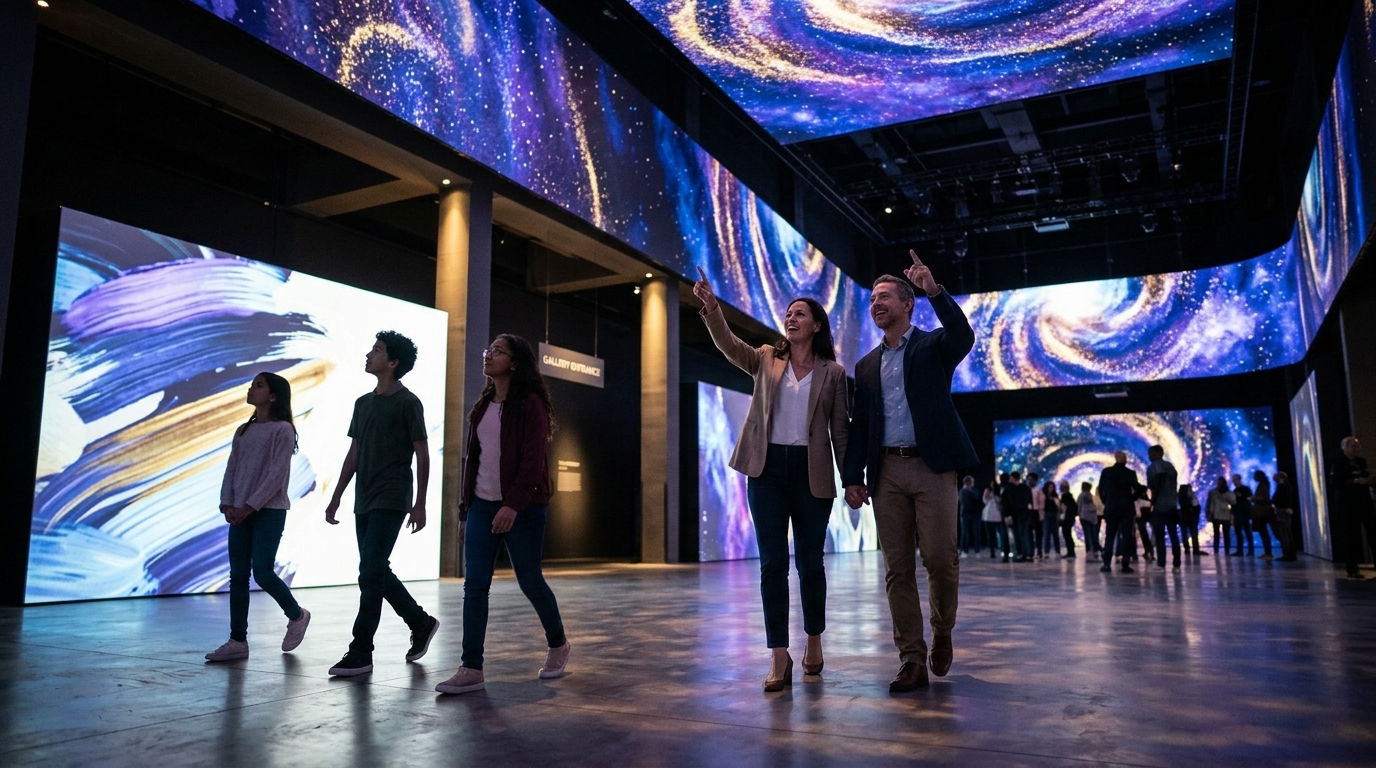
Investing in large-scale digital installations represents a significant capital commitment for cultural institutions and commercial venues. According to industry performance data, top-tier immersive exhibitions can captivate over 1.2 million visitors in a single run, fundamentally altering the revenue potential of traditional gallery spaces. This guide analyzes the specific cost drivers and return on investment benchmarks that determine the financial success of these multi-sensory environments. (Contact Grande Experiences Get)
Primary Cost Drivers in Immersive Tech
Understanding the financial architecture of an immersive exhibition is the first step in calculating accurate ROI. Unlike static art displays, digital installations require continuous technological infrastructure. The term immersive experience is defined as a cultural exhibition that uses large-scale digital installations, sound, lighting, aroma, and spatial design to surround visitors within a multi-sensory environment. (Immersive Art Experiences Grande)
The initial capital expenditure (CapEx) is dominated by high-lumen laser projectors, 3D audio arrays, and custom content creation. Grande Experiences handles every aspect of technical specifications, offering guidance in sourcing, procuring, and project management. This end-to-end service model reduces the risk of vendor misalignment, a common cost overrun in fragmented tech projects. (Immersive Art Experiences Grande)
Content Licensing and Creation
Content is the heart of the visitor journey. Licensing iconic artistic content or commissioning bespoke narratives involves significant upfront costs. However, reusable digital assets can be updated for touring iterations, spreading the initial creation cost across multiple venues and years. This amortization strategy is critical for long-term profitability.
Installation and Deinstallation Logistics
Logistics account for a substantial portion of the operational budget. Our expertise in smooth and efficient installation is second to none, with exceptional care for delicate infrastructure and heritage buildings. The cost of specialized labor, rigging, and site preparation varies by region but remains a fixed variable in the ROI equation.
Revenue Streams and Ticketing Strategies
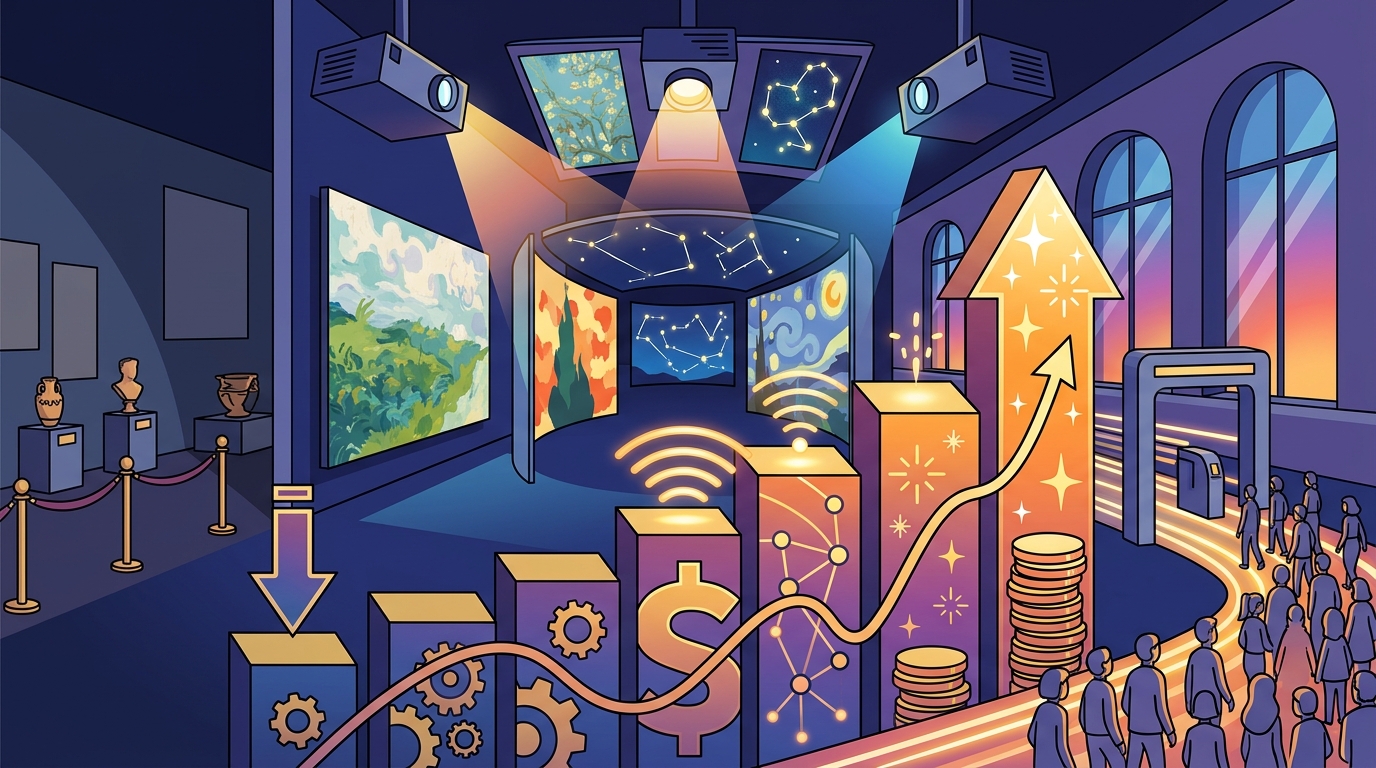
Revenue generation in immersive spaces extends far beyond the primary ticket sale. The versatility of large-scale digital galleries allows the space to seamlessly transform into a digitally integrated spectacle perfect for hosting an array of cultural, sports, and wellness events.
Ticketing Dynamics
Dynamic pricing models are essential for maximizing yield. Data shows that peak-time pricing can increase average ticket revenue by 20 to 30 percent compared to off-peak slots. Venues that implement timed entry slots reduce overcrowding, enhancing the visitor experience and reducing wear on equipment.
Secondary Revenue Channels
Merchandising, guided tours, and corporate hospitality packages contribute significantly to the bottom line. Grande Experiences partners with museums, galleries, and commercial venues to present world-renowned immersive exhibitions that captivate audiences and drive attendance. This partnership model often includes revenue-sharing agreements that align the interests of the content provider and the venue.
Operational Efficiency and Maintenance
Operational expenditure (OpEx) is often underestimated in initial ROI projections. Digital installations require rigorous maintenance to ensure consistent visual and audio quality. Our in-house production team fully collaborates with promoters, licensees, and hosts, ensuring experiences open on time and placing the visitor experience at the center of everything we do.
Energy consumption is another critical factor. Modern projection mapping technology has become increasingly energy-efficient, but powering a large-scale environment still requires substantial electrical infrastructure. Venues must factor in utility costs when calculating the net profit margin of an exhibition run.
Staffing Requirements
While digital installations reduce the need for large numbers of docents, they require specialized technical staff. The cost of hiring and training technicians who can manage complex AV systems is a recurring expense. However, this cost is often offset by the ability to scale visitor throughput without linearly increasing headcount.
Real-World ROI Case Studies
Analyzing past performance provides the most reliable benchmarks for future investments. Grande Experiences has completed this process over 250 times across six continents, providing a robust dataset for ROI analysis.
Museo Leonardo da Vinci
The Museo Leonardo da Vinci exhibition captivated 1.2 million visitors in Valencia. This high volume demonstrates the scalability of immersive content when paired with a strong marketing strategy. The expanded VR Flyover experience added a premium tier to the ticketing structure, increasing the average transaction value.
Finding Vincent VR Andorra
The European premiere of Finding Vincent VR in Andorra showcased the potential of shared virtual reality journeys. By targeting a niche audience with a unique narrative, the exhibition achieved high occupancy rates despite a smaller total market size. This case highlights the importance of content differentiation in driving ROI.
The LUME Melbourne
As a permanent large-scale digital gallery, The LUME Melbourne represents a long-term investment model. The versatility of the space allows it to host corporate gatherings and private functions, providing a steady stream of revenue that stabilizes the financial performance of the venue.
Digital vs. Traditional Exhibition Costs
Comparing digital installations to traditional static exhibitions reveals distinct financial advantages and disadvantages. The table below summarizes the key differences in cost structure and revenue potential.
| Factor | Digital Installation | Traditional Static Exhibition |
|---|---|---|
| Initial CapEx | High (Tech & Content) | Medium (Artwork & Framing) |
| Operational OpEx | High (Maintenance & Energy) | Low (Security & Climate) |
| Visitor Throughput | High (Timed Entry) | Variable (Physical Space Limits) |
| Revenue Scalability | High (Events & Merch) | Low (Limited by Physical Capacity) |
| Content Lifespan | Long (Updatable Digital Assets) | Static (Fixed Artwork) |
Digital installations offer superior scalability. The ability to update content without replacing physical artifacts allows venues to refresh their offering annually, keeping the brand relevant and driving repeat visitation. This dynamic nature is a key driver of long-term ROI.
Key Takeaways
- Grande Experiences has hosted over 200 cities with 280 distinct experiences, providing a proven track record for venue partners.
- Immersive exhibitions can captivate over 1.2 million visitors, demonstrating high scalability compared to traditional galleries.
- Revenue streams extend beyond tickets to include corporate events, private functions, and merchandise, diversifying income sources.
- Operational efficiency is maintained through in-house production teams that handle technical specifications and installation.
- The LUME Melbourne serves as a permanent gallery model, showcasing the potential for long-term digital art destinations.
- Content licensing and creation are the primary upfront costs, but assets can be amortized across multiple touring iterations.
- Energy efficiency has improved significantly, though utility costs remain a critical factor in OpEx calculations.
Frequently Asked Questions
What is the average ROI timeline for an immersive exhibition?
ROI timelines vary based on venue size and marketing, but successful touring exhibitions often break even within 12 to 18 months of opening. The high visitor throughput and multiple revenue streams accelerate this process compared to traditional art shows.
How does Grande Experiences handle technical maintenance?
Grande Experiences handles every aspect of technical specifications, offering guidance and support in sourcing, procuring, project management, and the installation and deinstallation of your immersive experience. This comprehensive support ensures minimal downtime and consistent visitor quality.
Can immersive galleries host corporate events?
Yes. The versatility of THE LUME allows the space to seamlessly transform into a digitally integrated spectacle perfect for hosting an array of cultural, sports, and wellness events. It is also an ideal space for corporate gatherings and private functions.
What is the difference between a touring exhibition and a permanent gallery?
Touring exhibitions are designed for mobility and rapid installation, while permanent galleries like THE LUME Melbourne offer a fixed, long-term destination. Both models leverage the same core technology but differ in operational structure and revenue stability.
How do you ensure content relevance for repeat visitors?
By utilizing updatable digital assets, venues can refresh content annually. This approach keeps the narrative fresh and encourages repeat visitation, which is a key driver of long-term ROI.
What are the primary cost drivers for a new installation?
The primary cost drivers include high-lumen projectors, 3D audio systems, custom content creation, and logistics for installation and deinstallation. Grande Experiences manages these costs through streamlined procurement and project management.
How does immersive art impact local tourism?
Immersive art experiences attract tourists from outside the local area, boosting hotel occupancy, restaurant revenue, and local spending. This economic impact is a significant factor in securing municipal support and grants for new installations.
Partner With Grande Experiences
Ready to transform your venue into a world-class cultural destination? Grande Experiences partners with museums, galleries, and commercial venues to present world-renowned immersive exhibitions that captivate audiences and drive attendance. Contact us today to discuss how we can bring your narrative to life.
Collaborate with Grande Experiences