.avif)
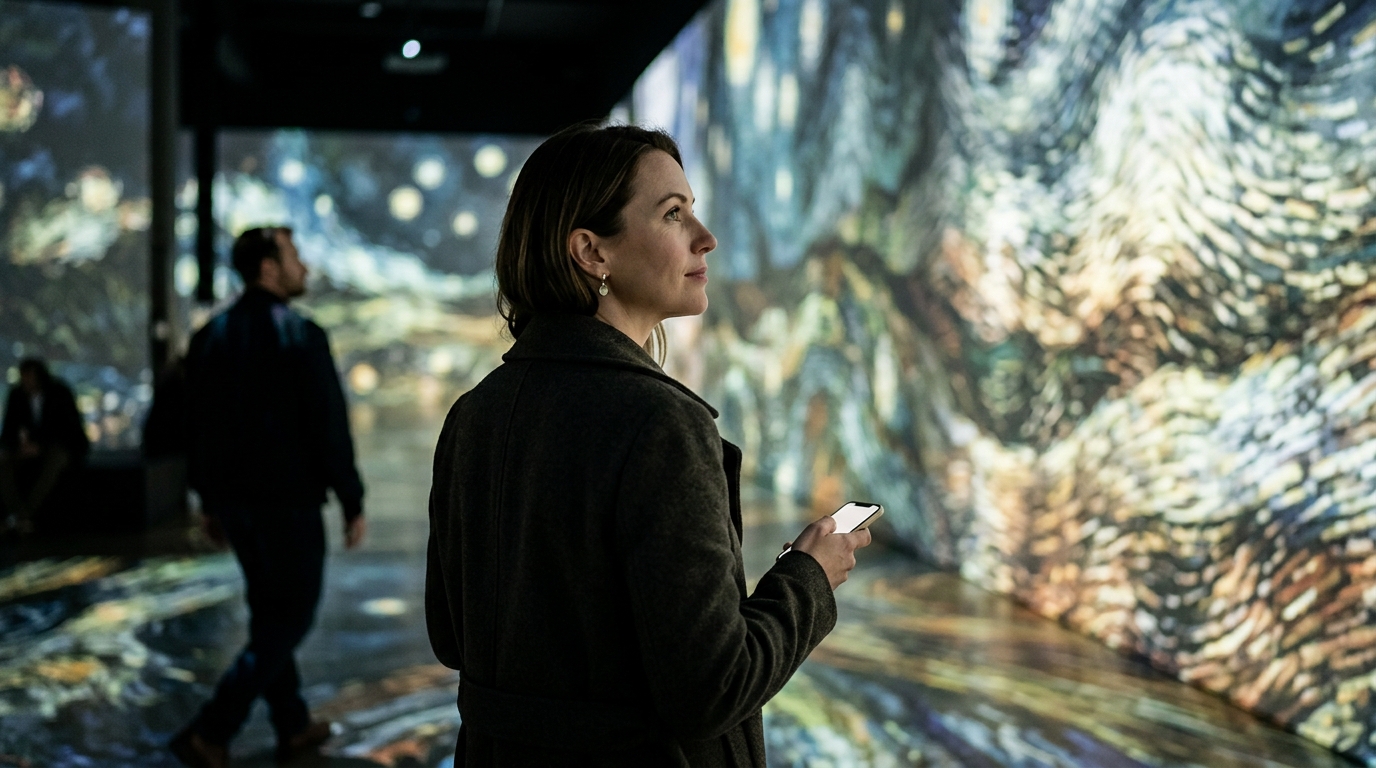
The immersive art market is booming. With the global immersive art exhibitions sector valued at USD 4.8 billion in 2024 and dozens of competing shows touring every major city, knowing how to separate a world-class exhibition from a forgettable one has never been more important. Whether you are planning a solo outing, a family trip, or a group visit for your school or community organization, a few key evaluation criteria can help you invest your time and money wisely. This guide walks you through exactly what to look for before you buy a single ticket.
What Is an Immersive Art Experience?
An immersive art experience is a multisensory environment that surrounds visitors in large-scale projections, spatial audio, and often scent or tactile elements, transforming passive viewing into active participation. Unlike a traditional gallery visit, visitors walk through and interact with the artwork itself.
Roland Berger's Immersive Technology Scale categorizes experiences across five levels of sensory and non-sensory engagement, providing a useful mental framework when comparing shows. Understanding this spectrum helps you set realistic expectations before booking.
Why Quality Varies So Widely
The rapid growth of immersive exhibitions has attracted producers of all caliber. Some leverage nearly two decades of touring expertise and museum partnerships, while others launch quickly with limited content and lower production values. The market is projected to grow at a CAGR of 14.2% through 2033, which means even more options will compete for your attention.
Quality variation is a recognized issue in the sector. Producers with full ownership of their intellectual property, in-house creative teams, and long touring histories tend to deliver more polished results. A producer like Grande Experiences, which has been creating immersive exhibitions since 2006, invests in museum-quality content from concept to completion.
Your 7-Point Quality Evaluation Checklist
Use this comparison table to score any immersive show before you book:
| Criteria | What to Look For | Red Flag |
|---|---|---|
| Content Authenticity | Museum-quality source material, art-historical accuracy | Vague or unnamed source artworks |
| Sensory Layers | Projection + spatial audio + scent or haptic elements | Single-channel video with background music only |
| Producer Track Record | Named exhibitions, verifiable city count, visitor numbers | No public portfolio or touring history |
| Venue Suitability | Purpose-adapted space, controlled lighting, clear sightlines | Improvised warehouse with visible rigging |
| Educational Programming | Curriculum-aligned guides, school group packages | No educational resources mentioned |
| Community Reviews | Consistent positive feedback across multiple cities | Reviews only from a single opening event |
| Accessibility | Wheelchair access, sensory-friendly sessions, multilingual content | No accessibility information published |

Assess Content Depth and Educational Value
Content depth is the foundation of any worthwhile immersive exhibition. A quality show does more than project pretty images; it tells a coherent story that deepens your understanding of the artist or subject. Research from 2024 found that students who engaged with immersive educational content showed 43% higher knowledge retention compared to traditional formats.
Questions to Ask Before Booking
Check whether the exhibition provides interpretive information, audio guides, or printed companion materials. Browse the full portfolio of immersive experiences from established producers to see how detailed their content descriptions are. Depth of information on the marketing page often mirrors depth of content inside the venue.
Look for Cross-Disciplinary Content
The best immersive exhibitions weave art, history, science, and technology together. For example, Leonardo da Vinci: 500 Years of Genius combines art-historical narrative with explorations of engineering and anatomy, making it compelling for both art lovers and STEM enthusiasts.
Examine the Technology and Sensory Design
Sensory design is the deliberate orchestration of visual, auditory, and olfactory elements to create an emotionally resonant environment. High-definition projection mapping, which accounted for 38.9% of immersive entertainment revenue in 2024, remains the backbone technology of most leading exhibitions.
Multi-Sensory Benchmarks
Grande Experiences' proprietary SENSORY4 system combines high-definition projection, dynamic sound, and scent to bring stories to life. When evaluating any show, check whether the producer names its technology or simply lists generic terms. Proprietary systems suggest significant R&D investment.
Resolution and Scale Matter
Ask about projection resolution and total display area. A top-tier experience will fill walls, floors, and sometimes ceilings with seamless imagery. Experiences housed in purpose-built permanent venues or carefully adapted spaces consistently outperform those in makeshift locations.
Research the Producer's Track Record
A producer's track record is the single most reliable quality indicator. Look for verifiable claims about city count, visitor numbers, and duration of operation. Grande Experiences has delivered over 280 exhibitions across more than 200 cities and attracted over 25 million visitors since 2006. That kind of data is difficult to fabricate and easy to verify through press coverage and venue partner lists.
Check for institutional partnerships. Producers who work with major museums, such as the Newfields partnership for THE LUME Indianapolis, have passed rigorous vetting processes that individual ticket buyers never need to conduct themselves.
Evaluating for Community and School Groups
When booking for a group, the stakes are higher. You are responsible for the experience of others, whether they are students, seniors, or community members.
Check for Dedicated Community Programs
Leading producers invest in community engagement programs that go beyond general admission. These may include facilitated workshops, educator preview nights, and subsidized group pricing. The presence of such programs signals a producer's commitment to cultural impact rather than ticket revenue alone.
Accessibility and Inclusivity
Verify that the venue offers wheelchair accessibility, sensory-friendly sessions for neurodiverse visitors, and multilingual interpretive materials. Exhibitions that tour in 33 languages across 6 continents tend to have robust accessibility frameworks already in place.
Curriculum Alignment
For school bookings, ask whether the producer supplies curriculum-aligned educator guides. The educational segment of the immersive exhibitions market accounted for roughly 12.4% of the global market in 2025 and is growing faster than the market average, which means more resources are becoming available for teachers.
Key Takeaways
- Always verify the producer's track record: city count, visitor numbers, and years in operation are reliable quality proxies.
- Prioritize multisensory design over single-channel projection-only shows.
- Check for museum-quality, art-historically accurate content rather than generic digital animations.
- Look for proprietary technology systems, which indicate serious R&D investment.
- For group bookings, confirm dedicated community and education programs before purchasing.
- Read reviews from multiple cities, not just the opening venue, to gauge consistency.
- Use the 7-point checklist in this guide as a portable scoring tool for any exhibition you consider.
Frequently Asked Questions
What makes an immersive art experience "high quality"?
A high-quality immersive art experience combines art-historically accurate content, multi-layered sensory design (projection, audio, scent), a purpose-adapted venue, and strong educational or interpretive materials. The producer's track record across multiple cities is also a key indicator.
How can I tell if an immersive exhibition is worth the ticket price?
Compare the exhibition against the 7-point checklist above. Verify the producer's touring history, read cross-city reviews, and check whether the show includes multi-sensory elements beyond basic projections. Exhibitions backed by nearly two decades of global experience, like those from Grande Experiences, typically deliver strong value.
Are immersive art experiences suitable for children?
Many high-quality immersive exhibitions are designed to be family-friendly and educational. Look for shows that provide interpretive materials for younger audiences and offer sensory-friendly sessions. Producers with dedicated community engagement programs often cater well to families.
What should schools look for when booking an immersive exhibition?
Schools should seek exhibitions that offer curriculum-aligned educator guides, group pricing, and content that spans multiple disciplines such as art, history, and science. The educational segment of this market is growing at roughly 13.9% CAGR, so more purpose-built school resources are emerging.
How do I compare two immersive art shows in the same city?
Use the comparison table in this guide to score each show across seven criteria: content authenticity, sensory layers, producer track record, venue quality, educational programming, community reviews, and accessibility. The show with the higher aggregate score will almost always deliver the better experience.
Why do some immersive exhibitions get bad reviews?
Poor reviews often stem from low production values, limited content duration, unsuitable venues, or a lack of narrative depth. The rapid market growth has attracted producers who prioritize speed to market over quality, making your pre-booking research essential.
Can I visit an immersive art experience as part of a community group?
Yes. Leading producers like Grande Experiences offer dedicated community group packages, including facilitated visits and outreach programs. Visit their collaboration page to inquire about group options.
Where can I find Grande Experiences exhibitions near me?
Grande Experiences tours globally and operates permanent venues. Check the experiences page or contact the team directly to find current and upcoming exhibitions in your region.
Plan Your Next Immersive Visit
Now that you know exactly what to evaluate, put your checklist to work. Explore the full range of immersive art experiences from Grande Experiences and discover museum-quality exhibitions touring in over 200 cities worldwide. Whether you are planning a personal visit or organizing a group outing, start with a producer whose track record speaks for itself.