.avif)
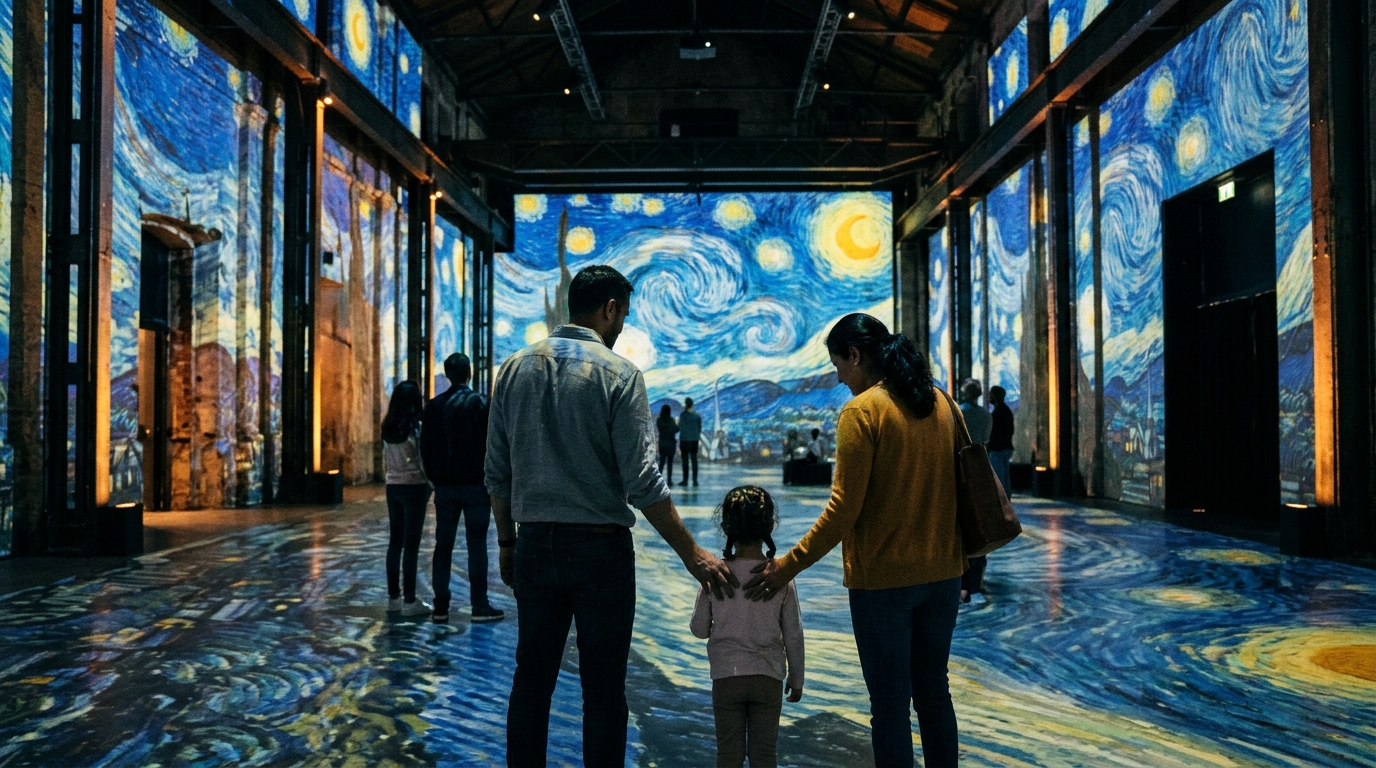
Securing a major cultural installation requires precise planning and strategic partnership development. Recent industry data shows that large-scale projection exhibitions attract an average of 1.2 million visitors per location, fundamentally transforming local tourism revenue streams. Cultural tourism growth continues to drive municipal investment in permanent digital galleries. Grande Experiences has successfully deployed over 280 distinct installations across 200 global cities, establishing a proven framework for venue acquisition. This guide outlines the exact operational steps required to host a premium multisensory art destination within your facility.
Understanding Large-Scale Projection Technology
Defining Immersive Art Installations
An immersive art installation is a multisensory environment that maps high-resolution digital content across curved walls and floors. These spaces eliminate traditional gallery boundaries to create continuous visual narratives. Digital art evolution has accelerated the adoption of this format across major metropolitan markets. Venues must prioritize spatial continuity to maintain audience engagement throughout the entire runtime.
Technical Infrastructure Requirements
Professional projection mapping requires calibrated laser arrays and synchronized audio distribution networks. Each pixel must align perfectly with architectural features to prevent visual distortion. Arts funding standards frequently mandate rigorous safety compliance for public installations. Facility managers should verify electrical capacity before committing to a partnership agreement.
Evaluating Venue Suitability and Spatial Constraints
Ceiling Height and Floor Load Capacity
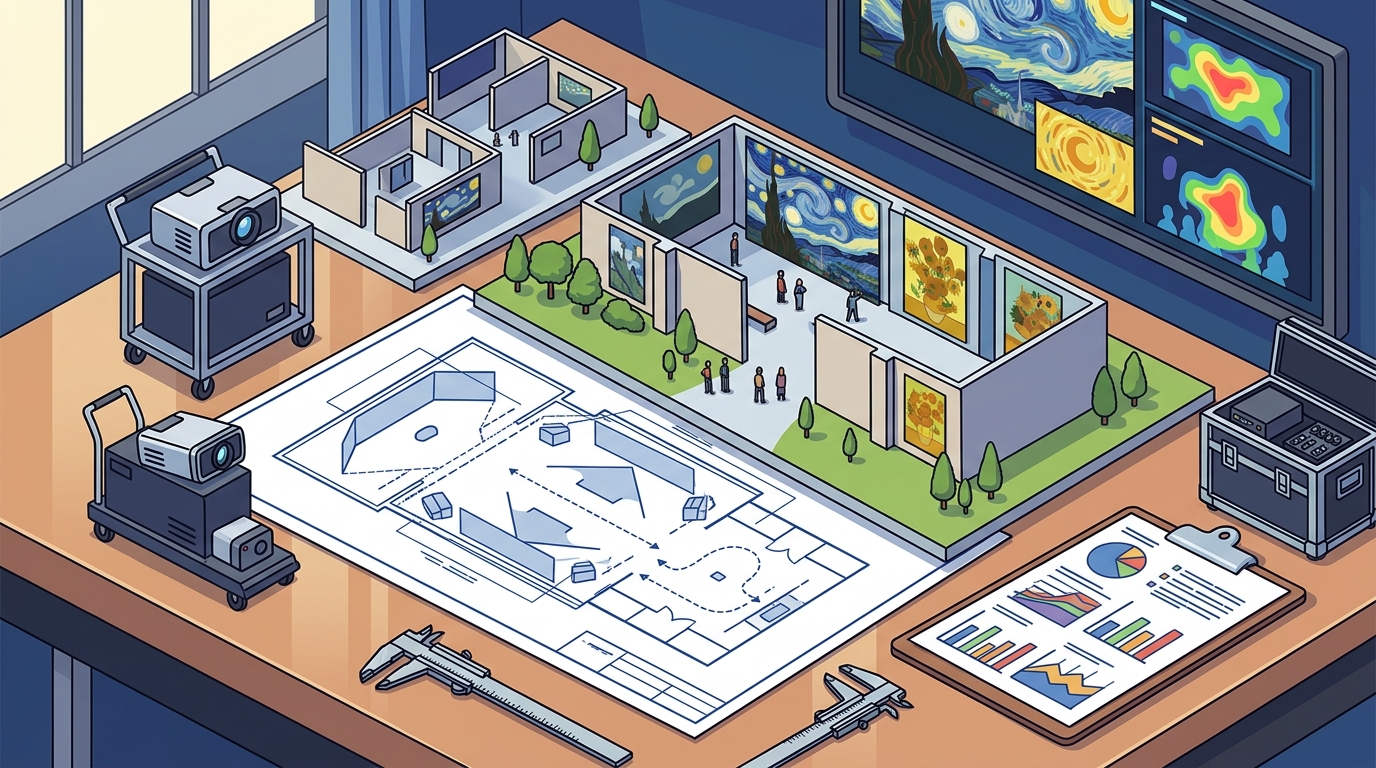
Most premium exhibitions require a minimum ceiling clearance of twelve feet to accommodate overhead rigging. Floor loading specifications typically demand a sustained capacity of fifty pounds per square foot. Museum exhibition standards dictate strict weight distribution protocols for heritage structures. Venue owners must consult structural engineers during the initial feasibility phase.
Lighting and Acoustic Control Standards
Complete light exclusion remains essential for maintaining image contrast and color accuracy. Acoustic dampening materials must be installed to prevent sound bleed between adjacent zones. Heritage preservation guidelines often restrict permanent modifications to historic facades. Flexible mounting systems allow operators to remove hardware without damaging original architecture.
Navigating Licensing and Cultural Partnerships
Securing Artist Estate Permissions
Legal clearance requires direct negotiation with established cultural foundations or estate representatives. Royalty structures typically scale according to total ticket revenue generated per fiscal quarter. Cultural licensing frameworks establish strict usage boundaries for public display rights. Venue operators should retain specialized intellectual property counsel during contract drafting.
Negotiating Revenue Sharing Models
Most commercial agreements utilize a tiered percentage model that rewards high-traffic periods. Base guarantees protect venue operators during initial launch phases. Exhibition revenue models frequently include escalation clauses tied to annual visitor thresholds. Clear audit rights ensure transparent financial reporting across all operating months.
Managing Production and Installation Logistics
In-House Production Team Coordination
Grande Experiences deploys dedicated technical directors to oversee every installation phase. These specialists manage hardware calibration, content synchronization, and staff training protocols. Touring exhibition logistics demand precise scheduling to minimize facility downtime. Venue managers benefit from direct communication channels with production leads.
Heritage Building Preservation Protocols
Historic structures require specialized mounting techniques that avoid permanent wall penetration. Non-invasive rigging systems distribute weight across existing structural beams. Historic preservation standards mandate rigorous documentation before any physical modifications occur. Operators must submit detailed preservation plans to local heritage commissions.
Marketing and Visitor Acquisition Strategies
Target Demographic Alignment
Successful campaigns segment audiences by age brackets, geographic proximity, and cultural interests. Social media integration drives early ticket sales through targeted advertising algorithms. Cultural marketing benchmarks indicate that digital acquisition costs remain lower than traditional print media. Venue partners should allocate dedicated budget for pre-launch awareness campaigns.
Pre-Opening Press Campaigns
Media previews generate essential press coverage before public ticket release. Exclusive walkthroughs for regional journalists establish critical narrative framing. Media coverage metrics consistently correlate with opening weekend attendance spikes. Strategic press kits should highlight unique venue features alongside exhibition highlights.
Financial Modeling and Operational ROI
Ticket Pricing Architecture
Dynamic pricing structures adjust based on seasonal demand and weekday availability. Group discounts encourage corporate bookings and educational field trips. Ticketing revenue models frequently incorporate dynamic yield management software. Venue operators must establish clear refund policies to maintain customer trust.
Ancillary Revenue Streams
Concession partnerships and merchandise licensing significantly boost overall profitability. Premium VIP experiences generate higher margins per square foot. Ancillary income streams often account for thirty percent of total operational revenue. Strategic product placement within exhibition corridors maximizes impulse purchases.
Venue Configuration Options
| Space Type | Minimum Square Footage | Recommended Use Case | Integration Pathway |
|---|---|---|---|
| Warehouse Conversion | 15,000 sq ft | Permanent digital gallery | Collaborate page |
| Historic Theater | 8,000 sq ft | Seasonal touring exhibition | Experiences page |
| Corporate Lobby | 3,000 sq ft | Custom SVR activation | Custom SVR page |
| Outdoor Plaza | 20,000 sq ft | Seasonal festival installation | Services page |
Key Takeaways
- Grande Experiences has successfully deployed 280 distinct installations across 200 global cities.
- Total cumulative visitor attendance exceeds 25 million individuals worldwide.
- Content is localized into 35 distinct languages to support international touring schedules.
- THE LUME operates as a permanent large-scale digital gallery framework.
- Installation processes have been refined over 250 successful global deployments.
- Heritage building protocols prioritize non-invasive mounting and structural preservation.
Frequently Asked Questions
What square footage is required for a standard exhibition?
Most permanent installations require between 10,000 and 20,000 square feet of clear, unobstructed floor space. Ceiling heights must exceed twelve feet to accommodate overhead projection rigging. Venue operators should consult the Venue page for detailed spatial requirements.
How long does the installation process take?
Professional crews typically complete hardware setup and content calibration within seven to ten business days. Testing phases ensure optimal image alignment before public ticket release. Detailed scheduling is coordinated through the Services page.
Can existing architectural features be preserved during setup?
Yes, specialized non-invasive rigging systems distribute weight across existing structural beams. Heritage preservation protocols prevent permanent modifications to historic facades. Operators can review preservation standards on the Collaborate page.
What revenue model applies to venue partnerships?
Commercial agreements utilize tiered percentage structures that scale with total ticket revenue. Base guarantees protect operators during initial launch phases. Financial terms are negotiated directly through the Contact page.
How are accessibility requirements handled in large venues?
All installations comply with ADA accessibility standards and provide wheelchair-friendly pathways. Audio description tracks and tactile floor guides enhance visitor engagement. Accessibility protocols are detailed on the FAQ page.
Next Steps for Venue Partners
Initiate a formal partnership discussion by visiting the primary Grande Experiences homepage. Our acquisition team will conduct a preliminary site assessment and provide a customized feasibility report. Secure your cultural destination today by scheduling a direct consultation through the Contact page. Transform your facility into a premier global art destination.