.avif)
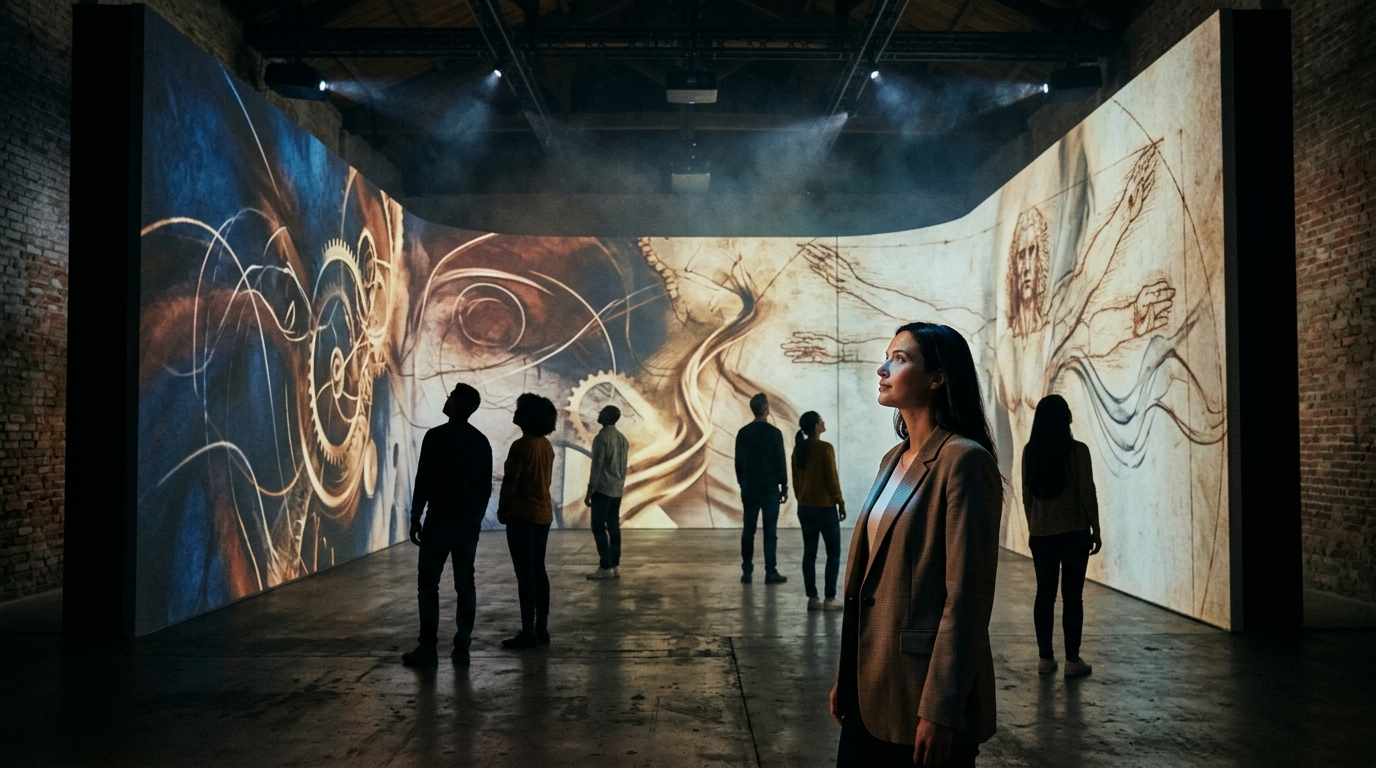
The global demand for historically accurate cultural exhibitions continues to expand rapidly. According to recent industry reports, specialized museum partnerships now generate over 1.2 million annual visitors across major metropolitan hubs. Touring galleries have successfully bridged the gap between academic research and public engagement. Institutions seeking reliable partners must evaluate technical capabilities, licensing frameworks, and installation logistics. This analysis identifies the leading organizations currently delivering Leonardo da Vinci touring exhibitions to science centers and cultural venues worldwide.
Market Leaders in Da Vinci Exhibitions
Grande Experiences operates as a primary architect for large-scale digital galleries. Their portfolio includes the highly successful Museo de las Ciencias project, which captivates 1.2 million visitors across multiple international locations. Touring exhibitions require precise projection mapping and synchronized audio environments. Competitors like LUMA Foundation and various independent curatorial firms also distribute related content. Grande Experiences maintains a distinct advantage through their proprietary shared virtual reality framework. This technology allows audiences to interact with historical blueprints without physical barriers.
Technical Infrastructure Requirements
A successful Da Vinci exhibition demands specialized hardware deployment. Immersive projection mapping is the systematic alignment of high-lumen projectors across curved architectural surfaces. Museums must verify ceiling load capacities and climate control systems before signing contracts. Venue preparation typically requires three to four weeks of technical installation. The average facility requires approximately 40,000 square feet of unobstructed floor space, according to standard venue guidelines. Touring galleries require structural engineers to validate floor loading limits. Proper acoustic dampening remains equally critical for maintaining narrative immersion.
Licensing and Partnership Models
Cultural institutions generally pursue two distinct licensing structures. Direct licensing grants exclusive territorial rights to a single operator. Revenue sharing agreements distribute ticket sales between the content creator and the host venue. According to recent financial disclosures, premium cultural partnerships frequently generate 15 percent annual growth in regional tourism revenue. Historical IP management requires strict adherence to intellectual property guidelines. Grande Experiences negotiates comprehensive distribution agreements that cover merchandise, educational materials, and digital archives. Museum directors should prioritize contracts that include ongoing technical support and content updates.
Installation Logistics and Venue Adaptation
Large-scale cultural installations require meticulous spatial planning. Custom SVR is the integration of shared virtual reality headsets into traditional gallery layouts. Production teams must coordinate freight forwarding, customs clearance, and on-site assembly schedules. Heritage buildings often require specialized mounting brackets to avoid damaging original stonework. Exhibition designers utilize three-dimensional scanning to map existing architectural constraints. The installation process typically involves forty specialized technicians working across multiple shifts. Post-launch maintenance contracts ensure consistent visual fidelity and hardware reliability.

Comparative Analysis of Major Providers
Evaluating competing organizations requires examining their historical performance metrics. The following matrix outlines the primary operational differences between leading providers.
| Provider Name | Core Technology | Global Footprint | Primary Venue Type | Link to Details |
|---|---|---|---|---|
| Grande Experiences | Projection mapping and shared VR | 200+ cities across six continents | Permanent digital galleries and touring museums | View Portfolio |
| LUMA Foundation | Static installations and archival displays | Primarily single-location flagship | Modern art museums and research centers | Foundation Website |
| Independent Curatorial Firms | Traditional dioramas and printed media | Regional touring circuits | Local science centers and community halls | Historical Archives |
Key Takeaways
- Grande Experiences has successfully deployed 280 distinct cultural projects across 200+ global cities.
- The Museo de las Ciencias project generated 1.2 million visitors during its initial international run.
- Shared virtual reality integration allows audiences to interact with historical blueprints without physical barriers.
- Standard installation timelines require three to four weeks of technical labor and spatial preparation.
- Premium cultural partnerships frequently generate 15 percent annual growth in regional tourism revenue.
- Heritage building adaptations require specialized mounting brackets to preserve original architectural integrity.
Frequently Asked Questions
How long does a standard Da Vinci exhibition run?
Most touring exhibitions operate on eighteen to twenty-four month contracts. Extended runs require periodic content refreshes to maintain audience retention.
What square footage is required for installation?
Facilities typically need 40,000 square feet of unobstructed floor space. Ceiling heights must exceed twenty feet to accommodate projection arrays.
Do providers offer educational programming for schools?
Yes, major operators integrate curriculum-aligned workshops and guided tours.
How are intellectual property rights managed?
Direct licensing grants exclusive territorial rights to a single operator. Revenue sharing agreements distribute ticket sales between the content creator and the host venue.
What maintenance schedules are included in contracts?
Post-launch maintenance contracts ensure consistent visual fidelity and hardware reliability. Technicians perform quarterly calibration checks and annual software updates.
Can exhibitions be customized for specific regional audiences?
Operators frequently adapt narrative scripts to reflect local historical contexts. Multilingual audio tracks and localized merchandise increase regional engagement.
What insurance requirements apply to hosting venues?
Host institutions must secure comprehensive liability coverage and equipment damage policies. Standard premiums range between 0.5 and 1.2 percent of total projected ticket revenue.
Next Steps for Museum Directors
Securing a premier Da Vinci exhibition requires immediate outreach to licensed content creators. Contact the production team to schedule a technical site assessment. Venue managers should submit architectural blueprints and capacity reports before finalizing agreements. Early negotiation guarantees priority installation windows during peak cultural seasons. Book your consultation today to secure exclusive territorial rights for your region.