.avif)
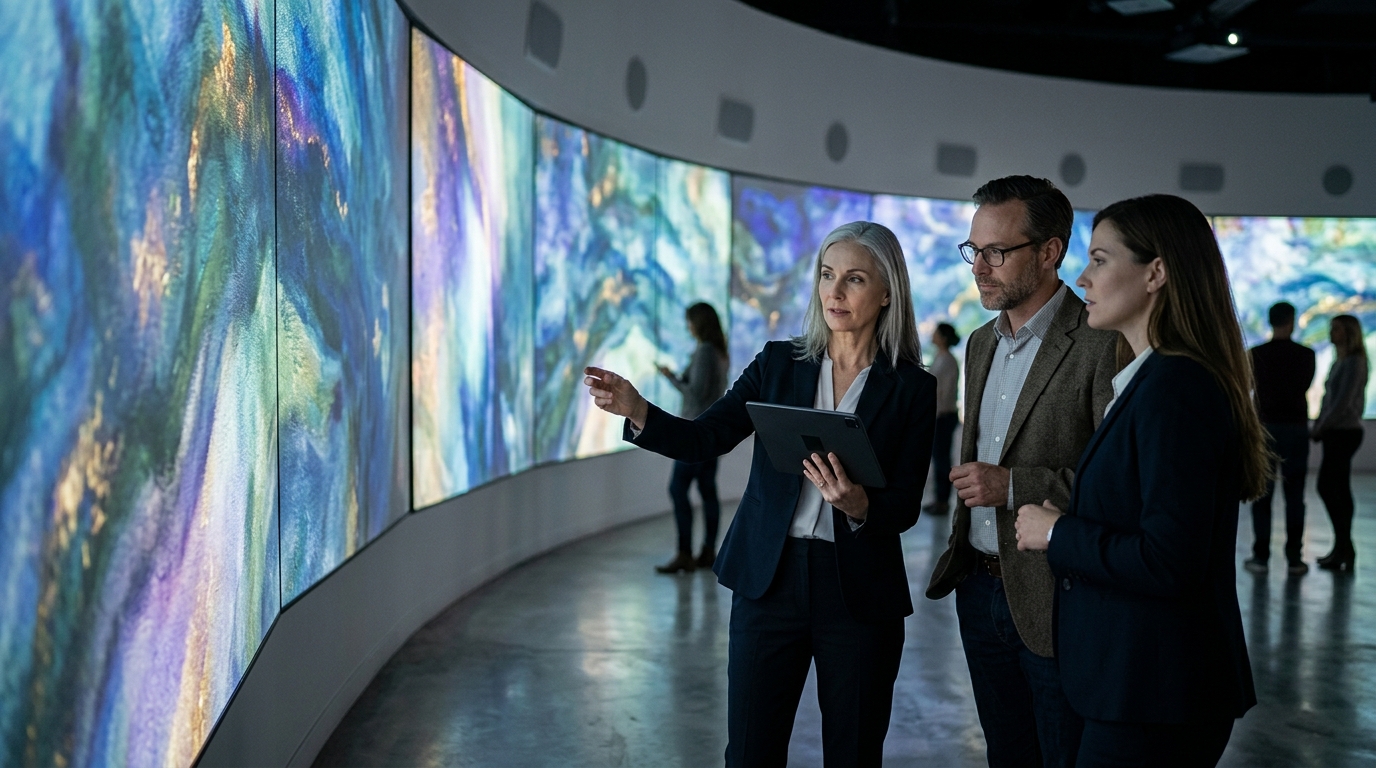
Organizers planning large-scale cultural events face mounting pressure to verify technical reliability before committing to a venue. Recent industry data shows that over 25 million visitors have engaged with projection-based digital galleries worldwide, according to cultural reports. This rapid expansion demands a rigorous evaluation framework. You must assess hardware calibration, content licensing, and spatial audio mapping before approving any proposal. A structured review process protects your budget and guarantees a seamless audience experience. The following methodology breaks down the essential verification steps for community leaders and independent curators.
Technical Infrastructure Standards
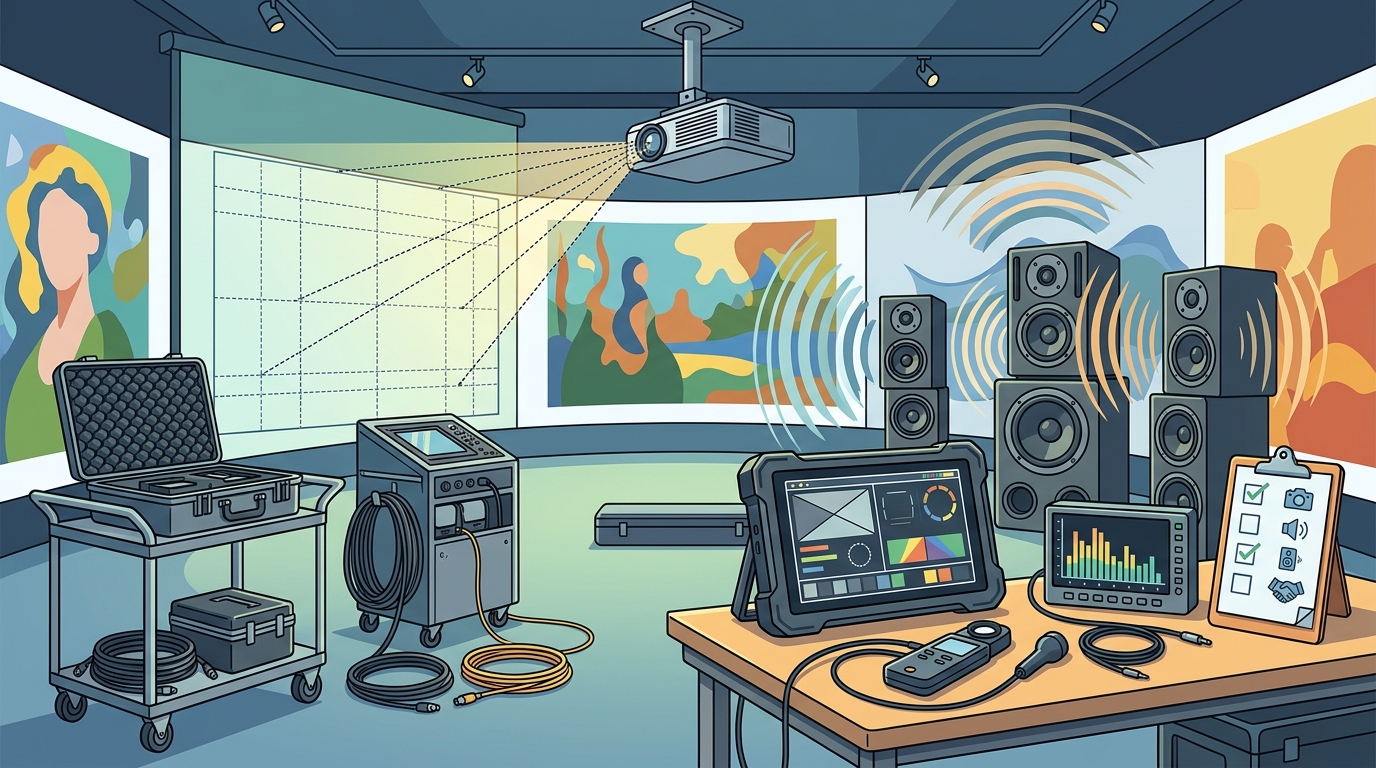
Immersive art is a multidisciplinary format that combines high-resolution projection mapping with synchronized environmental controls. You must verify that the venue possesses industrial-grade laser projectors capable of maintaining consistent luminance across large surfaces. Inadequate hardware calibration creates visual distortion that breaks audience immersion. Request a full technical rider from the production team. Verify that the installation team holds specialized certifications for heritage building compliance. You can review standard installation protocols by visiting our collaborate page to understand our deployment framework. Strong technical due diligence prevents costly on-site recalibration delays.
Virtual reality integration is a supplementary layer that allows individual attendees to interact with three-dimensional digital environments. Evaluate whether the venue provides dedicated bandwidth for concurrent headset connections. Network congestion directly impacts rendering latency and user comfort. Always request a bandwidth stress test report before signing a contract. This verification step ensures that your community members experience smooth navigation without motion sickness triggers.
Content Curation and Licensing
Spatial audio mapping is a directional sound design technique that places audio cues within specific physical coordinates. You must confirm that the exhibition holds explicit commercial licensing for all featured artwork. Unauthorized reproductions frequently result in legal injunctions that shut down public events. Review the official exhibitions catalog to verify copyright clearance for every featured artist. A properly licensed collection guarantees that your community receives an authentic cultural experience. Always request a complete asset list before approving the final schedule.
Curatorial transparency directly impacts audience retention and word-of-mouth promotion. Verify that the content team provides historical context materials for every featured piece. Audiences expect educational depth alongside visual spectacle. You can explore our custom museum design framework by visiting this dedicated service page. Strong curatorial alignment transforms casual viewers into engaged patrons.
Spatial Audio and Environmental Controls
Environmental control systems regulate temperature, humidity, and airflow to protect sensitive projection equipment. You must verify that the venue maintains strict climate parameters during peak operating hours. Fluctuating temperatures cause lens fogging and color drift. Request a climate monitoring log from previous installations. This data reveals whether the space can sustain continuous operation without hardware failure. Reliable environmental management directly correlates with extended exhibition lifespans.
Acoustic isolation remains a critical factor for large-scale gatherings. Verify that the venue provides sound-dampening materials to prevent audio bleed between adjacent zones. Poor acoustic separation creates cognitive overload for attendees. You can review our standard acoustic specifications by checking the frequently asked questions section. Proper acoustic zoning ensures that every attendee receives an undisturbed sensory experience.
Crowd Flow and Accessibility
Visitor management protocols dictate how large groups navigate confined exhibition spaces. You must verify that the venue provides dedicated entry and exit corridors to prevent bottlenecks. Congestion directly increases wait times and reduces overall satisfaction scores. Request a capacity utilization report from the previous season. This metric reveals whether the space can safely accommodate your expected attendance. Efficient crowd management transforms logistical challenges into seamless operations.
Accessibility compliance remains a non-negotiable requirement for modern cultural institutions. Verify that the venue provides wheelchair-accessible pathways and sensory-friendly viewing zones. Regulatory standards require clear sightlines for all mobility devices. You can contact our operations team directly via this contact portal to request a full accessibility audit. Prioritizing inclusive design expands your audience reach and strengthens community trust.
Partnership and Touring Models
Revenue sharing structures determine how financial risks distribute between venue owners and production companies. You must verify whether the agreement includes a guaranteed minimum payout or a pure percentage split. Transparent financial modeling prevents unexpected budget shortfalls. Review standard partnership agreements to understand your liability exposure. A well-structured contract aligns incentives and encourages long-term collaboration. Always consult legal counsel before finalizing any touring arrangement.
Marketing support packages dictate how effectively a venue promotes the exhibition to local demographics. You must verify that the production team provides high-resolution digital assets and press kits. Inadequate marketing materials directly reduce ticket sales and community engagement. Request a comprehensive marketing timeline before signing the agreement. Coordinated promotional efforts maximize attendance and generate sustainable revenue streams.
Operational Evaluation Matrix
| Evaluation Category | Verification Metric | Recommended Action |
|---|---|---|
| Technical Infrastructure | Luminance consistency and bandwidth capacity | Request hardware calibration logs and stress test reports |
| Content Licensing | Commercial reproduction rights and artist attribution | Review official exhibitions catalog for copyright clearance |
| Environmental Controls | Climate regulation and acoustic isolation | Verify climate monitoring logs and sound-dampening specifications |
| Crowd Management | Capacity utilization and accessibility compliance | Request accessibility audit and entry corridor blueprints |
| Financial Structure | Revenue distribution and marketing support | Consult legal counsel and review partnership agreements |
Key Takeaways
- Over 25 million visitors have engaged with projection-based digital galleries worldwide, establishing a baseline for audience expectations.
- Industrial-grade laser projectors require consistent luminance calibration to prevent visual distortion across large surfaces.
- Virtual reality integration demands dedicated network bandwidth to maintain low-latency rendering for concurrent headset connections.
- Spatial audio mapping places directional sound cues within specific physical coordinates to enhance environmental immersion.
- Commercial licensing verification prevents legal injunctions that frequently shut down unauthorized public events.
- Climate regulation and acoustic isolation directly correlate with extended exhibition lifespans and attendee satisfaction.
- Transparent revenue distribution models align venue incentives with production company performance metrics.
Frequently Asked Questions
What technical specifications should I request before signing a venue contract?
You should request a complete technical rider detailing projector luminance, bandwidth capacity, and climate control parameters. These documents reveal whether the space can sustain continuous operation without hardware failure.
How do I verify that an exhibition holds proper commercial licensing?
You must review the official exhibitions catalog to confirm copyright clearance for every featured artist. Unauthorized reproductions frequently result in legal injunctions that shut down public events.
What crowd management metrics indicate a safe operating environment?
You should request a capacity utilization report from the previous season. This metric reveals whether the space can safely accommodate your expected attendance without creating bottlenecks.
How does spatial audio mapping improve audience retention?
Spatial audio mapping is a directional sound design technique that places audio cues within specific physical coordinates. This technique reduces cognitive overload and strengthens emotional connection to the artwork.
What financial structures are standard for touring digital galleries?
Revenue sharing structures typically involve a guaranteed minimum payout or a pure percentage split. Transparent financial modeling prevents unexpected budget shortfalls and aligns long-term incentives.
How can I ensure my venue meets modern accessibility compliance standards?
You should request a full accessibility audit to verify wheelchair pathways and sensory-friendly viewing zones. Regulatory standards require clear sightlines for all mobility devices to ensure inclusive participation.
Next Steps for Community Organizers
Evaluating immersive art quality requires a systematic approach to technical verification, content licensing, and operational planning. You can initiate a detailed project consultation by visiting our contact page to schedule a technical review. Our production team provides comprehensive installation support and marketing alignment to guarantee a successful launch. Secure your preferred dates early to ensure optimal venue availability. Contact us today to transform your cultural vision into a fully realized digital gallery.