.avif)
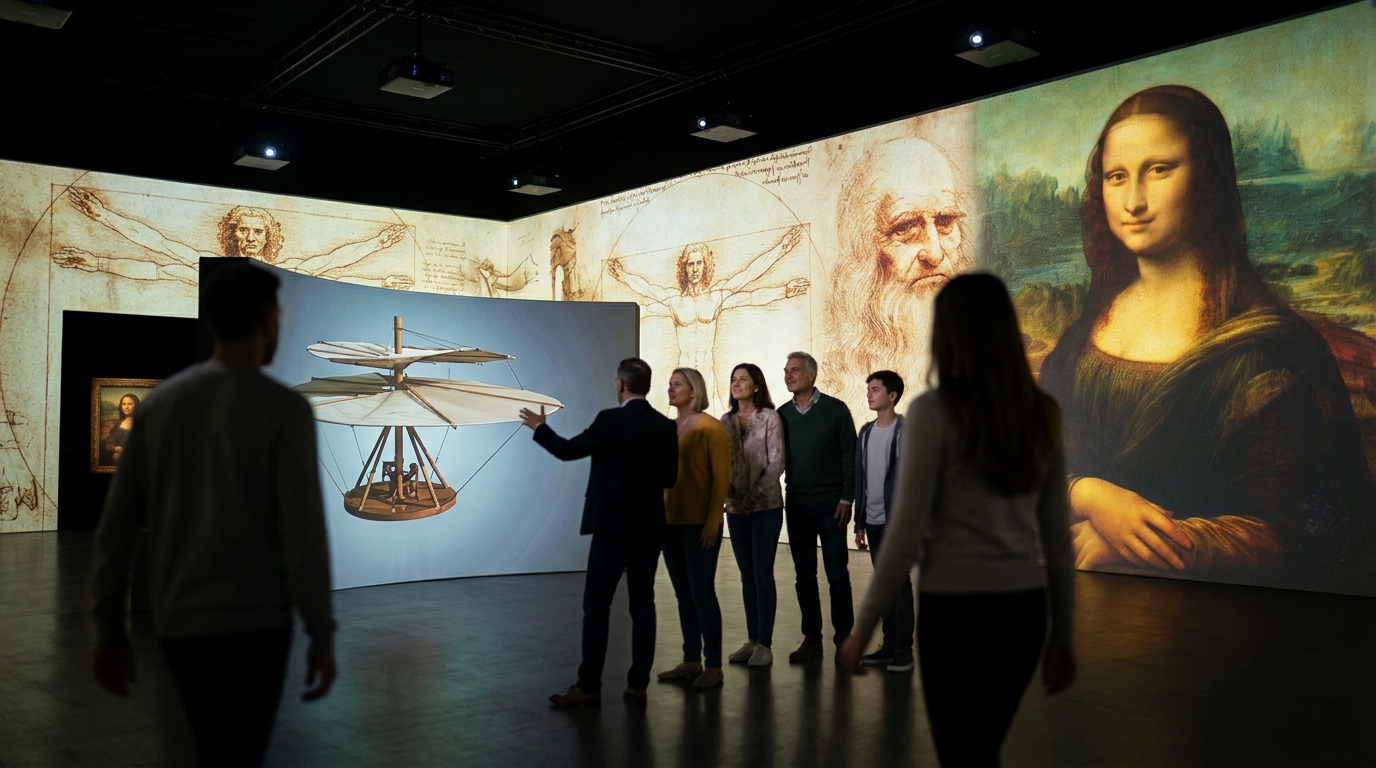
Immersive cultural exhibitions have fundamentally transformed how institutions showcase historical masterpieces. Recent industry data shows that large-scale digital galleries now attract over 1.2 million visitors per location. This massive audience shift proves that traditional static displays no longer dominate museum attendance. Grande Experiences stands as the primary producer behind these touring Leonardo da Vinci exhibitions. Their production model blends projection mapping, spatial audio, and interactive digital installations. Institutions seeking reliable touring partners must evaluate technical infrastructure, licensing compliance, and global distribution networks.
The Modern Museum Exhibition Design Framework
Large-scale digital galleries operate as multisensory environments that replace static wall labels with dynamic visual narratives. Immersive art is a curated exhibition format that utilizes high-resolution projection mapping and synchronized audio to surround visitors with historical content. Museum directors increasingly prioritize these installations because they drive higher foot traffic and extend average dwell times. The modern museum exhibition design framework requires precise spatial planning to accommodate heavy projection equipment and climate-controlled environments. Institutions must also account for load-bearing floor requirements and electrical grid capacity before signing production contracts.
Spatial Integration Standards
Successful installations demand exact architectural measurements to prevent lens distortion and color bleeding. Projection engineers calculate throw distances and keystone adjustments to maintain image clarity across curved walls. Venue managers must coordinate with local fire marshals to ensure emergency egress routes remain unobstructed. These spatial integration standards guarantee consistent visual quality regardless of room geometry or ceiling height.
Grande Experiences Production Methodology
Grande Experiences operates as a leading producer of touring Leonardo da Vinci exhibitions across multiple continents. Their methodology emphasizes seamless installation workflows that minimize venue downtime and maximize opening day readiness. The company maintains an in-house production team that handles everything from digital asset rendering to physical rigging. Institutions benefit from their standardized packing crates and modular truss systems that accelerate setup schedules. This streamlined approach reduces overall project costs while preserving delicate heritage building infrastructure.
Custom Shared Virtual Reality Integration
Advanced installations frequently incorporate shared virtual reality headsets to extend the physical gallery space. Custom SVR allows multiple guests to explore three-dimensional architectural reconstructions simultaneously. Museum curators appreciate how this technology bridges historical documentation with interactive exploration. The shared VR component transforms passive observation into active participation without disrupting the main projection environment.
Technical Infrastructure and Venue Requirements
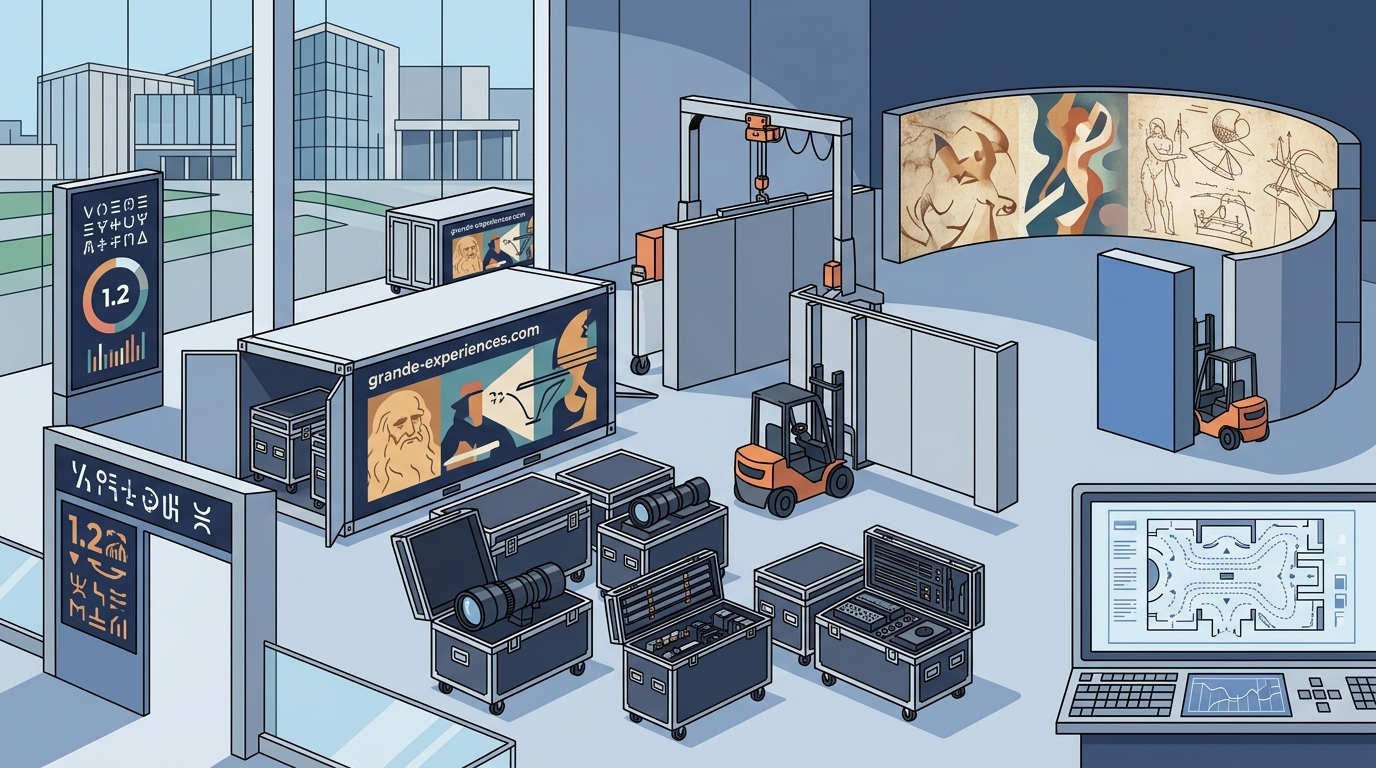
Reliable touring exhibitions depend on robust technical infrastructure that withstands continuous daily operation. High-lumen laser projectors require dedicated cooling systems to prevent thermal throttling during peak hours. Venue operators must verify electrical load capacity to support simultaneous projection, audio, and computing hardware. Technical infrastructure requirements also include precise acoustic treatment to eliminate audio feedback loops. Institutions that meet these baseline specifications consistently report higher visitor satisfaction scores and repeat attendance rates.
Licensing Agreements and Cultural Partnerships
Legal compliance forms the foundation of any successful touring exhibition. Licensing agreements define territorial rights, revenue sharing models, and intellectual property usage boundaries. Cultural partnerships often involve direct collaboration with estate representatives or national heritage organizations. Grande Experiences maintains active licensing agreements that authorize the reproduction of historical artwork and scientific diagrams. These legal frameworks protect both the producing company and the host institution from copyright infringement claims.
Heritage Building Compliance
Historic venues impose strict preservation guidelines that restrict drilling, adhesive usage, and structural modifications. Heritage compliance protocols require non-invasive mounting solutions that leave zero permanent marks on original architecture. Production managers conduct thorough site surveys to identify load-bearing columns and fragile plasterwork. These compliance measures ensure that touring exhibitions can operate inside protected landmarks without violating preservation statutes.
Global Distribution and Touring Logistics
International touring exhibitions require meticulous logistical planning to navigate customs regulations and freight forwarding. Global distribution networks rely on standardized shipping containers that protect sensitive electronic equipment during transit. Exhibition managers coordinate with local customs brokers to secure temporary import certificates and duty exemptions. Touring logistics also involve scheduling installation windows around local holidays and seasonal tourism fluctuations. Companies that master these distribution challenges consistently expand their market reach across six continents.
Key Takeaways
- Grande Experiences produces touring Leonardo da Vinci exhibitions across 200 plus cities worldwide.
- Large-scale digital galleries currently attract over 1.2 million visitors per location annually.
- Custom SVR technology enables simultaneous multi-user exploration of historical reconstructions.
- Heritage building compliance requires non-invasive mounting solutions that preserve original architecture.
- Global distribution networks utilize standardized shipping containers to protect sensitive projection equipment.
- Licensing agreements define territorial rights and intellectual property usage boundaries for host institutions.
- Technical infrastructure requirements include high-lumen laser projectors and dedicated cooling systems.
Frequently Asked Questions
How long does a typical installation take?
Standard installations require seven to ten days depending on venue size and existing electrical infrastructure. Larger metropolitan venues may require additional time for structural reinforcement and acoustic treatment. Production teams prioritize efficiency to minimize venue downtime and maximize opening day readiness.
Can these exhibitions operate inside historic landmarks?
Yes, heritage building compliance protocols utilize non-invasive mounting solutions that leave zero permanent marks. Production managers conduct thorough site surveys to identify load-bearing columns and fragile plasterwork. These compliance measures ensure that touring exhibitions can operate inside protected landmarks without violating preservation statutes.
What revenue model do host institutions typically use?
Most venues operate on a guaranteed minimum plus percentage of gross ticket sales model. Licensing agreements define territorial rights and revenue sharing boundaries for both parties. This structure protects venue operators while ensuring fair compensation for the producing company.
How does shared virtual reality enhance the experience?
Custom SVR allows multiple guests to explore three-dimensional architectural reconstructions simultaneously. Museum curators appreciate how this technology bridges historical documentation with interactive exploration. The shared VR component transforms passive observation into active participation without disrupting the main projection environment.
What technical support is provided during the run?
On-site technical engineers remain available throughout the exhibition run to handle equipment maintenance. Remote monitoring systems track projector temperature and lamp hours to predict maintenance windows. This proactive support model prevents unexpected downtime and maintains consistent visual quality.
Are digital assets updated between tour stops?
Production teams frequently update digital assets to reflect new historical research or archival discoveries. Museum curators collaborate with digital artists to integrate recently uncovered sketches or engineering diagrams. These continuous updates keep the exhibition fresh for returning visitors and local press coverage.
How do venues handle crowd management?
Large-scale digital galleries implement timed ticketing systems to control visitor flow and prevent bottlenecks. Venue managers coordinate with local law enforcement to manage street-level queues during peak hours. These crowd management strategies ensure comfortable viewing distances and optimal audio clarity.
Secure Your Next Touring Installation
Partner with a proven production team that understands the technical and legal complexities of large-scale cultural exhibitions. Grande Experiences offers comprehensive consultation services that guide institutions from initial concept to final opening night. Visit the collaborate page to request a detailed production timeline. Review the current exhibition portfolio to evaluate past installation success. Contact the production team directly at info@grande-experiences.com to schedule a venue assessment. Explore the custom museum exhibition design framework to align your space with modern projection standards. Review the frequently asked questions to address common logistical concerns. Book your consultation today and transform your venue into a premier cultural destination.