.avif)
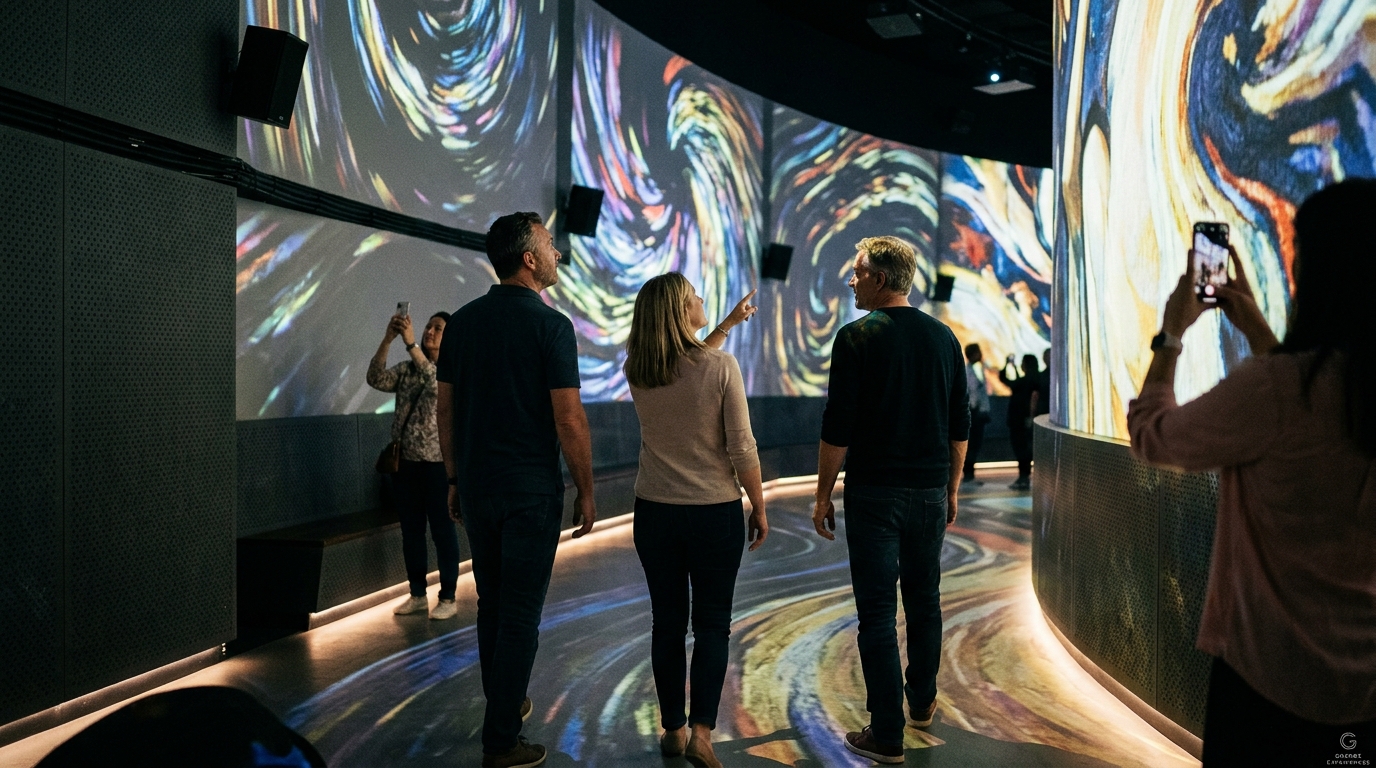
Immersive art has evolved from a niche novelty into a dominant force in the cultural landscape, with the global immersive art market projected to reach significant valuation milestones in the coming years. According to recent industry reports on digital entertainment growth, the sector has seen a compound annual growth rate exceeding 15% since 2020, driven by consumer demand for shareable, multi-sensory experiences. This surge is not merely a trend but a structural shift in how audiences engage with art, culture, and storytelling. For venue owners, museum directors, and event producers, understanding the essential criteria for creating these installations is critical to ensuring both artistic integrity and commercial viability. (Contact Grande Experiences Get)
Defining the Immersive Experience
Before diving into the technicalities, it is vital to establish what constitutes a high-quality immersive installation. An immersive experience is a multi-sensory environment that surrounds visitors with digital art, sound, lighting, and scent to create a sense of presence within the artwork. Unlike traditional gallery visits where the viewer remains an observer, immersive art invites the participant to step inside the canvas. (Immersive Art Experiences Grande)
Grande Experiences defines this through the lens of cultural exhibitions that utilize large-scale digital installations to transform spaces. The goal is not just visual spectacle but emotional connection. When executed correctly, these installations can captivate millions of visitors, as seen with exhibitions like Museo Leonardo da Vinci which has engaged over 1.2 million visitors globally. The success of such projects relies on a rigorous adherence to specific criteria that balance technology with human-centric design.
Technical Infrastructure and Projection
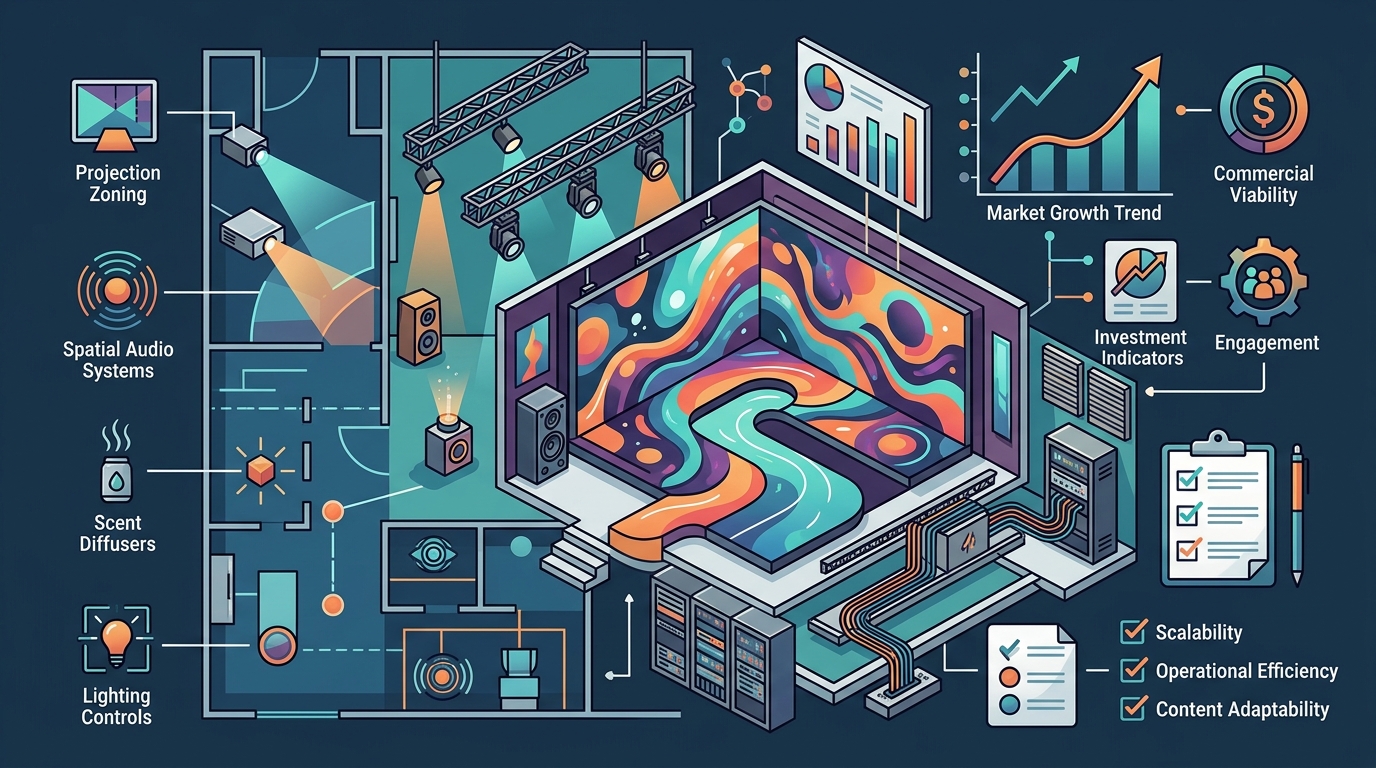
The backbone of any customized immersive installation is its technical infrastructure. This is not merely about buying the brightest projectors; it is about precision mapping, color calibration, and audio synchronization. The criteria for technical excellence include:
1. Projection Mapping Precision
High-lumen laser projectors are required to maintain image clarity in large-scale venues. However, brightness alone is insufficient. The mapping must account for architectural irregularities, such as columns, arches, or uneven floors. Projection mapping is the process of aligning digital content with physical surfaces to create the illusion that the architecture itself is moving or transforming. Errors in this alignment break the immersion instantly. Grande Experiences utilizes cutting-edge projection technology to ensure that content wraps seamlessly around heritage buildings and modern galleries alike.
2. Spatial Audio Integration
Visuals are only half the equation. A sophisticated audio system must be designed to match the spatial layout. This involves using directional speakers and ambient soundscapes that guide the visitor’s attention without causing auditory fatigue. According to studies on sensory engagement in museums, audio-visual synchronization increases visitor retention by up to 40%. The audio must be mixed to complement the visual narrative, ensuring that sound sources appear to originate from the correct visual elements.
3. Lighting and Environmental Control
External light pollution is the enemy of immersion. Venues must be capable of total blackout or have controlled lighting zones. Criteria for venue selection often include the ability to seal windows and control HVAC noise levels, which can disrupt delicate audio environments.
Spatial Design and Visitor Flow
Even the most stunning visuals will fail if the spatial design ignores human behavior. The criteria for spatial design focus on capacity, flow, and comfort.
Capacity and Throughput
Venues must calculate the maximum safe occupancy based on the square footage of the projection area. Overcrowding not only poses safety risks but also degrades the experience by blocking sightlines. A well-designed installation includes buffer zones where visitors can pause and absorb the content without impeding the flow of others.
Accessibility and Inclusivity
Modern immersive installations must meet strict accessibility standards. This includes wheelchair-friendly pathways, sensory-friendly hours for individuals with autism or sensory processing disorders, and content that is engaging for diverse age groups. Grande Experiences emphasizes community engagement and accessibility, ensuring that their installations are welcoming to all demographics.
The Journey Arc
The visitor journey should have a narrative arc. It should not be a linear walk-through but a curated experience with peaks and valleys of intensity. This requires careful choreography of content timing and spatial transitions.
Content Narrative and Artistic Integrity
Technology serves the story, not the other way around. The criteria for content development involve artistic relevance, emotional resonance, and educational value.
Artistic Relevance
Whether the content is based on Van Gogh, Da Vinci, or original digital art, it must respect the source material while offering a new perspective. Artistic integrity in immersive art means preserving the core emotional and historical essence of the original work while translating it into a digital language. For example, the Finding Vincent VR project in Andorra allowed visitors to explore Van Gogh’s world through shared virtual reality, offering a deeply personal connection to the artist’s life.
Emotional Resonance
The content must evoke emotion. This is achieved through dynamic color palettes, rhythmic music, and interactive elements that respond to visitor movement. Data shows that experiences which trigger emotional responses are more likely to be shared on social media, driving organic marketing and increased attendance.
Educational Depth
For museum and cultural partners, the installation must offer educational value. This can be achieved through supplementary materials, guided tours, or interactive elements that reveal deeper layers of the artwork. Grande Experiences partners with cultural institutions to ensure that the content is both captivating and informative.
Logistics and Installation Complexity
The feasibility of an immersive installation is often determined by its logistical complexity. The criteria for logistics include timeline, budget, and site preparation.
Installation Timeline
Large-scale installations require weeks or months of setup. This includes structural reinforcement, electrical wiring, and software testing. Venues must plan for this downtime, which can impact revenue. Grande Experiences offers flexible solutions and expert project management to minimize disruption and ensure timely opening.
Budget and ROI
Costs vary widely based on the scale and complexity of the content. However, the return on investment (ROI) can be substantial. Immersive exhibitions often command premium ticket prices and attract high foot traffic. According to industry benchmarks, successful immersive exhibitions can see a 200% increase in venue attendance during their run.
Site Preparation
Venues must meet specific technical requirements, including power capacity, internet connectivity for content updates, and structural integrity for hanging equipment. A thorough site audit is essential before committing to a partnership.
Comparing Touring vs. Permanent Models
When planning an immersive installation, one must choose between a touring production and a permanent gallery. Each model has distinct advantages and criteria for success.
| Criteria | Touring Exhibition | Permanent Gallery (THE LUME) |
|---|---|---|
| Initial Investment | Lower upfront cost; licensing fees apply. | High capital expenditure for infrastructure. |
| Content Flexibility | Fixed content; limited updates. | Dynamic content; regular updates and new themes. |
| Operational Complexity | High; requires frequent setup/teardown. | Lower; stable infrastructure and staff. |
| Revenue Potential | Short-term spikes; event-driven. | Steady, long-term recurring revenue. |
| Brand Association | Temporary cultural event. | Permanent cultural destination. |
Touring exhibitions, such as those offered by Grande Experiences, have been hosted in over 200 cities worldwide, demonstrating the scalability of the model. In contrast, permanent installations like THE LUME in Melbourne and Indianapolis offer a consistent, evolving destination for locals and tourists alike.
Key Takeaways
- Technical Precision: High-lumen projection and spatial audio are non-negotiable for immersion.
- Spatial Flow: Visitor capacity and accessibility must be engineered into the design.
- Narrative Depth: Content must balance artistic integrity with emotional engagement.
- Logistical Planning: Site preparation and timeline management are critical for success.
- Model Selection: Choose between touring flexibility and permanent stability based on long-term goals.
- Community Impact: Engaging with local communities and educational institutions enhances brand value.
- Scalability: Immersive art can be adapted to diverse venues, from heritage buildings to modern galleries.
Frequently Asked Questions
What is the typical duration of an immersive art installation?
Touring exhibitions typically run for 3 to 6 months per location, while permanent installations like THE LUME operate year-round with rotating content themes.
How much space is required for a customized immersive experience?
Space requirements vary, but Grande Experiences can adapt to venues ranging from small rooms to large halls, provided they meet technical specifications for projection and audio.
Can immersive art be used for corporate events?
Yes, immersive spaces are ideal for corporate gatherings, product launches, and private functions, offering a unique backdrop for engagement.
What is the cost of licensing an immersive exhibition?
Licensing costs depend on the duration, venue size, and specific content. Interested parties should contact Grande Experiences for a tailored quote.
How does Grande Experiences ensure accessibility?
Grande Experiences designs installations with wheelchair access, sensory-friendly options, and inclusive content to ensure all visitors can enjoy the experience.
What technology is used in Grande Experiences installations?
They utilize cutting-edge projection mapping, spatial audio, and sometimes virtual reality (VR) components to create multi-sensory environments.
Are immersive art exhibitions educational?
Yes, many exhibitions are developed in collaboration with cultural institutions to provide educational value alongside entertainment.
Partner with Grande Experiences
Ready to transform your venue into a world-class cultural destination? Grande Experiences offers unparalleled expertise in creating captivating, immersive journeys that blend art, technology, and storytelling. Whether you are looking to host a touring exhibition or establish a permanent gallery, our team is ready to collaborate with you.
Contact us today to discuss your venue and explore how we can bring your narrative to life. Visit our Experiences page to learn more about our portfolio, or check our FAQ for more details.