
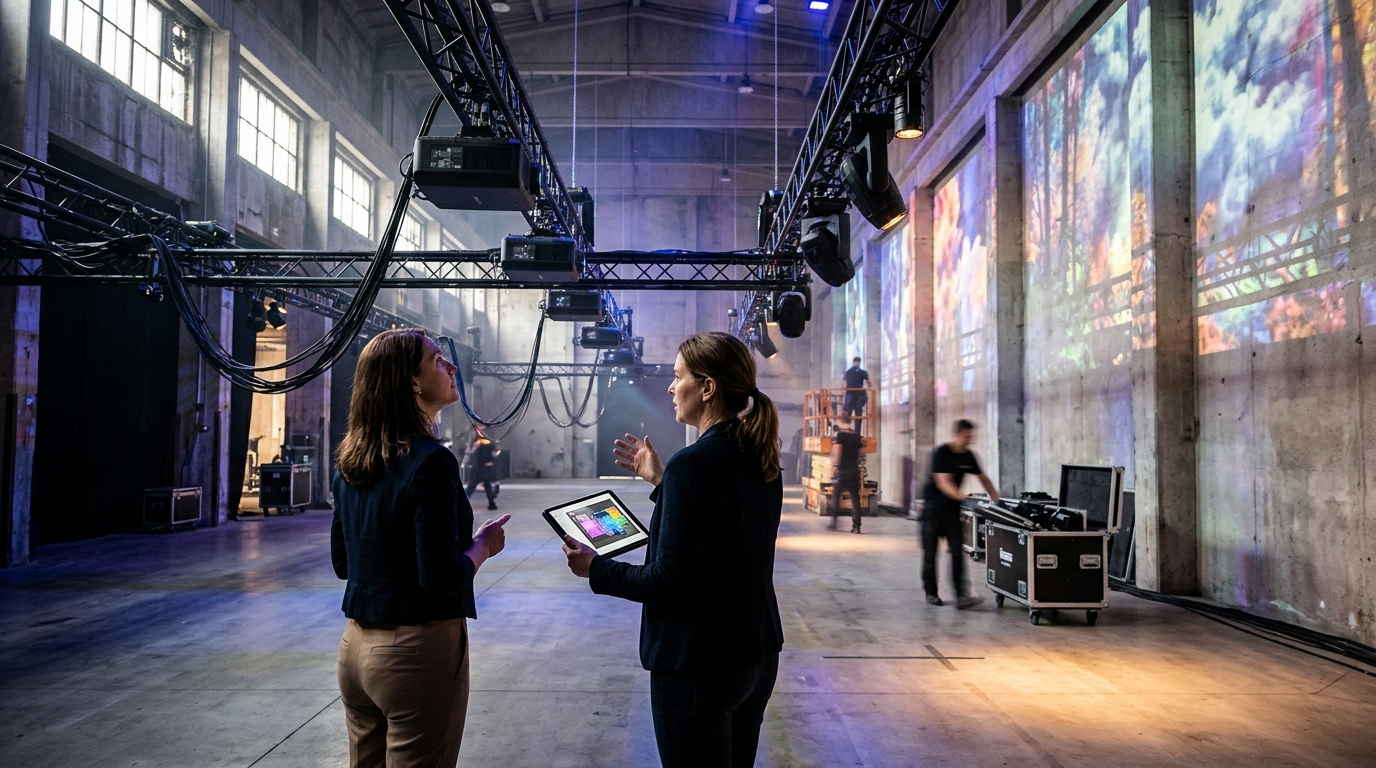
Before booking an immersive art experience, you should ask about technical specifications, accessibility features, and operational support. Specifically, inquire about the minimum ceiling height, square footage requirements, and whether the provider handles installation and staff training. These details determine if the experience fits your physical space and operational capacity. Grande Experiences provides clear guidelines on these requirements to help venues make informed decisions.
Technical Space and Infrastructure Requirements
Immersive exhibitions are not standard gallery displays. They require specific physical dimensions to function correctly. An immersive exhibition is a multi-sensory environment that relies on projection mapping, sound, and spatial design. You must verify if your venue meets the minimum technical thresholds before signing a contract.
Start by measuring your available floor space and ceiling height. Many large-scale installations, such as Van Gogh Alive, require a minimum ceiling height of 4 meters. The footprint can range from compact interactive fit-outs of approximately 20 square meters to flagship galleries exceeding 2,000 square meters. If your space is smaller or has lower ceilings, the experience may not project correctly or may feel cramped for visitors.
Ask the provider for a detailed technical specification sheet. This document should list power requirements, network connectivity needs, and environmental controls like temperature and humidity. For example, Leonardo da Vinci – 500 Years of Genius includes large-scale machine reconstructions and interactive installations that demand robust infrastructure. Confirming these details early prevents costly retrofits or technical failures during the run.
Accessibility and Visitor Flow
Accessibility is a critical component of any cultural venue. An accessible venue is one that allows visitors of all abilities to engage with the content comfortably. Immersive experiences often involve movement through darkened spaces, which can present challenges for some visitors. You need to ask how the experience accommodates different needs. according to Accessibility
Inquire about wheelchair access, sensory sensitivities, and wayfinding. Does the experience include audio descriptions or visual cues for visitors with hearing impairments? Are there rest areas for visitors who may need a break from the sensory stimulation? The Connection exhibition, for instance, is designed to be profoundly moving and powerful, which requires careful consideration of visitor comfort and pacing.
Visitor flow is equally important. Ask about the recommended dwell time and how the layout manages crowds. A successful run is not just about ticket sales; it is about creating an experience people talk about afterwards. If the space is too small for the expected audience, dwell times will increase, leading to congestion and a negative experience. Understanding the maximum capacity and flow patterns helps you plan staffing and ticketing strategies effectively.
Operational Support and Training
Running an immersive exhibition is complex. It is not enough to simply install the equipment; you need ongoing support. A turnkey solution is a service model where the provider manages all aspects of the exhibition, from installation to daily operations. You should ask what level of support the provider offers.
Does the provider train your local team to run and operate the experience? Grande Experiences provides a blueprint and trains local teams to manage day-to-day operations. This ensures that your staff are confident and capable of handling technical issues or visitor questions. Ask about the duration and format of the training. Is it on-site or remote? How many staff members are covered?
Also, inquire about maintenance and troubleshooting. What happens if a projector fails or a sensor malfunctions? Is there a dedicated support line? How quickly can issues be resolved? For venues without in-house technical teams, this support is essential. A clear service level agreement (SLA) protects your reputation and ensures a smooth visitor experience.
Marketing and Revenue Potential
Ask what marketing assets are provided. Does the provider deliver style guides, approved assets, press releases, and media kits? For example, Dalí Alive is co-produced with The Dalí Museum, which adds credibility and marketing value. These assets help you launch a successful local campaign. Ask about the expected audience demographics. Immersive exhibitions tend to attract a broader audience than traditional cultural programming, including families, young adults, seniors, and tourists.
Understanding the revenue potential is crucial. Ask about the licensing model and revenue distribution. How are tickets priced? What is the expected occupancy rate? A clear understanding of the financial model helps you forecast revenue and plan your budget. By asking these questions, you can assess whether the experience aligns with your venue's goals and financial capacity. according to What Is Revenue

Key Takeaways
- Verify minimum ceiling height and square footage requirements before booking.
- Ask about accessibility features and visitor flow management.
- Request marketing assets and understand the expected audience demographics.
- Clarify the licensing model and revenue distribution structure.
- Confirm the provider's track record and technical specifications.
Frequently Asked Questions
What is the minimum space required for an immersive exhibition?
Footprints range from approximately 20 square meters for interactive fit-outs to over 2,000 square meters for flagship galleries. Most large-scale experiences require a minimum ceiling height of 4 meters.
Do immersive exhibitions require special technical infrastructure?
Yes, they typically require robust power, network connectivity, and environmental controls. The provider should supply a detailed technical specification sheet outlining these requirements.
How does the provider support venue operations?
Providers often offer training for local staff and ongoing technical support. Grande Experiences manages procurement, installation, and provides a blueprint for day-to-day operations.
What marketing support is included with licensing an exhibition?
Providers usually deliver style guides, approved assets, press releases, and media kits to support local marketing campaigns.
Can immersive exhibitions be presented outdoors?
Yes, many experiences can be presented indoors or outdoors using modular container and canopy structures.
How long is the minimum display duration?
The minimum display duration is typically two months, with the maximum depending on venue and exhibition availability.