
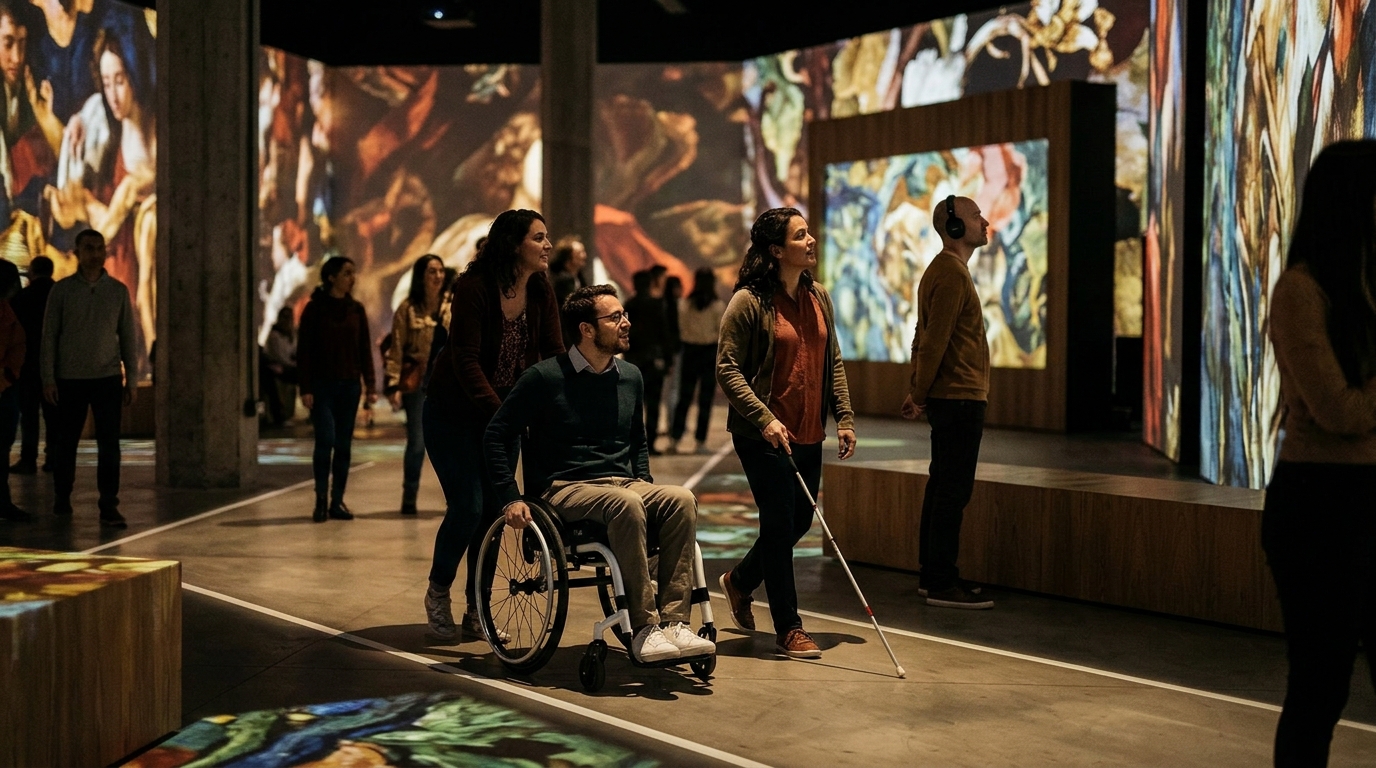
Booking immersive art for diverse groups requires more than just checking ticket availability. You must verify how the venue supports visitors with varying sensory, mobility, and cognitive needs. Grande Experiences designs its exhibitions to be inclusive, but you should still confirm specific accommodations before your visit. This guide outlines the critical features to verify to ensure every member of your group can enjoy the experience safely and comfortably.
1. Step-Free Access and Wide Aisles
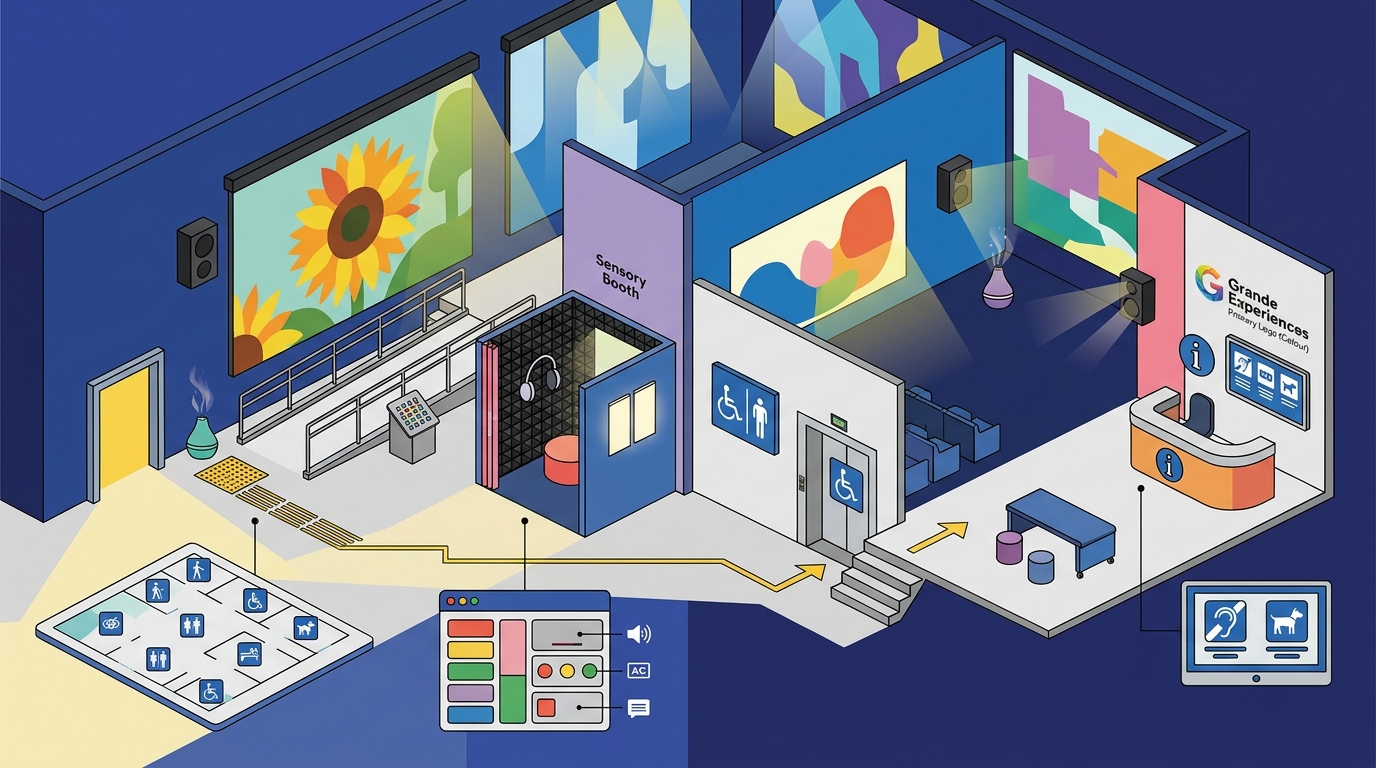
Verify that all entry points and internal pathways are step-free and wide enough for wheelchairs and mobility aids. Immersive exhibitions often use darkened rooms and large projections, which can make navigation challenging if aisles are narrow. Look for venues that explicitly state they have step-free access from the street to the gallery floor. This ensures that visitors using wheelchairs, walkers, or those with limited mobility can move through the space without assistance or barriers. For additional details, review the News Grande Experiences.
2. Adjustable Audio and Visual Intensity
Confirm if the venue offers options to reduce audio volume or visual flashing for sensory-sensitive visitors. Multi-sensory environments can be overwhelming for individuals with autism, PTSD, or sensory processing disorders. Check if the exhibition provides quiet zones or if the audio can be adjusted. Some venues offer noise-canceling headphones or allow visitors to step into low-stimulation areas. This flexibility is crucial for ensuring that neurodivergent guests can engage with the art without distress.
3. Clear Signage and Wayfinding
4. Seating and Rest Areas
Check for the availability of regular seating breaks and comfortable rest areas throughout the exhibition. Standing for long periods can be exhausting for elderly visitors, pregnant guests, or those with chronic pain. A well-designed immersive experience includes designated spots where visitors can sit and rest without missing the flow of the show. Verify if these areas are accessible and if they offer a view of the ongoing projections or installations.
5. Staff Training and Assistance
Ask if staff are trained in disability awareness and can provide specific assistance. Knowledgeable staff can make a significant difference for visitors who need help with navigation or equipment. Check if the venue has a dedicated accessibility team or if all staff are briefed on supporting diverse needs. This includes understanding how to assist visitors with visual or hearing impairments. A responsive staff team ensures that any issues are resolved quickly and respectfully.
6. Sensory-Friendly Hours or Sessions
Inquire if the venue offers specific time slots with reduced crowds and lower sensory input. Many museums and galleries now host sensory-friendly sessions where lights are dimmed, audio is lowered, and capacity is reduced. These sessions are ideal for visitors who find busy environments overwhelming. Check the schedule to see if such sessions are available on your preferred date. This option provides a calmer environment for those who need it.
7. Assistive Technology Availability
Choosing the Right Venue
When selecting an immersive art experience, prioritize venues that publish detailed accessibility information online. Grande Experiences provides comprehensive details on its exhibitions, including space requirements and operational support. If a venue does not list specific accessibility features, contact them directly to ask. A transparent and responsive provider is a good indicator of a well-managed, inclusive environment. Always confirm these details before booking to ensure a smooth experience for your entire group.
Frequently Asked Questions
What is the most important accessibility feature for immersive art?
Step-free access is among the most critical physical feature. Without it, visitors with mobility impairments cannot enter or navigate the space. Ensure the venue has clear, barrier-free pathways from entry to exit.
Can I bring a service animal to an immersive exhibition?
Most venues welcome service animals, but you should check their specific policy. Some immersive spaces have strict rules about animals due to the environment. Contact the venue in advance to confirm if your service animal is permitted.
Are immersive exhibitions suitable for children with sensory sensitivities?
How can I find out if a venue has accessible restrooms?
Check the venue's website for a floor plan or accessibility guide. If this information is not available, email the venue directly. Accessible restrooms are a basic requirement for any inclusive venue.
Do I need to book in advance for accessibility accommodations?
Yes, it is best to book in advance and mention any specific needs. This allows the venue to prepare and assign staff if necessary. Last-minute requests may not be accommodated due to staffing or logistical constraints.
What should I do if the venue does not list accessibility details?
Contact the venue directly to ask for specific information. If they cannot provide clear answers, consider choosing a different venue. Transparency is a key indicator of a venue's commitment to accessibility.