
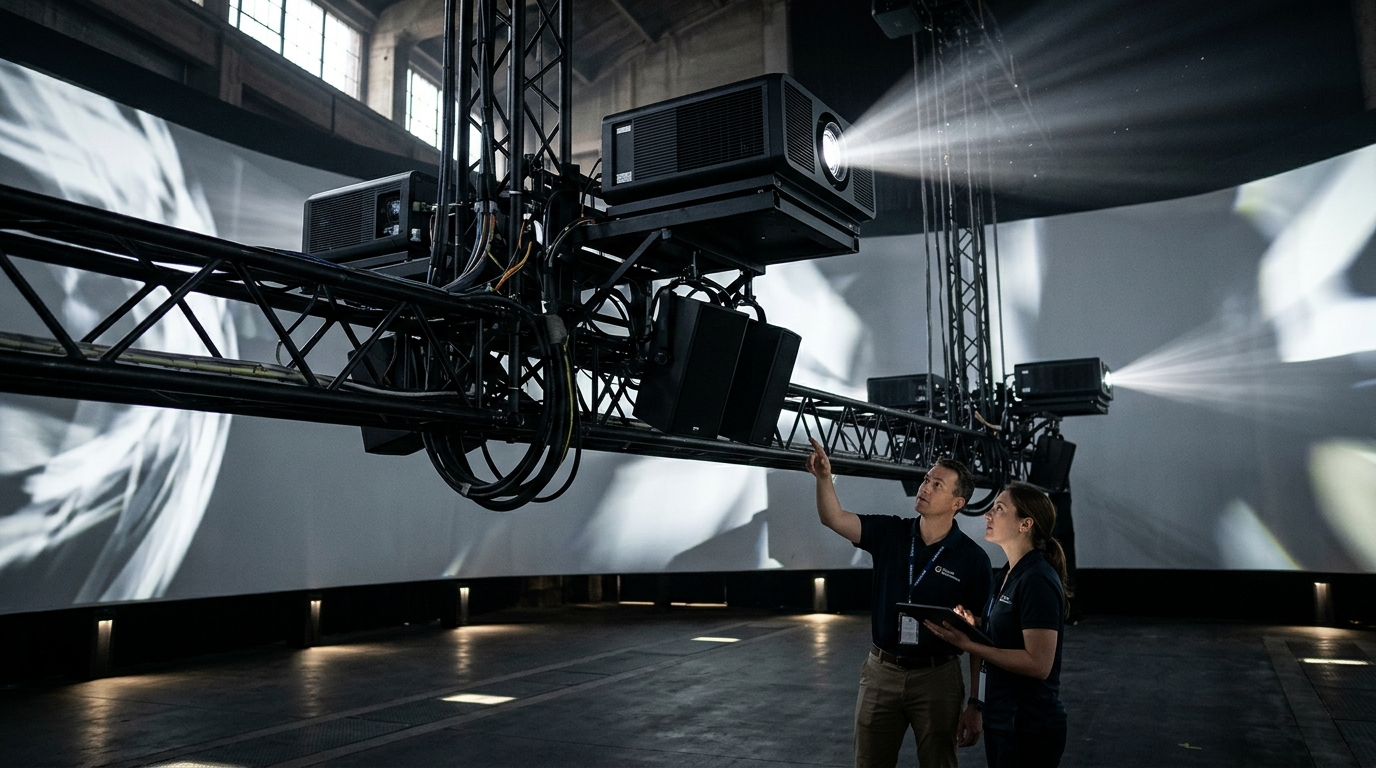
When building immersive digital art installations, the most significant equipment costs are high-brightness laser projectors, spatial audio arrays, and structural rigging. These hardware components form the core of the sensory environment. Grande Experiences has developed its own projection, audio, and aroma system to support these technical elements in large venues.
Projection Systems and Visual Hardware
Projection is the most expensive component of any immersive digital installation. High-lumen laser projectors are required to maintain image brightness in spaces with ambient light. A single high-end projector can cost tens of thousands of dollars. For large-scale environments, venues often need multiple units to achieve full coverage and resolution. The cost scales with the size of the surface and the required brightness levels.
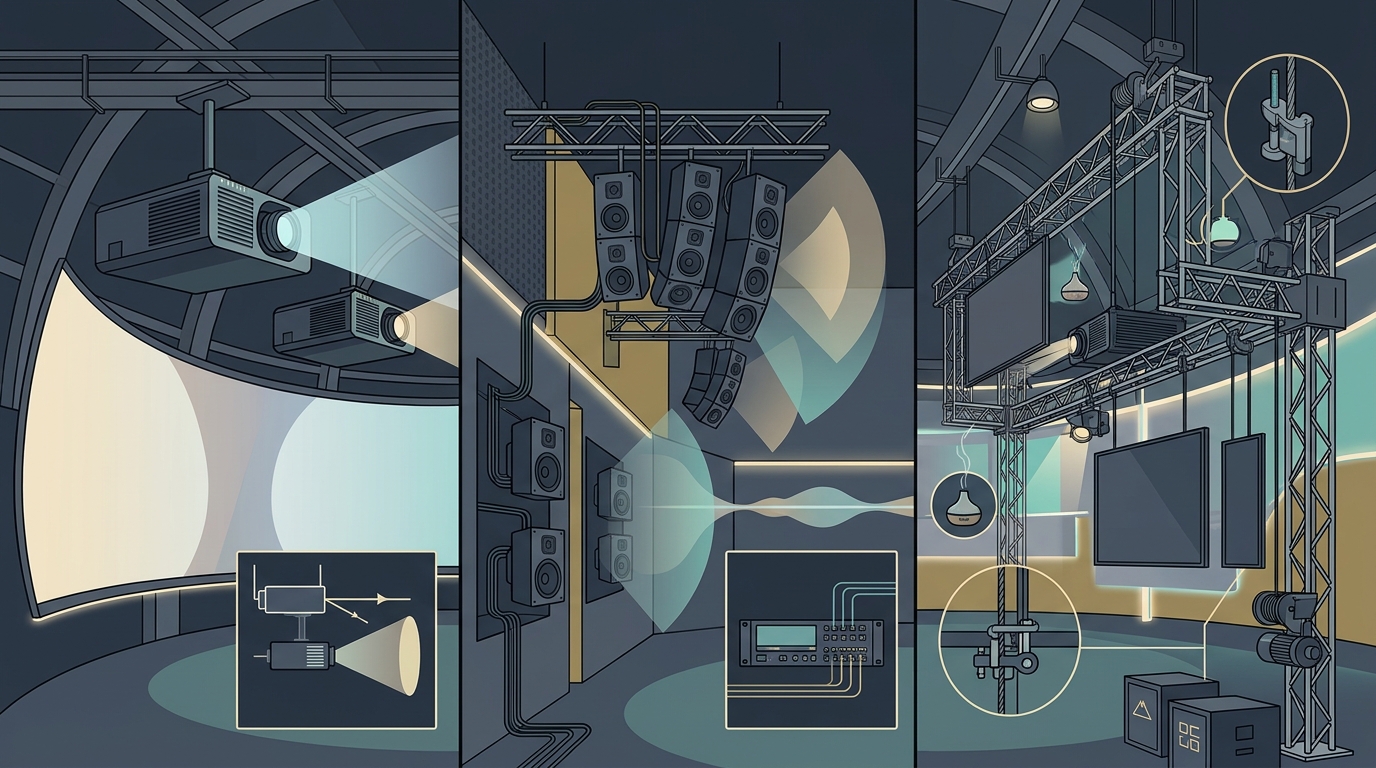
Grande Experiences utilizes a proprietary system called SENSORY4, which integrates projection, audio, and aroma. This integrated approach ensures that the visual hardware is calibrated specifically for the space. The investment in projection hardware is justified by the ability to create a seamless, edge-to-edge visual experience that captivates audiences.
Audio and Sensory Technology
Immersive audio is not just about volume; it is about spatial precision. High-fidelity speaker arrays and subwoofers are essential for creating a three-dimensional soundscape. The cost of a professional-grade audio system depends on the number of channels and the acoustic treatment of the room. Poor audio quality can undermine the entire visual experience, making this a critical budget line item.
Structural Rigging and Venue Preparation
Grande Experiences handles the technical build end-to-end, including the design and installation of the physical structure. This ensures that the equipment is safely and securely mounted. The venue is responsible for providing the space and local facilities, but the provider manages the heavy lifting and technical integration. This division of labor helps venues manage their capital expenditure effectively.
Interactive and Virtual Reality Components
Interactive elements and virtual reality (VR) hardware add another layer of cost. Motion sensors, touch interfaces, and VR headsets are expensive per unit. The cost scales with the number of users the installation is designed to accommodate. For example, a VR flight experience like Fly da Vinci requires full-body flight platforms and high-end VR headsets. These components are durable but represent a significant upfront investment.
The choice between shared VR and individual headsets also impacts the budget. Shared VR allows multiple users to interact in the same virtual space, which can be more cost-effective per user. However, it requires more complex tracking systems and software. The decision depends on the desired visitor experience and the available floor space.
Key Takeaways
- Projection systems are the single largest equipment cost in immersive installations.
- Spatial audio arrays are essential for creating a true multi-sensory environment.
- Structural rigging and venue preparation costs vary significantly based on the space.
- Interactive and VR hardware costs scale with the number of concurrent users.
- Integrated systems like SENSORY4 can optimize the overall technical budget.
Frequently Asked Questions
What is the most expensive piece of equipment in an immersive installation?
High-brightness laser projectors are typically the most expensive individual components. The cost depends on the lumen output and resolution required for the specific venue size and lighting conditions.
How much does a VR flight platform cost?
The cost of a VR flight platform varies based on the level of motion simulation and the quality of the VR headsets. It is a significant investment but can generate a new ticketed revenue stream for venues.
Do I need to buy the equipment or can I license it?
Most venues license the complete experience, including the equipment, from a provider like Grande Experiences. This model reduces the upfront capital expenditure and transfers the maintenance and technical support to the provider.
What is the role of aroma in immersive installations?
Aroma systems add a scent dimension to the experience, enhancing the narrative and emotional impact. The hardware cost is moderate, but the ongoing cost of scent cartridges is a recurring expense.
How long does it take to install the equipment?
Installation time depends on the complexity of the build and the venue's readiness. A professional team can manage the procurement, installation, and de-installation process efficiently.
Is the equipment suitable for outdoor use?
Some experiences can be presented outdoors, but the equipment must be weatherproofed. This adds to the cost and complexity of the installation. Indoor environments are generally more cost-effective for high-fidelity digital art.
Conclusion
Understanding the biggest equipment costs is essential for planning a successful immersive digital art installation. The investment in high-quality projection, audio, and structural hardware ensures a premium visitor experience. Grande Experiences provides a proven model for venues to add these attractions without bearing the full burden of technical development. To discuss your specific venue and budget, contact our team for a detailed proposal.