
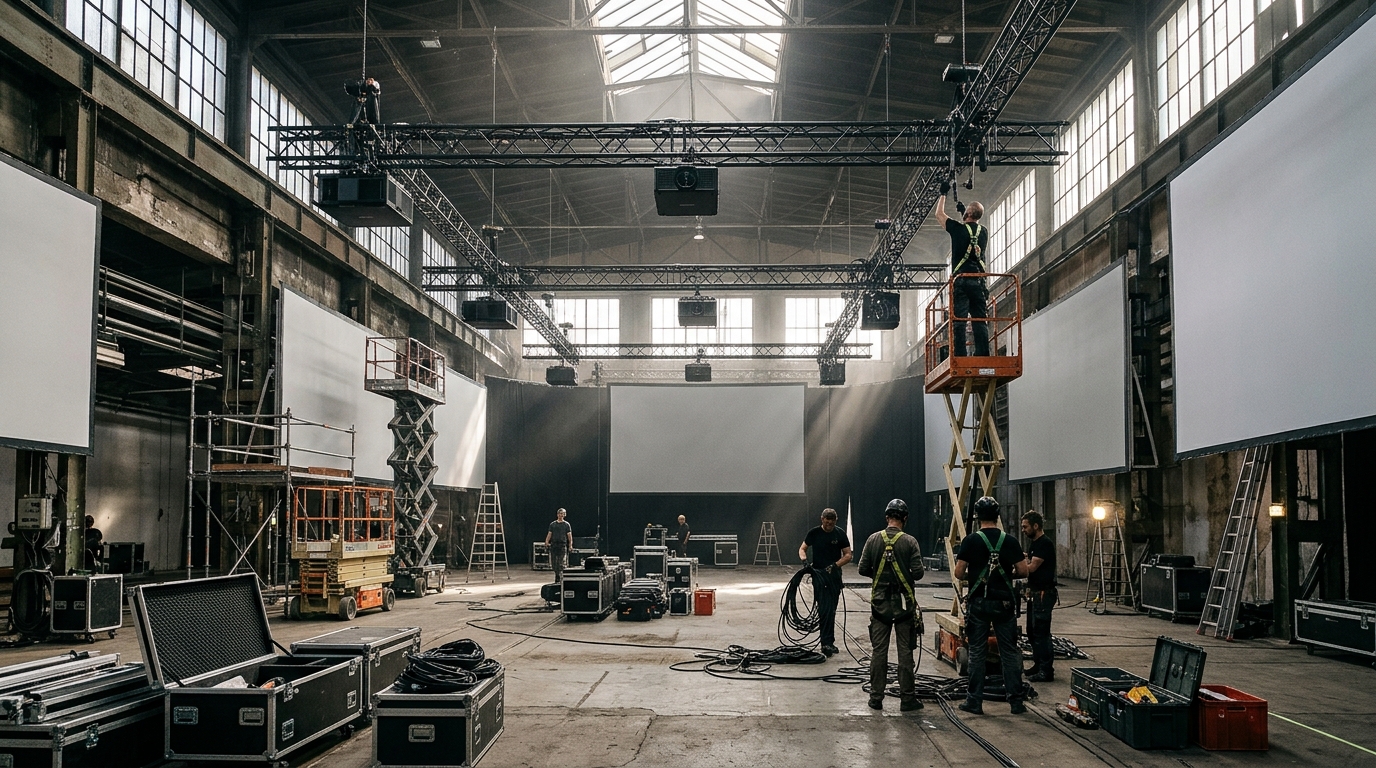
Installing a large-scale immersive art exhibition typically requires four to eight weeks of on-site work before a multi-month opening. This duration accounts for structural rigging, projection calibration, and audio synchronization. For venues planning a long-term run, this lead time ensures the technical infrastructure is stable and safe for daily public access. Grande Experiences manages this process end-to-end, handling procurement, project management, and installation to minimize venue disruption.
The Pre-Installation Planning Phase
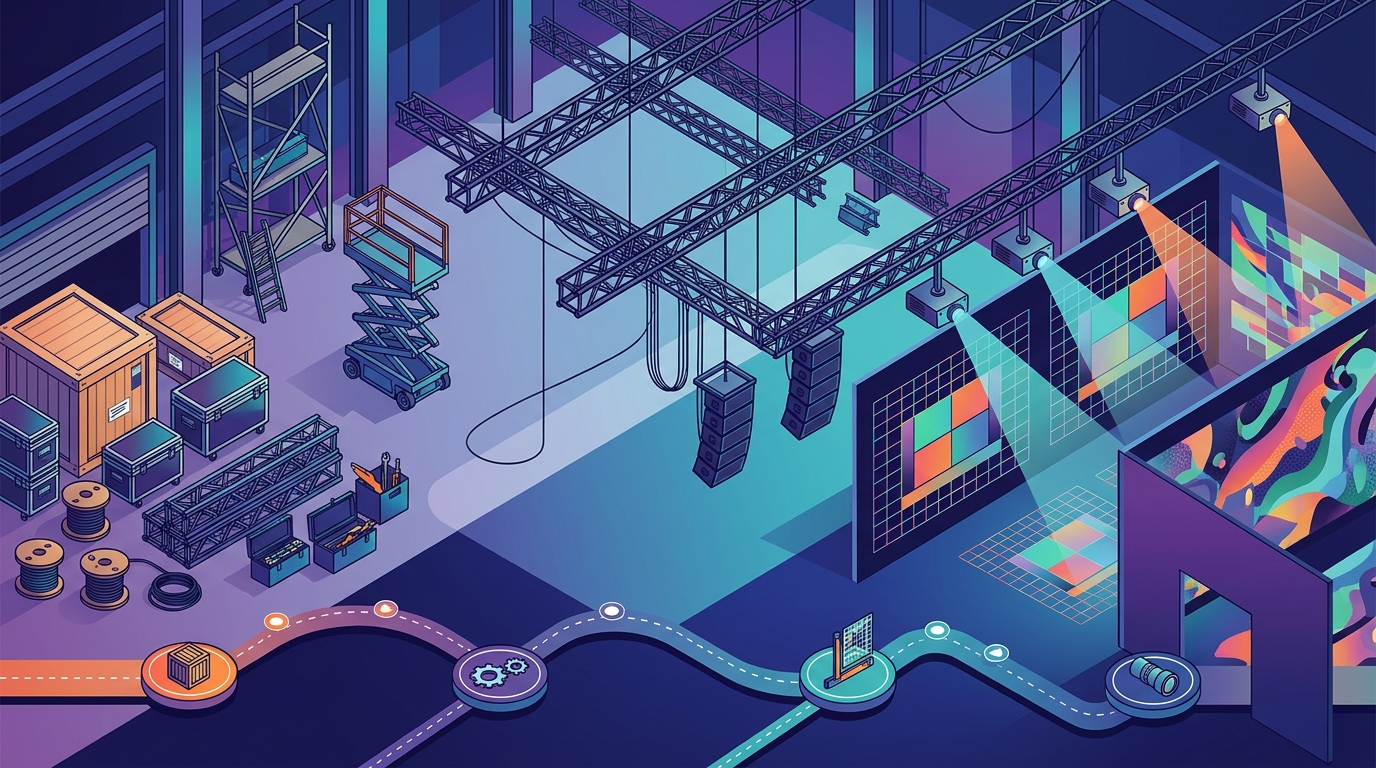
Before any physical equipment arrives, a rigorous planning phase dictates the overall schedule. This stage involves detailed site surveys, structural load calculations, and power distribution mapping. An immersive exhibition is a complex technical system that requires precise alignment of projectors, sensors, and audio arrays. Skipping or rushing this phase often leads to delays during the physical build. Venues must provide accurate architectural drawings and access schedules to the technical team. This preparation ensures that the on-site installation proceeds without unexpected structural conflicts.
On-Site Structural and Rigging Work
The physical installation begins with the construction of the exhibition space. This includes building platforms, rigging points, and mounting hardware for large-scale projections. For flagship galleries, this structural phase can take two to three weeks. The team must ensure that all rigging meets local safety standards and building codes. In a multi-month run, the durability of these structures is critical. They must withstand daily foot traffic and environmental changes. The installation team works in shifts to complete the framework before the digital components are introduced.
Calibrating Projection and Audio Systems
Once the structure is complete, the technical team installs and calibrates the digital systems. This is the most time-sensitive part of the process. Projectors must be aligned to the millimeter to create seamless, edge-blended images across large surfaces. Audio systems require acoustic tuning to match the room's dimensions. This calibration phase typically takes one to two weeks. It involves testing content at full volume and brightness to identify and correct any visual artifacts. The goal is to create a cohesive multi-sensory environment that feels natural to the visitor. Precision in this stage directly impacts the quality of the visitor experience.
Testing, Safety, and Final Handover
The final week is dedicated to comprehensive testing and safety inspections. The venue's local team is trained on daily operations, including startup and shutdown procedures. Fire safety, emergency exits, and crowd management protocols are reviewed. A soft opening or technical rehearsal is often conducted to identify any remaining issues. This buffer period allows for adjustments before the public opens. For a multi-month run, this handover ensures that the venue staff is fully confident in operating the exhibition. It reduces the risk of technical failures during the first week of public access.
Key Takeaways
- Plan for a total lead time of four to eight weeks for on-site installation.
- Pre-installation planning, including site surveys and power mapping, is critical for success.
- Structural rigging and safety compliance take the longest, often two to three weeks.
- Projection and audio calibration requires precise, time-intensive technical work.
- A final week for testing and staff training ensures a smooth public opening.
- Partnering with an experienced provider manages the complexity and reduces venue risk.
Frequently Asked Questions
How much space is needed for an immersive exhibition?
Space requirements vary by format. Footprints range from approximately 20 square meters for interactive fit-outs to over 2,000 square meters for flagship galleries. The specific size depends on the chosen experience and the venue's available floor space.
Can immersive exhibitions be installed outdoors?
Yes, many immersive experiences can be presented outdoors. This includes open-air activations using modular container and canopy structures. Outdoor installations require additional planning for weather protection and power supply.
Who is responsible for installation and support?
The exhibition provider typically manages procurement, project management, installation, and de-installation. They also provide ongoing support and training for the venue's local team. This ensures the venue is not burdened with complex technical tasks.
How long does the de-installation process take?
De-installation is generally faster than installation, often taking one to two weeks. The team removes equipment, restores the venue to its original condition, and manages the freight of components to the next location.
Is the venue responsible for insurance?
Yes, the venue is typically responsible for local public liability insurance. The exhibition provider usually covers insurance for the equipment in transit and in the exhibit. This division of responsibility is standard in the industry.
Plan Your Installation Timeline
Understanding the installation timeline is the first step in planning a successful multi-month run. By accounting for the phases of planning, rigging, calibration, and testing, venues can set realistic expectations. To discuss your venue's specific requirements and receive a detailed proposal tailored to your space and goals, contact our team. Learn more: Contact Grande Experiences.