.avif)
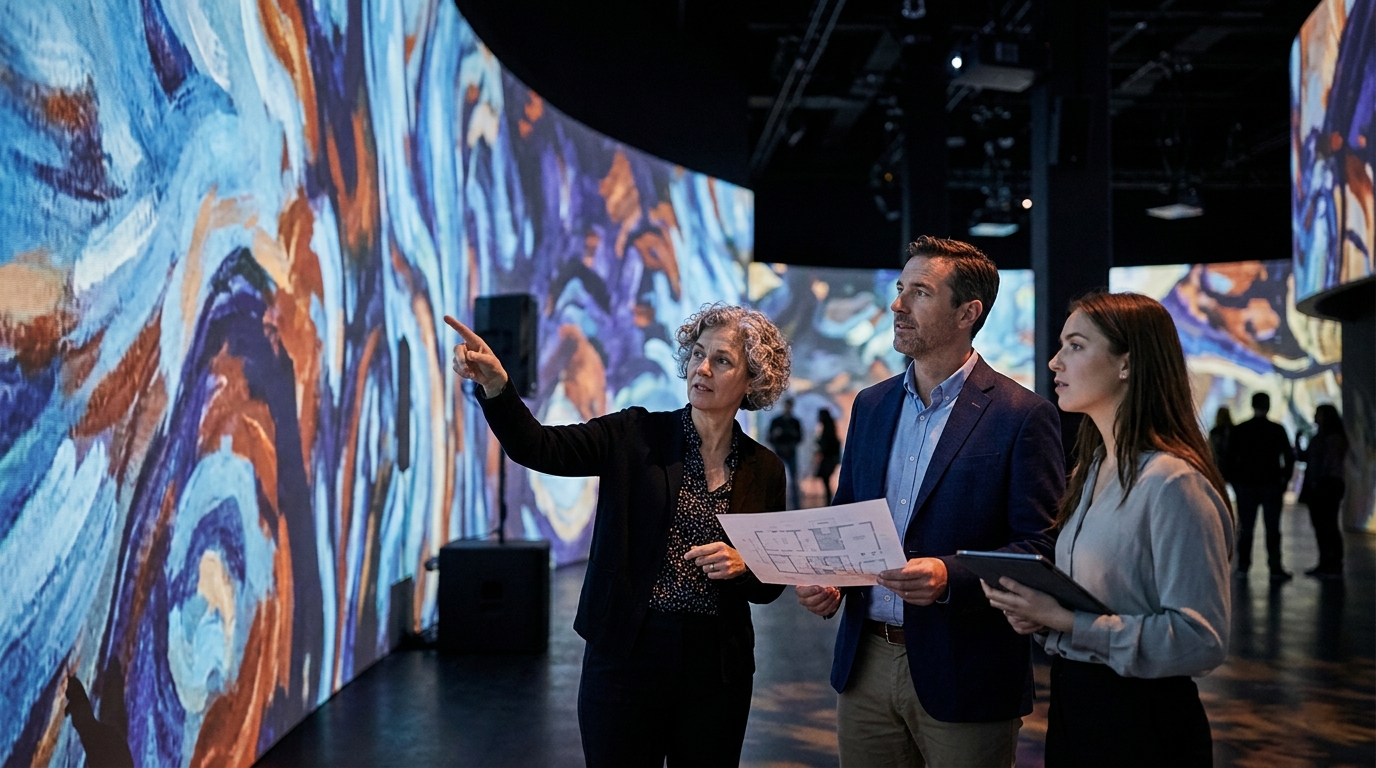
Immersive art exhibitions have evolved from niche cultural curiosities into a dominant force in the global entertainment industry. Grande Experiences reports that their touring productions have captivated over 25 million visitors across more than 200 cities worldwide, signaling a massive shift in how audiences consume art. For venue owners, museum directors, and cultural institution leaders, the decision to host such an exhibition is no longer just about acquiring content; it is a strategic evaluation of technological infrastructure, audience engagement metrics, and long-term brand alignment. This guide provides a rigorous framework for evaluating immersive art experiences, ensuring that your venue selects partnerships that drive attendance and deliver exceptional visitor value.
Understanding Immersive Art Experiences
Before diving into evaluation criteria, it is essential to define the medium. Immersive art is a multi-sensory environment that surrounds visitors with digital installations, sound, lighting, and spatial design. Unlike traditional galleries where art is viewed from a distance, immersive experiences invite the audience to step inside the narrative. Grande Experiences describes their work as cultural exhibitions that use large-scale digital projections to transform venues into unforgettable environments. This distinction is critical for venue operators because it changes the operational model from static display to dynamic, high-energy event management.
The rise of this format is not accidental. According to recent industry analyses, the global immersive market has seen exponential growth, driven by a consumer desire for shareable, experiential content. Venues that successfully integrate these experiences often see a significant uptick in foot traffic, particularly among younger demographics who prioritize experiences over physical goods. However, not all immersive exhibitions are created equal. The evaluation process must begin with a clear understanding of what constitutes a high-quality production versus a superficial light show.
Evaluating Technical Infrastructure Requirements
The most immediate hurdle in hosting an immersive exhibition is technical feasibility. Venue operators must conduct a thorough audit of their physical space to determine if it can support the required hardware. This evaluation goes beyond simple square footage; it involves assessing ceiling height, wall surface quality, power distribution, and acoustic properties.
Projection Mapping and Display Technology
High-lumen projectors are the backbone of most immersive installations. You must evaluate whether your venue’s walls and floors can serve as effective canvases. Smooth, light-colored surfaces typically yield the best results, while textured or dark walls may require additional treatment or specialized projection mapping techniques. Grande Experiences emphasizes their expertise in handling delicate infrastructure, which suggests that a reputable partner will provide detailed technical riders early in the evaluation process. Do not rely on generic specifications; request a site-specific technical assessment from the provider.
Audio and Lighting Integration
Sound design in immersive environments is complex. It requires spatial audio systems that can create a 360-degree soundscape without causing auditory fatigue or disturbing adjacent spaces. Evaluate your venue’s acoustic isolation capabilities. Similarly, ambient lighting must be carefully calibrated to enhance the digital projections without washing them out. A comprehensive technical evaluation should include a timeline for installation and deinstallation, as these processes can be invasive and time-consuming. According to industry standards, a professional touring production requires weeks of setup to ensure safety and visual fidelity.

Assessing Content Quality and Storytelling
Technology is merely the vehicle; the content is the destination. When evaluating an immersive exhibition, the primary question must be: Does the narrative resonate? Grande Experiences partners with museums and cultural institutions to present world-renowned exhibitions, indicating that content authority is a key differentiator in the market.
Artistic Integrity and Curation
Look for exhibitions that offer deep curation rather than superficial visuals. For example, the Finding Vincent VR experience offers a shared virtual reality journey into Van Gogh's world, providing historical context alongside visual splendor. Evaluate the source material. Is it public domain? Is it licensed from a reputable estate? Exhibitions tied to iconic artists like Leonardo da Vinci or Gustav Klimt often carry inherent brand recognition that aids in marketing. However, the evaluation must also consider the novelty of the presentation. Has this content been overexposed in your region?
Interactivity and Educational Value
Modern audiences expect interactivity. Evaluate whether the exhibition includes interactive elements, such as the Vitruvian Man interactive installation found in Museo Leonardo da Vinci. Interactive components increase dwell time and encourage social media sharing, which serves as organic marketing. Furthermore, consider the educational value. Exhibitions that offer guided tours, workshops, or digital companion apps provide additional revenue streams and enhance the perceived value for ticket holders.
Analyzing Audience Engagement and Metrics
Success in the immersive art space is measurable. When evaluating a potential exhibition, request data from the producer regarding past performance. Grande Experiences notes that their Leonardo da Vinci exhibition captivated 1.2 million visitors in Valencia, demonstrating the scalability of well-executed immersive content. Use these benchmarks to set realistic expectations for your venue.
Demographic Alignment
Analyze the demographic data of the exhibition’s previous runs. Does the target audience align with your venue’s existing customer base? Immersive exhibitions often attract a broad demographic, including families, tourists, and corporate groups. Evaluate the exhibition’s appeal to these segments. For instance, community engagement initiatives can help build local goodwill and attract diverse audiences. Consider whether the exhibition offers programs for schools or charitable organizations, which can enhance your venue’s reputation as a community hub.
Operational Efficiency and Turnover
Evaluate the operational impact on your venue. How many visitors can the space accommodate per hour? What is the average dwell time? High turnover rates can maximize revenue, but only if the experience quality remains consistent. Evaluate the queue management systems and entry protocols proposed by the producer. A poorly managed queue can lead to negative reviews and reduced capacity. According to operational best practices, a seamless visitor flow is critical for maintaining high satisfaction scores in high-traffic immersive environments.
Comparing Partnership and Licensing Models
Finally, the evaluation must extend to the business relationship. How does the producer structure its partnerships? Grande Experiences offers a range of options, from touring exhibitions to permanent installations like THE LUME. Understanding these models is crucial for long-term strategic planning.
| Partnership Model | Description | Best For | Key Considerations |
|---|---|---|---|
| Touring Exhibition | Temporary installation of a pre-produced show. | Venues seeking short-term revenue spikes. | High installation costs; limited duration. |
| Permanent Gallery | Custom-built, long-term digital gallery. | Established cultural institutions. | High upfront investment; steady long-term income. |
| Bespoke Collaboration | Custom content tailored to venue identity. | Brands seeking unique experiences. | Complex production; high creative control. |
| Corporate Events | Private functions within the immersive space. | Venues with strong corporate networks. | Requires flexible scheduling and staffing. |
When evaluating these models, consider the support provided by the producer. Grande Experiences highlights their in-house production team’s role in collaborating with promoters to ensure experiences open on time. This level of support is invaluable for venue operators who may lack specialized technical staff. Evaluate the marketing support offered as well. Does the producer provide a global marketing campaign, or is the burden of promotion entirely on the venue?
Key Takeaways
- Technical Audit is Critical: Always conduct a site-specific technical assessment before committing to an immersive exhibition to ensure your infrastructure can support the hardware.
- Content Authority Matters: Prioritize exhibitions with strong curation and historical context, such as those featuring iconic artists like Van Gogh or da Vinci.
- Metrics Drive Decisions: Use data from past productions, such as visitor counts and demographic breakdowns, to set realistic revenue expectations.
- Operational Efficiency: Evaluate queue management and visitor flow protocols to maximize capacity and maintain high satisfaction scores.
- Partnership Flexibility: Consider both touring and permanent models, weighing the high upfront costs of permanent installations against the recurring revenue potential.
- Community Impact: Look for producers who engage in community outreach, which can enhance your venue’s local reputation and attract diverse audiences.
- Marketing Support: Ensure the producer provides robust marketing support to reduce the promotional burden on your team.
Frequently Asked Questions
What is the primary difference between an immersive exhibition and a traditional art show?
An immersive exhibition surrounds visitors with multi-sensory digital installations, sound, and lighting, allowing them to step inside the art, whereas a traditional art show typically displays static works on walls for viewing from a distance.
How much space is required to host an immersive exhibition?
Space requirements vary by production, but most immersive exhibitions require large, open floor plans with high ceilings to accommodate projection mapping and audience flow. A detailed technical rider from the producer will specify exact dimensions.
Can immersive exhibitions be hosted in heritage buildings?
Yes, many producers specialize in working with heritage buildings. Grande Experiences notes their expertise in handling delicate infrastructure, ensuring that installations are reversible and non-damaging to historic structures.
What is the typical duration of an immersive exhibition run?
Touring exhibitions typically run for several months to a year, depending on the venue and market demand. Permanent installations, like THE LUME, operate on a long-term basis, offering consistent revenue streams.
How do immersive exhibitions engage younger demographics?
Immersive exhibitions appeal to younger audiences through interactive elements, shareable visual moments, and dynamic storytelling that aligns with digital-native preferences for experiential content.
What kind of marketing support do producers provide?
Reputable producers often provide global marketing campaigns, digital assets, and promotional strategies. However, the extent of support varies, so it is essential to clarify marketing responsibilities in the partnership agreement.
Are immersive exhibitions suitable for corporate events?
Yes, many immersive venues offer bespoke solutions for corporate gatherings, private functions, and wellness events, leveraging the versatile nature of the digital gallery space.
Ready to Transform Your Venue?
Evaluating an immersive art exhibition requires a balance of technical due diligence, content analysis, and strategic partnership assessment. By following this guide, venue owners can make informed decisions that drive attendance and enhance their cultural offerings. If you are ready to explore how immersive storytelling can elevate your space, contact Grande Experiences to discuss your venue’s potential. Visit our collaboration page to start the conversation and discover how we can bring world-class immersive experiences to your community.