
How Producers Bring Leonardo da Vinci's Art and Inventions to Life
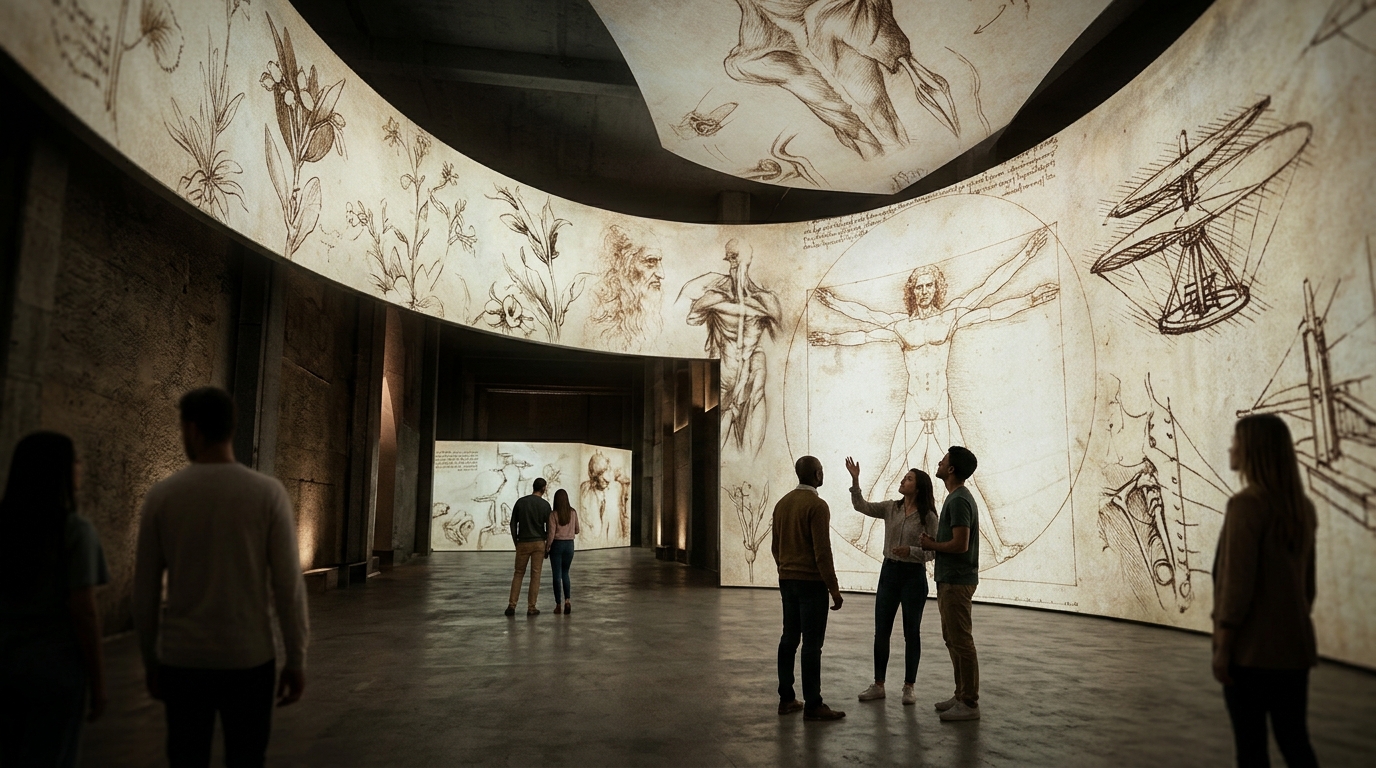
Immersive exhibition producers bring Leonardo da Vinci's art and inventions to life by combining large-scale projection mapping, interactive digital interfaces, and spatial audio. Grande Experiences utilizes these multi-sensory technologies to transform historical sketches into dynamic, physical environments. This approach allows visitors to step inside the Renaissance mind and interact with concepts that were once confined to parchment.
The Evolution of Digital Renaissance
Traditional museum displays often isolate historical artifacts behind glass, creating a passive viewing experience. Immersive production shifts this dynamic by using digital projection to scale artwork to architectural dimensions. This technique allows the viewer to feel surrounded by the artist's vision rather than observing it from a distance. The transition from static display to dynamic environment is the core of modern exhibition design.
Producers rely on high-resolution digital reproduction to capture the fine details of Leonardo's drawings. These digital assets are then mapped onto curved surfaces and walls, creating a sense of depth and movement. The result is a living gallery where the artwork appears to breathe and shift. This method bridges the gap between historical preservation and modern entertainment.
Interactive Technology and Hands-On Learning
Interactivity is a critical component of engaging modern audiences with historical content. Producers integrate touchscreens, motion sensors, and augmented reality to allow visitors to manipulate digital models. For example, a visitor might be able to assemble a digital version of Leonardo's flying machine or adjust the gears of a mechanical knight. This hands-on approach turns abstract engineering concepts into tangible experiences.
The use of interactive technology supports educational goals by encouraging active participation. When visitors can test the principles of physics or anatomy through digital simulation, they retain information more effectively. This aligns with STEAM education principles, which emphasize the connection between science, technology, engineering, arts, and mathematics. By making the content playable, producers ensure that the exhibition remains relevant to diverse age groups.
Spatial Audio and Atmospheric Design
Visuals alone are not enough to create a fully immersive environment. Producers use spatial audio to place sound sources in specific locations within the room. This creates a three-dimensional soundscape that guides the visitor's attention and enhances the emotional impact of the visuals. For a Leonardo exhibition, this might include the sound of wind, water, or mechanical gears that correspond to the projected images.
Atmospheric design also incorporates lighting and scent to complete the sensory experience. Dimmed lighting helps the projections stand out, while subtle scents can evoke the historical context of the workshop. These elements work together to lower the visitor's defenses and increase their emotional connection to the content. The goal is to create a cohesive world that feels authentic and engaging.
Narrative Structure and Visitor Journey
A successful immersive exhibition requires a clear narrative structure. Producers design the visitor journey to guide guests through a logical progression of ideas. This might start with Leonardo's early life and move through his major inventions to his later artistic works. The physical layout of the space supports this narrative, with each room or zone representing a different theme or period.
The pacing of the exhibition is also carefully considered. Producers balance dense information with moments of rest to prevent visitor fatigue. This ensures that guests can absorb the content without feeling overwhelmed. A well-structured narrative helps visitors understand the broader context of Leonardo's work and its impact on modern science and art.
Technical Infrastructure and Scalability
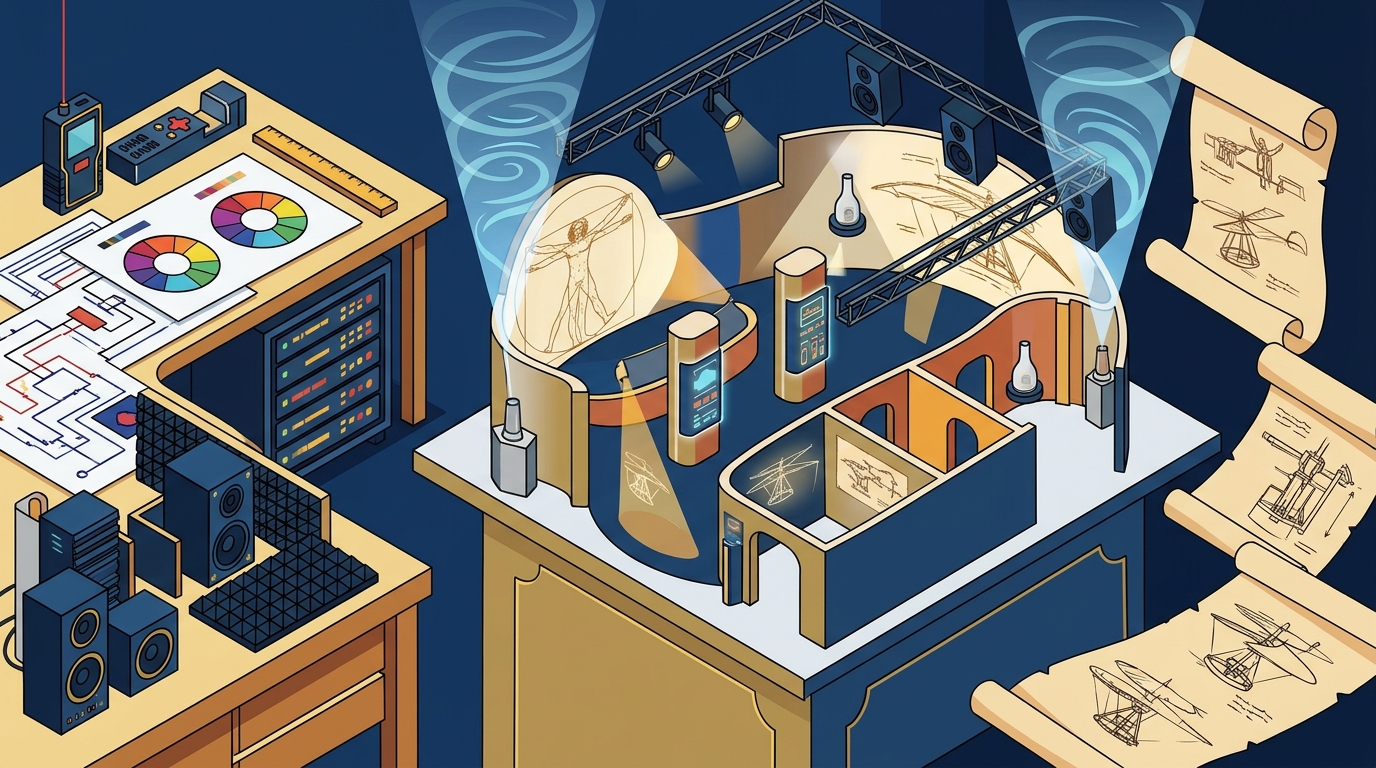
Building an immersive exhibition requires robust technical infrastructure. Producers must ensure that the projection systems, servers, and interactive stations are reliable and scalable. This involves careful planning of the physical space, including power requirements, cooling, and network connectivity. The technology must be able to handle high visitor volumes without compromising the quality of the experience.
Scalability is a key advantage of digital immersive exhibitions. Producers can adapt the same core content for different venue sizes and configurations. This flexibility allows the exhibition to tour to various locations or be installed as a permanent attraction. The ability to scale the experience ensures that it can reach a wider audience while maintaining a high standard of production quality.
Key Takeaways
- Large-scale projection mapping transforms static historical drawings into dynamic, architectural environments.
- Interactive technology allows visitors to manipulate digital models of Leonardo's inventions, enhancing learning.
- Spatial audio and atmospheric design create a multi-sensory experience that deepens emotional engagement.
- A clear narrative structure guides visitors through a logical progression of themes and ideas.
- Robust technical infrastructure ensures reliability and scalability for touring or permanent installations.
- Immersive exhibitions bridge the gap between historical preservation and modern entertainment.
Frequently Asked Questions
What technology is used to project Leonardo's artwork?
Producers use high-resolution digital projection mapping to display artwork on large surfaces. This technology allows for precise alignment of images with physical architecture.
How do visitors interact with the inventions?
Visitors use touchscreens, motion sensors, and augmented reality to manipulate digital models of the inventions. This hands-on approach encourages active learning.
Is the exhibition suitable for all ages?
Yes, the content is designed to be accessible and engaging for a wide range of ages. The interactive elements are particularly appealing to younger visitors.
Can the exhibition be customized for specific venues?
Yes, producers can adapt the content and layout to fit different venue sizes and configurations. This scalability is a key feature of digital immersive exhibitions.
What role does audio play in the experience?
Spatial audio creates a three-dimensional soundscape that enhances the visual experience. It helps guide the visitor's attention and adds emotional depth.