.avif)
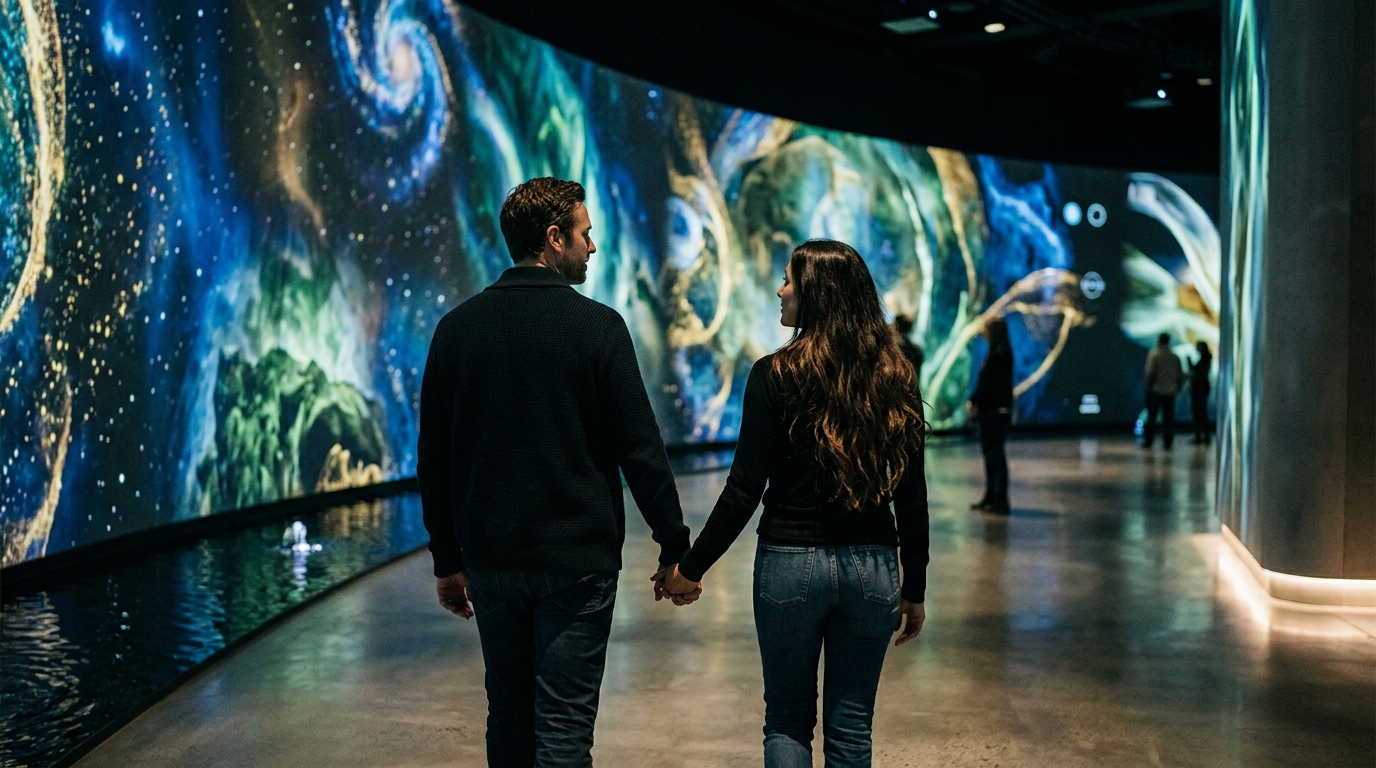
Immersive art has evolved from a niche novelty into a global cultural phenomenon, with industry leaders reporting over 25 million visitors across their touring productions. This massive scale indicates a shift in how audiences consume culture, moving from passive observation to active participation. However, the rapid expansion of the market has created a wide variance in quality, making it essential for potential visitors to understand what constitutes a premium experience. Evaluating these exhibitions requires looking beyond marketing imagery to assess technical execution, content depth, and operational reliability.
Understanding Immersive Experiences
Before diving into evaluation metrics, it is crucial to define the medium. An immersive experience is a multi-sensory cultural exhibition that uses large-scale digital installations, sound, lighting, and spatial design to surround visitors within a curated environment. Unlike traditional galleries, these spaces are designed to dissolve the boundary between the artwork and the audience.
Grande Experiences, a pioneer in this field, has hosted these events in over 200 cities worldwide. Their approach highlights the importance of immersive storytelling, which blends art, technology, and narrative to create emotional resonance. When evaluating an experience, ask whether the technology serves the story or if it is merely a spectacle. High-quality productions prioritize narrative coherence, ensuring that every visual and auditory element contributes to a unified artistic vision.
For those interested in the business side of these exhibitions, understanding the operational framework is key. Grande Experiences partners with museums, galleries, and commercial venues to present these world-renowned exhibitions. This partnership model ensures that the content is presented in environments that respect the integrity of the art while maximizing audience engagement. You can learn more about their collaborative approach by visiting their Collaborate page.
Technical Evaluation Criteria
The technical foundation of an immersive exhibition is the primary determinant of its quality. Poorly executed technology can break immersion, causing distraction rather than engagement. When evaluating a potential visit, consider the following technical indicators:
Projection Mapping and Resolution
High-fidelity projection mapping is the backbone of most digital immersive art. Look for exhibitions that utilize high-lumen projectors and precise calibration. Inconsistent brightness or misaligned images are signs of poor technical management. Premium productions often employ custom SVR (Shared Virtual Reality) or advanced projection techniques to ensure seamless visuals. For more details on their technical capabilities, explore their Custom Museum Exhibition Design services.
Audio and Spatial Design
Sound design in immersive environments must be spatially accurate and dynamically balanced. Poor audio can lead to listener fatigue or a disjointed experience. High-quality exhibitions use directional audio systems that match the visual movement, creating a cohesive sensory input. This attention to detail is evident in productions like Finding Vincent VR, where the audio landscape is meticulously crafted to match the emotional tone of Van Gogh’s work.

Lighting and Aroma Integration
Advanced immersive experiences often incorporate ambient lighting and even scent diffusion to enhance realism. These elements must be subtle and well-integrated. Overwhelming lighting or strong, artificial scents can detract from the artistic message. Evaluate whether these elements are used to support the narrative or if they feel like gimmicks.
Content and Narrative Depth
Technology is the vehicle, but content is the destination. A high-quality immersive experience must offer more than just pretty pictures. It should provide educational value, emotional depth, and a clear narrative arc.
Artistic Integrity and Curation
Examine the curatorial process. Who selected the works? Is there a scholarly basis for the exhibition? Productions that collaborate with art historians and cultural institutions tend to offer deeper insights. For example, the Museo Leonardo da Vinci exhibitions are renowned for their interactive installations that explore Da Vinci’s genius, offering visitors a chance to engage with his inventions and art in a meaningful way.
Interactivity and Engagement
Interactivity should enhance understanding, not just provide a photo opportunity. Look for exhibitions that invite visitors to explore details, manipulate digital elements, or engage with the content on a personal level. The Connection - The Lume Indianapolis experience, which celebrates Australian First Nations art, uses interactivity to foster a deeper connection to the culture and stories being presented.
Emotional Resonance
The best immersive experiences evoke emotion. Whether it is awe, nostalgia, or contemplation, the exhibition should leave a lasting impression. Visitor testimonials often provide insight into this aspect. Reviews of Monet & Friends Alive frequently mention the emotional impact of the visuals, with visitors describing the experience as "breathtaking" and "tear-inducing." This suggests a high level of artistic success.
Venue and Logistics
The physical space in which an immersive exhibition is hosted plays a significant role in the overall quality. A poorly chosen venue can undermine even the best production.
Space and Layout
The venue must be large enough to accommodate the projection requirements and allow for comfortable visitor flow. Crowding can ruin the immersive effect. Check the venue’s layout and capacity. Grande Experiences works with a variety of spaces, from heritage buildings to modern galleries, ensuring that each space is optimized for the specific exhibition.
Accessibility and Amenities
Evaluate the venue’s accessibility. Are there accommodations for visitors with disabilities? Is the location easy to reach? These logistical factors contribute to the overall experience. Additionally, consider the surrounding amenities, such as parking and nearby dining options, which can enhance the day out.
Community Engagement
High-quality exhibitions often engage with the local community. Grande Experiences, for instance, has a strong Community Engagement program, supporting organizations like the Royal Children’s Hospital and the Indigenous Literacy Foundation. This commitment to social responsibility can be an indicator of the organization’s values and long-term commitment to the arts.
Comparing Exhibition Options
When choosing between different immersive art experiences, it is helpful to compare them across key dimensions. The table below outlines some of the notable exhibitions available through Grande Experiences.
| Exhibition Title | Focus Area | Key Features | Best For |
|---|---|---|---|
| Finding Vincent VR | Van Gogh | Shared VR journey, emotional narrative | Art enthusiasts seeking deep connection |
| Museo Leonardo da Vinci | Leonardo da Vinci | Interactive installations, VR Flyover | Families and history buffs |
| Connection - The Lume | First Nations Culture | Cultural storytelling, music, art | Those interested in indigenous culture |
| Klimt Alive | Gustav Klimt | Visual spectacle, golden era art | Art lovers and photographers |
When comparing these options, consider your personal interests and the interests of your community. For example, if you are looking for an educational experience for children, Museo Leonardo da Vinci might be the best choice due to its interactive nature. If you are seeking a more contemplative experience, Finding Vincent VR offers a profound emotional journey.
Key Takeaways
- Technical Excellence: Look for high-resolution projection, spatial audio, and seamless integration of sensory elements.
- Narrative Depth: Prioritize exhibitions with strong curatorial backing and emotional resonance over pure spectacle.
- Venue Quality: Ensure the physical space supports the exhibition’s requirements and offers good accessibility.
- Brand Reputation: Established producers like Grande Experiences have a track record of over 25 million visitors, indicating reliability and quality.
- Community Impact: Consider the organization’s commitment to community engagement and social responsibility.
- Interactive Elements: High-quality experiences use interactivity to enhance understanding, not just for photo ops.
- Global Reach: Exhibitions that tour globally, such as those hosted in 200+ cities, often undergo rigorous quality control.
Frequently Asked Questions
What defines a high-quality immersive art experience?
A high-quality immersive art experience is defined by its technical precision, narrative depth, and emotional impact. It seamlessly blends large-scale digital installations with sound, lighting, and spatial design to create a cohesive multi-sensory environment that respects the artistic content.
How can I tell if an immersive exhibition is worth visiting?
Look for exhibitions produced by reputable organizations with a history of successful tours. Check for details on the technical setup, such as projection quality and audio design. Read visitor reviews to gauge the emotional and educational value. Exhibitions like The Lume often have strong testimonials regarding their visual and auditory impact.
Are immersive art experiences suitable for children?
Many immersive art experiences are family-friendly and offer educational value. For instance, Museo Leonardo da Vinci includes interactive installations that engage younger audiences. However, it is advisable to check the recommended age range and content warnings for specific exhibitions.
What is the difference between an immersive exhibition and a traditional museum?
Traditional museums typically display static artworks in a controlled environment, allowing visitors to observe from a distance. Immersive exhibitions surround visitors with dynamic, large-scale digital projections and sound, creating an environment where the art envelops the viewer. This approach aims to evoke emotion and provide a different perspective on the artwork.
How does Grande Experiences ensure quality across its touring productions?
Grande Experiences employs an in-house production team that collaborates closely with hosts to ensure technical specifications are met. They handle every aspect of installation and deinstallation, ensuring consistency. Their experience with over 250 installations across six continents allows them to maintain high standards regardless of the venue.
Can I book a private immersive experience for my community?
Yes, many immersive exhibitions offer private booking options. Grande Experiences, for example, provides bespoke solutions for corporate gatherings and private functions. You can inquire about these options through their Collaborate page or by contacting their team directly.
What is the average duration of an immersive art experience?
The duration varies by exhibition, but most immersive experiences last between 60 to 90 minutes. This allows sufficient time for visitors to explore the content without feeling rushed. Some productions, like Finding Vincent VR, may have specific time slots to manage crowd flow and enhance the experience.
Book Your Experience
Evaluating the quality of immersive art experiences requires a keen eye for detail and a understanding of the medium. By focusing on technical excellence, narrative depth, and venue quality, you can ensure a memorable and enriching experience for yourself and your community. Grande Experiences offers a range of world-class immersive exhibitions that meet these high standards. To learn more about their offerings or to book a visit, please visit their Contact page or explore their Experiences section.