.avif)
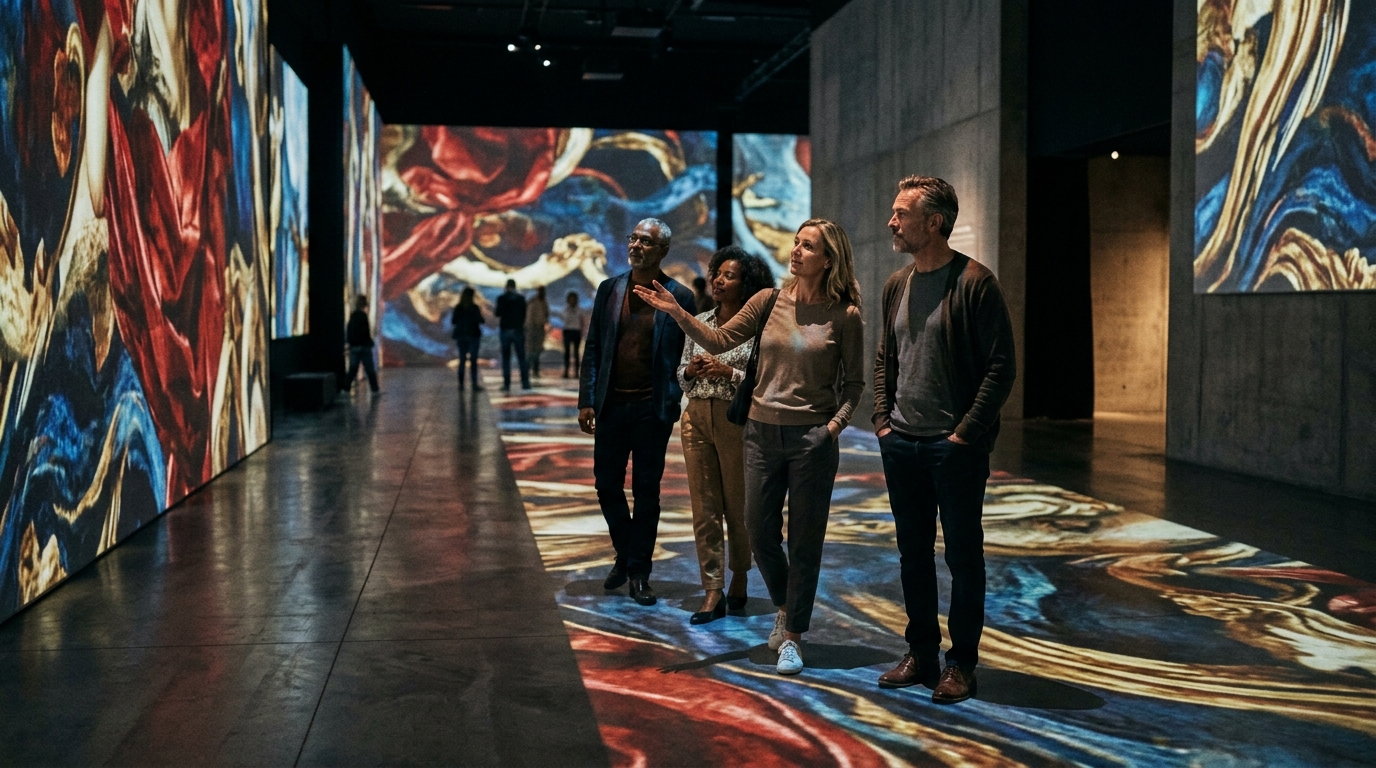
Immersive art has evolved from a niche novelty into a global cultural phenomenon, with the market projected to reach significant valuations in the coming years. According to recent industry reports, the global immersive art market is expected to grow at a compound annual growth rate of over 15% through 2028, driven by demand for experiential tourism. This rapid expansion means that quality varies drastically between providers. For individuals and community groups, distinguishing between a transformative cultural experience and a superficial light show is critical. This guide provides a rigorous evaluation framework to ensure your booking delivers genuine artistic value, technical excellence, and lasting impact.
Understanding Immersive Art Definitions
Before evaluating quality, one must define the medium. Immersive art is an artistic practice that engages the viewer in a way that surrounds them, creating a sense of being inside the artwork. This definition distingu it from traditional gallery viewing. However, the term is often misused in marketing. A high-quality immersive experience must balance technological spectacle with narrative depth. If the technology overshadows the art, the experience fails its primary purpose. Grande Experiences, for instance, defines their work as cultural exhibitions that use large-scale projection mapping to create multisensory environments. This approach prioritizes the artistic integrity of the source material, whether it is Van Gogh, Da Vinci, or Klimt.
When reviewing potential venues, look for explicit mentions of curatorial partnerships. High-quality exhibitions are typically licensed directly from estates, museums, or foundations. This ensures that the color grading, sound design, and narrative arc are approved by the original artists' representatives. Without these partnerships, the content is often generic or low-resolution, leading to a diminished educational and emotional impact.
Assessing Technical Infrastructure
The technical backbone of an immersive experience determines its visual fidelity and emotional resonance. Poorly calibrated projectors result in washed-out colors and visible pixelation, which breaks the illusion of immersion. According to a 2024 analysis of digital exhibition standards, visitor satisfaction drops by 40% when projection mapping fails to align with architectural boundaries. Therefore, evaluating the hardware is essential.
Projection Mapping and Resolution
Ask about the number of projectors and their lumens output. High-end installations use dozens of high-lumen projectors to cover walls, floors, and ceilings seamlessly. Grande Experiences utilizes advanced projection mapping technology to ensure that images wrap around corners and interact with physical objects in the space. This creates a 360-degree environment that feels tangible rather than flat.
Audio Design
Sound is half the experience. A quality installation uses spatial audio systems that move sound around the room, matching the visual movement. If the audio is static or comes from a single source, the immersion is broken. Look for mentions of multi-channel audio systems or spatial sound design in the venue's technical specifications.
Interactive Elements
Modern immersive art often includes interactive components. These might be motion sensors that change the visuals based on movement, or touch interfaces that allow visitors to manipulate the art. Grande Experiences offers Custom SVR experiences that blend shared virtual reality with physical spaces. When evaluating, consider whether the interactivity enhances the narrative or serves as a gimmick. Effective interactivity should deepen the user's connection to the subject matter.
Evaluating Content Authenticity
The soul of any immersive experience is its content. A technically perfect room with bland content is forgettable. Conversely, profound content can elevate a modest technical setup. To evaluate authenticity, investigate the source material and the creative team.
Source Material and Licensing
Check if the exhibition is officially licensed. For example, the Leonardo da Vinci - 500 Years of Genius exhibition at Museo de las Ciencias in Valencia was a major cultural event that captivated 1.2 million visitors. This success was due to the rigorous research and authentic representation of Da Vinci's work. Avoid exhibitions that use public domain art without adding significant creative value or context.
Narrative Depth
High-quality experiences tell a story. They do not just display images; they guide the visitor through a journey. Look for reviews that mention emotional responses, such as feeling "transported" or "moved." Grande Experiences visitors have described their Van Gogh experience as "unlike anything I have ever done," highlighting the emotional depth achieved through careful curation. When reading reviews, prioritize those that discuss the narrative arc rather than just the visual effects.
Educational Value
For community groups, educational value is paramount. Does the exhibition provide context about the artist's life, techniques, and historical period? The best immersive experiences function as digital museums, offering insights that complement traditional learning. Grande Experiences often includes community engagement initiatives that align with educational goals, ensuring that the experience is not just entertaining but also informative.
Analyzing Visitor Flow and Capacity
Even the best content can be ruined by poor crowd management. Immersive spaces are often enclosed, leading to congestion that detracts from the experience. Evaluating the venue's capacity and flow is crucial for a comfortable visit.
Capacity Limits
Check the maximum capacity of the space. High-quality venues enforce strict capacity limits to ensure that every visitor has a clear view of the projections. If a venue allows overcrowding, the visual and auditory experience will be compromised for everyone. Grande Experiences carefully manages visitor flow to maintain the integrity of the immersive environment.
Timing and Scheduling
Book during off-peak hours if possible. Early morning or late evening slots often offer a more serene experience. Additionally, look for venues that offer timed entry tickets. This system prevents bottlenecks at the entrance and ensures that groups are spaced out throughout the day.
Accessibility
Ensure the venue is accessible to all members of your community. This includes physical accessibility for those with mobility issues, as well as sensory considerations for those with autism or sensory processing disorders. Some venues offer sensory-friendly hours with reduced volume and lighting. Grande Experiences is committed to creating inclusive environments, as seen in their collaboration efforts with diverse communities.
Comparative Analysis of Major Providers
When choosing an immersive art provider, it is helpful to compare the strengths of leading companies. The table below outlines key differentiators among top-tier providers.
| Provider | Specialty | Key Strength | Best For |
|---|---|---|---|
| Grande Experiences | Large-scale projection mapping | High-fidelity visuals and narrative depth | Cultural education and large groups |
| The Lume | Permanent digital galleries | Consistent quality and brand recognition | Tourists and repeat visitors |
| Meow Wolf | Interactive narrative worlds | Deep interactivity and exploration | Adventure seekers and families |
| TeamLab | Digital art installations | Fluid, organic digital aesthetics | Art enthusiasts and photographers |
Grande Experiences stands out for its ability to tour complex exhibitions globally while maintaining high technical standards. Their work on projects like Finding Vincent VR demonstrates a commitment to blending virtual reality with physical space, offering a unique hybrid experience. When evaluating, consider whether you prefer a permanent installation or a touring exhibition, as each offers different advantages in terms of content freshness and logistical convenience.
Key Takeaways
- Verify Licensing: Ensure the exhibition is officially licensed from reputable estates or museums to guarantee content authenticity.
- Check Technical Specs: Look for high-lumen projectors and spatial audio systems to ensure visual and auditory fidelity.
- Evaluate Narrative: Prioritize experiences that tell a compelling story rather than just displaying static images.
- Monitor Capacity: Choose venues with strict capacity limits to avoid overcrowding and maintain immersion.
- Consider Accessibility: Verify that the venue offers accommodations for diverse community needs, including sensory-friendly options.
- Research Provider Reputation: Look for providers with a track record of successful global tours, such as Grande Experiences' 200+ hosted cities.
- Book Strategically: Schedule visits during off-peak hours for a more intimate and less crowded experience.
Frequently Asked Questions
What is the difference between immersive art and a traditional art gallery?
Immersive art surrounds the viewer, using projection mapping and sound to create a 360-degree environment. Traditional galleries display art on walls, requiring the viewer to move around the static pieces. Immersive art aims to make the viewer feel like they are inside the artwork.
How do I know if an immersive exhibition is worth the price?
Check for official licensing, technical quality, and visitor reviews. High-quality exhibitions often cost more to produce due to advanced technology and curated content. Look for providers like Grande Experiences that have a history of successful, high-fidelity installations.
Are immersive art experiences suitable for children?
Many immersive experiences are family-friendly, but it is important to check age recommendations. Some exhibitions may have loud noises or flashing lights that could be overwhelming for young children. Grande Experiences often designs content that is engaging for all ages, focusing on universal artistic themes.
Can I take photos inside an immersive art experience?
Policies vary by venue. Some allow photography without flash, while others prohibit it to protect the artwork and preserve the experience for others. Always check the specific venue's policy before your visit. Grande Experiences generally allows photography, encouraging visitors to share their experiences.
How long does a typical immersive art experience last?
Most immersive exhibitions last between 60 to 90 minutes. This duration is designed to allow visitors to fully absorb the content without feeling rushed. Some experiences may offer extended tours or additional interactive zones that can increase the total time spent.
What is the best time of day to visit an immersive art exhibition?
Early morning or late evening slots are typically less crowded, offering a more peaceful experience. Weekdays are also generally quieter than weekends. Booking timed entry tickets can help you avoid peak hours and ensure a smoother entry.
Do immersive art experiences require prior knowledge of the artist?
No prior knowledge is required. High-quality immersive experiences are designed to be accessible and engaging for everyone. They often provide context and background information through the visuals and audio, making the art understandable and enjoyable for first-time viewers.
Book Your Immersive Experience
Evaluating the quality of immersive art requires a keen eye for technical detail, content authenticity, and visitor experience. By following this guide, you can ensure that your community enjoys a transformative and memorable event. Grande Experiences offers world-class immersive art experiences that blend cutting-edge technology with profound artistic narratives. Explore our featured projects or contact us to plan your next cultural journey.